Showing posts with label werewolf. Show all posts

January 17, 2022

A Werewolf in Natick? A Story for the Wolf Moon

On Monday, January 17, the Full Wolf Moon will rise at 4:13 pm and cast its lupine light across New England. Get out there and howl, folks! We're supposed to have a lot of rain here in Boston, so the moon may not be visible, but it will still be up in the sky even if you can't see it. 

In honor of the Wolf Moon, here is a story about a possible werewolf I found on Phantoms and Monsters. Phantoms and Monsters is a great site if you enjoy reading about paranormal encounters - check it out if you like weird tales.

The story goes something like this. In the spring of 2006, a group of friends from Natick decided to go camping. Rather than drive up to New Hampshire or out to western Massachusetts, they decided to camp closer to home. They chose a patch of woods behind some apartment buildings near an old, abandoned factory.
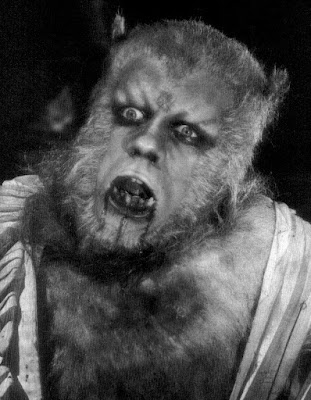
Oliver Reed in The Curse of the Werewolf (1961)

My first thought on reading this was, "That's probably not an official camp site." My second thought was, "Camping near an abandoned factory sounds like it would be spooky." My second thought was definitely correct.

The person who submitted the story wrote:

Now before I go further I must say that my area has experienced very weird sounds. Although in my opinion, they are very un-wolf like. They sound like a woman screaming crossed with long dog barks. A very indescribable and terrible sound. They come from various directions, though usually from the apartment area. (Phantoms and Monsters)

Coyotes? Maybe, or maybe not. But strange sounds in the woods just add to the spooky vibe.

The friends set up their tents and settled in for the night. After everyone had fallen asleep, one of the campers left her tent to urinate. She felt like she was being watched, though, so she woke up her boyfriend and asked him to come with her. He also felt they were being watched as they stepped away from the tents. 

As he stood watch, the boyfriend saw something moving through the trees away from the tents. It was tall, grey, and covered in fur:

He could see it through the brush... a large (approximately 6.5-7 foot in height) man-shaped figure, covered in grayish fur, sporting wolf-like features and a bushy tail swaying behind it. He was shocked and ran into the tent, leaving his girlfriend who came running in a moment later, after hearing the rustling of the creature.

They spent the rest of the night awake in their tent, occasionally hearing strange cries in the woods. They and the other campers quickly left the woods once the morning came.  

That's the end of the story. Like most monster stories, it's pretty simple. People see monster, people freak out, monster leaves. It's as if the monster just wants to be seen and acknowledged. Maybe the monster just wants to remind us that there are still weird things lurking out there in the world, even in a patch of woods near an abandoned factory.

An abandoned factory in the woods behind some apartments sounds like a liminal space to me. A liminal space is someplace that isn't quite one thing or another, a zone between one place and another. Liminal spaces are thresholds. 

It makes sense that the campers would see a werewolf in a liminal space. A werewolf is part human and part animal. It's both these things, and yet neither. The campsite was forested but formerly industrial, it was suburban and yet wild. It's the type of place where teenagers go to do forbidden things, and where campers would see uncanny creatures. It makes sense.

Did they really see a werewolf? I can hear some of you asking that question. I am a little skeptical that there are large, physical monsters roaming around our woods. (Of course, I don't go into the woods late at night!) I don't think that means the campers made this story up, though. There are lots of middle positions between hardcore skepticism and total belief. Maybe the campers inadvertently conjured up something from deep inside their psyches, or maybe they glimpsed the spirit of that land, what the ancient Romans would call a genius loci.

Happy Wolf Moon everyone!

August 01, 2020

A Werewolf in Pawtucket, Rhode Island

Many, many years ago when I was a small child I saw Abbot and Costello Meet Frankenstein (1948) on some local TV station. Although this movie is a very broad comedy, I was still really scared by the monsters in it, particularly by the Wolfman. I was probably five years old so maybe this is understandable, or maybe I was just a really cowardly kid. Regardless, the Wolfman was portrayed by Lon Chaney Jr., and his transformation from a mild-mannered human to a hirsute and ferocious monster terrified me. 

Lon Chaney Jr. in Abbot and Costello Meet Frankenstein

He was also the most sympathetic of the movie's monsters, though, so I was also fascinated. Once I got over my fear of werewolves I learned to love stories about them. Sabine Baring Gould's The Book of Werewolves (1865) is a good source for European legends, as is Montague Summers's The Werewolf in Legend and Lore (1933). Both of those are easily available, but sadly, there isn't too much written about New England werewolves. Maybe that's because we don't have a lot of werewolves here, which could be a good thing depending on how you feel about ravening monsters.

The word werewolf comes from an Old English term, werwulf, or man-wolf, and refers to a human who can transform into a wolf. The reasons for this ability vary in old legends and include things like curses, deals with the Devil, or witchcraft. The idea that someone can become a werewolf after being bitten or scratched by one is a more recent pop culture innovation. Lycanthropy (the fancy term for werewolfism) was originally considered a moral condition, not an infectious disease. 

There are lots of New England legends about people transforming into animals, but they're usually about witches, and witches don't like to change into wolves. Witches prefer to transform into more discrete animals like birds, cats, and even horses. It's easier to cause mischief that way. No one suspects an innocent-looking bird but people are pretty suspicious when a wolf shows up. Still, during the Salem witch trials Tituba confessed to seeing cats, birds and wolves in the company of witches, implying that these were either demons or witches in animal form. 

That's not the only local connection between witches and wolves. There is also an obscure legend that one of Cape Ann's Dogtown witches, Daffy Archer, may have been a werewolf or had one at her command. You can read more about the Dogtown werewolf here

Some of New England's other werewolf legends come from French-Canadian immigrants, who brought stories of the loup-garou with them from Quebec. A loup-garou is someone, usually male, who has signed a deal with the Devil and can transform into a wolf. They are scary and dangerous, but happily can be repelled by prayer and religious symbols, as this tale from Vermont shows


Those stories are over a hundred years old, but I just read another werewolf account, and it's relatively recent. It appears in Albert Rosales book Humanoid Encounters: 2000 - 2009. According to Rosales, on December 16, 2008, four students in Pawtucket, Rhode Island decided to take a walk in the woods after finishing their exams. They followed an old waterway deeper and deeper into the woods. As they walked it became increasingly quiet. 

Noticeably quiet. No birds. No squirrels. No breeze.

Scarily quiet.

The students suddenly became aware that they were not alone. Someone - or rather something - was in the woods with them. The creature was about six feet tall. It stood upright like a man, but had the head of a wolf. The students stood still in terror, petrified that the creature would approach them. 

The wolf creature looked around, sensing it was not alone, but did not see the students. Finally it ran off further into the trees and was lost to sight. After waiting to make sure it was really gone the students left the woods. One of the witnesses was convinced the creature was a werewolf. 

What did the others think it was if not a werewolf? Rosales's book doesn't say. It also doesn't include some details that would be useful, like how old the students were or their names. Still, I'm happy to find another local werewolf story to add to my collection. This reads like a classic paranormal encounter: the journey out of consensus reality into the woods, the eerie expectant stillness, the advent of a strange entity, and the return back to the normal world. 

The moral aspects of older werewolf stories are missing here. There's no witchcraft or deal with the Devil. Instead, we just have some young folks who have an encounter with a monstrous being in the woods. The lesson is not a moral one, but rather an ontological one: there are still monsters lurking out in the trees. 

January 14, 2019

Super Blood Wolf Moon: Science, Folklore, And A French-Canadian Werewolf

This month New England will experience the super blood wolf moon. 

Say it out loud: "Super blood wolf moon."

Howl it to the cold night sky: "Super Blood Wolf Moon!"

It sounds like the name of a metal band from the early 2000s, doesn't it? "Hey bro, I hear that Lustmord is opening for Super Blood Wolf Moon at the TD Garden. I need to get my tickets." It also sounds like dialogue from a horror movie. "If you kids know what's good for you, you won't go to the witch's grave during the super blood wolf moon!" Too bad no one ever listens to old geezers in horror movies...


Well, the super blood wolf moon is a real thing. It starts on January 20 at 9:35 p.m. Eastern Time and ends on January 21 at 2:50 a.m., and it shows you how amazing life is when science and folklore come together. It's as  amazing as heavy metal and horror movies combined but quieter and with a lot less gore. 

The super blood wolf moon is the official name for the full moon in January. I'll break the name down piece by piece:

1. SUPER: A full moon is called a super moon when the Moon is at its closest point to to the Earth. It appears larger than normal in the sky. There are often 3 or 4 super moons in any given calendar year. The most recent one was on December 22.

2. BLOOD: A super moon sounds kind of fun, but a blood moon sounds ominous. Don't worry though. It's not as bad as it sounds! Although the Moon will turn blood red on January 20 - 21, it is not an omen of doom. It is actually just a lunar eclipse caused by the Moon passing through the shadow cast by the Earth. "Blood moon" is a piece of folk terminology; astronomers just use the term "lunar eclipse." 


3. WOLF: The Moon has a different folk name each month. For example, November is the Beaver Moon, December is the Cold Moon, and January is the Wolf Moon. Here is the complete list of names used by The Old Farmers Almanac:

Wolf Moon (January)
Snow Moon (February)
Worm Moon (March)
Pink Moon (April)
Flower Moon (May)
Strawberry Moon  (June)
Buck Moon (July)
Sturgeon Moon (August)
Corn Moon (September)
Hunter Moon (October)
Beaver Moon (November)
Cold Moon (December)

These names are supposedly derived from those originally used by the Algonquin tribes of the Northeastern United States. Different naming systems are used around the world, but this seems to be the most common one in the U.S. and has roots here in New England. Each name refers to what happens in the natural world during that month. Worms become active in March, flowers bloom in May, and in January the hungry wolf howls. Game is scarce at this time of year, and the Algonquins could hear wolves howling outside their encampments in the icy woods. 

So there you have it - Super Blood Wolf Moon! Hopefully it seems less ominous to you now, although I find the idea of hungry wolves more than a little spooky. Which brings me to my special bonus story this week - a tale about a loup-garou, the French-Canadian werewolf. 

There aren't many werewolf stories from New England. It was said the local Algonquin shamans could send out their souls in the shape of animals, but they didn't specialize in wolf forms. The same was true of the witches in local Puritan folklore. They could assume the shape of birds, dogs, cats and even horses to torment their victims but they didn't usually turn into wolves. 

Still from The Howling (1981)
However in the late 19th century many French-Canadians moved to New England to work in the region's textile mills. They brought their folklore with them, including the following story of a loup-garou, or werewolf. It comes from Rowland Robinson's 1894 book Danvis Folks, which while fiction incorporates folklore that he heard in Vermont. Happy Super Wolf Moon!

*****

Many years ago on a dark snowy night a man left his warm house and hitched the horse to his sleigh. His wife was ill, and maybe close to death, so he was going to get the local Catholic priest.

As he rode down the forest road, all he heard was the hiss of the sleigh's runners and the thudding of the horse's hooves. The snow was good for sleighing and soon he was near the church.

Suddenly, the horse slowed down and the sleigh barely moved forward. The man whipped the horse, but to no avail. It was as if the sleigh was suddenly burdened with a two ton load.

Looking back, the man saw a large black wolf standing on its hind legs. It had its front paws on the rear of the sleigh and was preventing it from from moving forward. The wolf's yellow eyes burned bright in the darkness.

Fear gripped the man's heart. No ordinary wolf was strong enough to stop a sleigh. This was something far worse! It was a loup-garou, a man who had sold himself to the Devil in return for the power to transform into a wolf. Sometimes the loup-garous just ate corpses, but sometimes they liked their meat to be fresher. 

The creature jumped fully onto the sleigh, and the sleigh shot forward as the horse pulled harder than ever. The loup-garou walked to the front of the sleigh and put its front paws on the driver's shoulders. The monster was so heavy the man thought he would be crushed.

In a panic he searched his pockets for his knife. If he could cut the loup-garou its devilish magic would be dispelled and it would turn back into a human. But in the dark night, distracted by the monster's hot breath on his face, he couldn't find his blade. Death seemed imminent.

At this point the sleigh reached the church. Hearing the commotion the priest opened the front door. When he saw what was happening, he said a brief prayer. Instantly the monstrous wolf turned back into a man, who fled into the forest with a whimper.

Luckily the priest had a good supply of whiskey to calm the man's nerves. The priest returned to the man's house and prayed over his wife, who recovered soon afterwards. 

October 03, 2016

A Terrible Critter with Eyes Like Fire Coals: Revisiting the Dogtown Werewolf

A few years ago I blogged about the Dogtown werewolf, but it seems like a good time to revisit this topic. I was just recently researching this topic for my friend Sam Baltrusis's upcoming book about haunted crime scenes, and a producer from a paranormal show had also asked me what I knew about the topic. But most importantly, I really like werewolves!

New England folklore is filled with stories about witches, ghosts and the Devil himself, but there aren't very many about werewolves. Although the French Canadians of Vermont and Maine tell some tales about the loup-garou you don't find many werewolf stories in southern New England. One of the few comes from Dogtown on Massachusetts's Cape Ann.

Dogtown Common is a large park situated between the cities of Gloucester and Rockport. Once a thriving Colonial village, today Dogtown is 3,000 acres of forest, swamps and boulders. The ruins of the old village can be still be seen among the trees, along with boulders that wealthy Gloucester financier Roger Babson carved with motivational slogans. It's a weird landscape that has inspired artists and poets, and is haunted by legends of witches and strange disappearances.

Dogtown may also be home to a werewolf, at least according to the late author Robert Ellis Cahill (b.1934 - d. 2005). Cahill is an interesting figure in New England folklore. Before becoming a writer Cahill had worked as a Massachusetts politician and spent four years as Essex County sheriff, operating out of nearby Salem in that latter job until he suffered a major cardiac arrest in 1978. Heart attacks had long been a professional hazard of Salem's sheriffs, a problem supposedly dating back to the witch trials of 1692. During those trials accused wizard Giles Corey supposedly cursed Sheriff George Corwin, who died of a painful heart attack at a young age. Many of his successors suffered from heart attacks as well. The curse only ended after the sheriff's office was moved from Salem to nearby Middleton.

Robert Ellis Cahill (from Wikipedia).
Perhaps his encounter with a folkloric curse led Cahill to the next phase of his career, which was writing books about New England's weird and spooky history. He published more than thirty short books which had titles like New England's Cruel and Unusual Punishments, New England's Mountain Madness, and Haunted Ships of the North Atlantic. It was in one of these books (New England's Things That Go Bump in The Night) that he discussed the Dogtown werewolf.

On the evening of March 17, 1984 a Boston man named David Myska saw a large, mysterious animal loping along the cliffs near Crane Beach in Ipswich. Myska thought it might be a mountain lion, but those felines have been extinct in Massachusetts for centuries. Myksa claimed it was too large to be a coyote. So what was it? The creature was also seen in nearby Rowley, and four days later a dead deer was found near Crane Beach. Its throat had been slashed and large tooth marks were found around its neck and chest. Oddly, none of the deer's flesh had been eaten.

Ipswich and Rowley are not Dogtown, but they are located just a few miles away across the Annisquam River. Could the animal seen in those towns been the same one sighted a few days later by two teens running down Raynard Street in Gloucester? They described it as “gray monstrous dog-like animal… It had big teeth and was foaming at the mouth.” Yikes. Raynard Steet leads directly into Dogtown.

According to Cahill, the history of Dogtown is littered with hints about werewolves. For example, he claims that the Indians who originally inhabited Cape Ann said they were descended from a race of dog-headed men. He claims they also believed that anyone who ate the wolfbane plant would revert to their ancestral form: hairy, fanged, clawed, and lupine. I haven't seen this folklore anywhere except in Cahill's book, so take it with a grain of salt. And whatever you do, don't eat wolfbane, which is highly poisonous, with or without salt.

Dogtown is famous for the witches who lived there in the 18th and early 19th century, and Cahill notes that one of these witches, Daffy Archer, wore a wolf's tooth around her neck as a pendant. Witches are famous shape-shifters, so I suppose it's not much of a leap to connect witches with werewolves. If Peg Wesson, an infamous Gloucester witch, could send out her soul in the shape of a crow perhaps some other witch could transform into a wolf.

Me in Dogtown. I didn't see a werewolf that day (that I know...)

Cahill also interprets a famous incident from Dogtown's history as a possible werewolf attack. On September 10, 1892, a Gloucester sailor named James Merry drunkenly decided to wrestle a bull pastured in Dogtown. The previous year Merry, inspired by toreadors he had seen in Spain, had successfully wrestled the same bull to the ground, so why not try it again? In his drunken stupor Merry forgot that bulls grow quickly, and the bull was much, much larger than it had been twelve months earlier. It won the rematch and gored Merry to death. The sailor's lifeless body was found the next morning in the pasture.

That's the official story, but Cahill claims that the moon was full the night of September 10, and that Merry was found with his throat torn out, something no bull would do. Cahill asks: could Merry have been killed by a werewolf?

I would say this is all pretty slender evidence for a werewolf, but Cahill does cite one story that makes me hesitate in saying he concocted the whole thing. In her 1879 book Reminiscences of a Nonagenarian, Sarah Emery tells the following tale about Amos Pillsbury, a man who lived in Dogtown and worked for her Emery's father as a laborer. One night Pillsbury was walking home from work, a route that took him through thick woods. As he traveled this dark road he encountered a "terrible critter":

"A terrible critter? What was it like Pillsbury?" father inquired.

"Oh, Mr. Smith, it was a terrible big critter, as big as Brindle's calf; its eyes were like fire coals, and it ran past me through the bushes, about a rod from the road, with every hair whistling like a bell. It must have been the wolverine."

"The what, Pillsbury?"

"The wolverine. My old granny used to keep us young 'uns quiet with stories about the wolverine out beyond in the woods. I used to be afeared to stir ten yards from the door o' nights; but, as I had never seen the critter afore, I had begun to think it was one of granny's stories, but I seed him last night, sartin sure ; and his eyes were like fire coals, and every hair whistled like a bell." 

Pillsbury here is using the word wolverine to refer to a wolfish creature, not to the Hugh Jackman character from the X-men movies or the large burrowing animal found in Alaska. It was something his grandmother had told him about since childhood, and he was so obviously scared by seeing it that local men hunted for the creature for two days. They didn't find any sign of it.

So does this all add up to a bona fide werewolf? I'd like to think so, but it might just be wishful thinking on my part. If it is, I'm not the only one who feels that way. A couple years ago we went to a performance/haunted house in Salem called Gallow's Hill, which re-enacts legends from the North Shore's past. According to the performers at Gallow's Hill, the Dogtown witches used werewolves to guard their houses. So, whether it's true or not, the legend of the Dogtown werewolf lives on.

May 04, 2014

Roger Babson's Dogtown Boulders

I've been working this winter on a book about the legends and lore of Massachusetts's North Shore. The title? Legends and Lore of the North Shore, of course!

While I was researching the book Tony and I took a trip up to Dogtown Common, the Colonial-era ghost town on Cape Ann. Dogtown is famous for many things, including witches and maybe a werewolf, but one of its most visually interesting features are the boulders carved by Roger Babson during the Great Depression.

Stone walls delineate former farms in Dogtown Common.
Roger Babson was a very successful financier in the early part of the 20th century, and accurately forecast the Depression. Descended from some of Gloucester's earliest settlers, Babson was unhappy with how people thought about poor, abandoned Dogtown. Rather than focusing on the village's uncanny history and Yankee Gothic atmosphere, he felt people should instead celebrate the hard-working colonists who had founded Dogtown.

Boulders, boulders, boulders!
To rehabilitate its image, he proposed hiring a group of local masons to carve motivational slogans into some of the boulders that are scattered across the Dogtown plateau. And there are a lot of boulders there! The rocky, unproductive soil was one reason the settlers ultimately abandoned the place.


The Gloucester city leaders agreed to Babson's odd proposal. He was willing to pay the masons himself, and since it was the depths of the Depression the men needed the money. Babson also sweetened the deal by donating five hundred acres of land to Gloucester so the city could have a new reservoir.


In the end, the masons carved Roger Babson's slogans into thirty-six boulders across Dogtown Common. They also carved numbers to mark the cellar holes of the settlers' abandoned homes, and a boulder indicating the former village's main square.


Roger Babson died in the 1960s, but I think if he were alive today he might be disappointed at the effect his boulders have. Rather than diminishing Dogtown's creepy atmosphere, they actually increase it. The boulders might have been cornily motivational in the Depression when Dogtown was mostly meadow, but since that time it has become a dense forest.


The carved rocks actually make the forest seem more desolate, not less. They're just another abandoned human endeavor, like the ghost town itself. Whenever I stumbled upon one hidden among the trees, I wasn't motivated to work hard or save money. Instead, I was reminded that time and Mother Nature will ultimately overturn everything, whether it's a village founded by Puritans or boulders carved by an eccentric millionaire. Roger Babson did contribute to Dogtown's reputation, just not in the way he thought.

July 28, 2013

The Shunned House: Facts As Strange As Fiction

Tony and I were in Providence visiting our friends Bill and Ed, and we decided to stroll down Benefit Street. If you've never been it's a worth checking out for the beautiful architecture.

Look at this photo of 135 Benefit Street. It's such a charming, well-maintained, historic house. Since it's near Brown University, you can also bet it's worth a lot of money.


That wasn't always the case for this particular property. Providence has definitely gentrified in the past few decades, but before that some of these beautiful 18th century homes were downright wrecks. Here's how H.P. Lovecraft describes this house in his story "The Shunned House":

In my childhood the shunned house was vacant, with barren, gnarled, and terrible old trees, long, queerly pale grass, and nightmarishly misshapen weeds in the high terraced yard where birds never lingered. We boys used to overrun the place, and I can still recall my youthful terror not only at the morbid strangeness of this sinister vegetation, but at the eldritch atmosphere and odour of the dilapidated house, whose unlocked front door was often entered in quest of shudders.

Lovecraft's short story relates how a prosperous merchant named William Harris builds the house in the 1700s, but he, his family, and his servants slowly sicken and die. Strangely, his wife goes insane before dying and raves wildly in an obscure dialect of French - a language she never learned. Perhaps even more strange is the giant human-shaped patch of phosphorescent mold that grows on the damp cellar floor, which everyone seems to take for granted. Shouldn't they try to remove it? They didn't have dehumidifiers back in the 1700s, obviously.

Virgil Finlay illustration for "The Shunned House" in the October 1937 issue of Weird Tales.Thank you Wikipedia!


One maid employed by the Harrises, a Rhode Islander from someplace wonderfully named Nooseneck Hill, thinks all the suffering might be caused by a vampire of some kind. In her part of Rhode Island people exhume, burn and then consume the hearts of suspected vampires, but the tasteful merchant family fires her for expressing her crazy ideas. They should have listened to her. All the mysterious deaths give the house such a bad reputation that no one, even the indigent, is willing to live there. The house becomes abandoned. 

Don't try to go inside - the house is private property and someone's home.
 In the 1920s, a professor named Elihu Whipple and his nephew decide to investigate the house's unsavory history. They find that a Huguenot (French Protestant) family lived in the same spot in the 1600s. The Huguenot family, who were occultist descendants of an accused werewolf from the French town of Caude, were slain by a mob of their angry Providence neighbors and buried in unmarked graves near their home.

Professor Whipple and his nephew, armed with the latest 1920s scientific devices, decide to spend the night in the shunned house's cellar. I won't give away the final ending of the story, but since it was written by Lovecraft you can bet someone turns into a puddle of slimy yellow grease.

Lovecraft's "The Shunned House" is fiction, but given the sensational nature of this story it's surprising to learn much of  it is actually based on fact. OK, maybe some of those facts are a little legendary...

Convenient street-level access to a cellar haunted by vampiric mold.
 FACT: According to Charles Skinner in Myths and Legends of Our Own Land, there was indeed a human-shaped mold that sucked the life out of people. It seems likely Lovecraft used Skinner's story as an inspiration. Breathe easy, Providence. The vampiric mold was actually found in a house on Green Street in Schenectady, New York and is no longer malevolently active.

FACT: Up until the 1890s, many New Englanders thought consumption (tuberculosis) was caused by the recently dead feeding on their surviving family members from the grave. The cure was to burn and eat one or more of the vampire's internal organs. There were many documented cases of this alleged vampirism in Rhode Island, including most famously one Mercy Brown. The best book about this practice is Michael Bell's Food for the Dead. He also devotes a chapter to "The Shunned House."

FACT: There is a village called Nooseneck in Rhode Island. I hope they sell t-shirts!

FACT: There was a werewolf from the French town of Caude. Jacques Roulet was accused of transforming into a wolf and murdering a young boy in 1598. He was convicted and sent to an insane asylum. As far as we know, none of his ancestors moved to Providence.

FACT: A family graveyard was located at 135 Benefit Street before the Harris House was built. All the remains were moved to the North Burial Ground, but legend claims a few bodies were left behind, including those of a French Huguenot couple. 

FACT: The house on Benefit Street was inhabited by a merchant named Harris, but his real name was Stephen, not William. According to Quahog.org, the Harris family did suffer some bad luck after building the house, including poverty, infant deaths, and the insanity of Mrs. Harris. Mrs. Harris was known to shout wildly in French - a language she had never learned.

October 22, 2012

Richard Carrier: Confessions of a Cider-Drinking Witch

Richard Carrier was only eighteen years old when he and his younger brother Andrew were accused of witchcraft.

He was quite surprised, but should he have been? His mother, Martha Carrier, had recently been accused of witchcraft herself, and the Carrier family had never been popular in Andover, Massachusetts. They were considered poor even by the low standards of 1692 New England, and they were also pugnacious - Richard had been in fistfights with several other men and boys. When smallpox struck their family they had lived as pariahs on the outskirts of town.

When the constables brought Richard and his brother to Salem for questioning, they were obviously terrified. (Records note that Andrew was so frightened he stuttered when he spoke.) Both brothers pled innocent, but the afflicted girls who had accused them convulsed wildly in their presence, indicating guilt. The Carrier boys were brought into an adjacent room, where the questioning continued privately and the constables tied their heads to their ankles. Under this torture, they confessed to being witches.

When he was returned to the courtroom, Richard told how the Devil had first approached him on the Andover road one night in May of 1691. The dark man in the high-crowned hat claimed he was Jesus, and offered Richard new clothes and a horse in return for making his mark in a red book. A tempting offer for a poor Puritan, and Richard signed. His initiation was complete when the Devil baptized him in a waterfall at Newbury, Massachusetts. His brother Andrew later signed the Devil's book in an apple orchard in the presence of Richard and their mother.


As a witch, Richard followed Satan's orders. He sent his spirit to torment Timothy Swan of Andover, who had argued with another witch about the price for thatching her roof. Richard used a simple poppet to torment the wife of Salem Village's minister Samuel Parris. He attended the witch meetings, which his spirit was summoned to by the beating of a drum.

And he drank stolen cider. 

Mary Lacy, who had been accused of witchcraft shortly before the Carrier brothers, had told the court that she, the Carrier family, and other witches had flown to the home of Elizabeth Ballard and drunken all the cider in her cellar.

"Sometimes we leave our bodies at home, but at other times we go in our bodies and the Devil puts a mist before their eyes and will not let them see us." Mary Lacy had drunken the cider while invisible.

Richard confessed to this as well, but said his spirit had done it while outside his body. Mary Lacy supported his confession. "He went in his spirit, and his body lay dead the while out of doors."

After he confessed, the afflicted girls touched his hand without convulsing, a sign of his true contrition. The court spared Richard and Andrew's lives because they had confessed to witchcraft. Their mother never confessed, and was hanged. 

***

There are lots of things I find interesting about Richard Carrier's story. For example, he was male (most of the accused witches in Salem and New England overall were women) and the torture he and Andrew endured is horrifying.

What struck me the most, though, was the cider. Richard and all the confessed witches created stories about their witchy exploits that were believable to their accusers. People in Puritan New England believed in the reality of witches; it was part of their shared worldview. Everyone knew what witches did. All it took was a little persuasion (or torture) to tell a convincing story about your own actions as a witch.

And apparently, witches sent their spirits or invisible bodies to drink their neighbors' cider. Elizabeth Ballard's cider would have been alcoholic cider, which was one of the main drinks at the time. Water was often polluted, tea was expensive, and grain for beer was too hard to grow. People drank hard cider morning, noon and night.

Spirits entering a house to drink liquor (or eat food) is an old folklore motif. For example, the Swedish historian Olaus Magnus wrote in his History of the Northern Peoples (1555) that at Yuletide werewolves break into cellars to drink beer and mead. The line between werewolves and witches is blurry, since both are shapeshifters. Many people who confessed to being werewolves talked about sending out their spirits in the shape of a wolf, much as witches sent their spirits to do mischief.

We don't believe in these things in the 21st century, of course, but a surprising number of people leave out milk and cookies for Santa on Christmas Eve. But that's just for children, right?


In parts of Medieval and Renaissance Europe it was believed that a night-riding goddess and her followers (sometimes called the Good Ladies) traveled across the countryside. To gain their favor, people would leave out food and beverages for them. In the British Isles, food was left out for faeries and elves. In many countries, food and beverages are still left out for the wandering spirits of the dead who might enter the home.

The origins of this belief in traveling spirits that enter your house to eat and drink is quite murky. Writers like Carlo Ginzburg and Claude Lecouteux trace it back to ancient shamanic practices and ideas about the dead. It sounds good to me. Apparently it is a very resilient belief that has changed shape and expressed itself differently over time.

For Halloween, maybe I'll leave out some cider for who or whatever is wandering around that night, and be thankful that I can write about this topic without being tortured. 

***

I got the information about Richard Carrier from Marilynne Roach's wonderful The Salem Witch Trials: A Day-by-Chronicle of New England Under Siege.  This is the book if you want to read a straightforward and detailed narrative of what transpired in Salem.

July 24, 2012

Horseshoe Magic: Secretly Pleasing to the Devil?

A few years ago I purchased an iron horseshoe in a neighborhood botanica. There is a decent-sized Santeria community in Boston, and the horseshoe is an attribute of Ogun, the orisha (spirit or deity) who governs iron, the military, and physical strength. Don't mess with Ogun!

I don't practice Santeria, though; I just bought the horseshoe because I've always heard they're lucky. I'm not sure where this idea originated, but it's been found in New England for a long time. For example, in the late 19th century farmers in western Massachusetts told folklorist Clifton Johnson the following:

1. Nailing a horseshoe above the door of your house brings luck.

2. Nail it so the opening points upwards. Otherwise, all the luck will run out!

3. In the old days, horseshoes were used to repel witches from the house.

The first two are still commonly held beliefs, but I don't think many people in the 21st century use horseshoes to protect themselves from witches. If I am wrong please let me know.


Those 19th century farmers were quite correct that their ancestors thought a horseshoe would keep witches out of the house. Richard Godbeer provides a great example in his book The Devil's Dominion, which examines witchcraft and magic in early New England.

The story goes something like this. Goody Chandler of Newbury Massachusetts became quite ill in 1666, and thought her sickness was caused by her neighbor Elizabeth Morse, who was unpopular and therefore considered a witch. Goody Chandler was determined to keep Morse out of her house, and nailed a horseshoe over the door. Apparently it worked because Elizabeth Morse refused to enter once the horseshoe was put up.

This probably would be the end of the story if an uptight neighbor named William Moody hadn't gotten involved. William Moody was opposed to any kind of magic, and he thought putting up a horseshoe was just as bad as witchcraft. He knocked down the horseshoe, and once again Elizabeth Morse began to come into Goody Chandler's house under the pretense of being neighborly.


William Moody was not alone in condemning all forms of magic as witchery - it was the official platform of the Puritan church in New England. Cotton Mather himself, the leading minister in Massachusetts, wrote in Wonders of the Invisible World that,

"The Children of New-England have Secretly done many things that have been pleasing to the Devil. They say, That in some Towns, it ha's been an usual Thing for People to Cure Hurts with Spells, or to use Detestable Conjurations, with Sieves, & Keyes, and Pease, and Nails, and Horse-Shooes... 'Tis in the Devils Name that such Things are done."

I suppose William Moody thought he was being helpful, but he comes across as a pious busybody. And his actions certainly didn't help Goody Chandler, who just got sicker and weaker. She finally convinced another neighbor to nail up the horseshoe again (she was now too weak to do it herself) but William Moody took it down and this time carried it away. Elizabeth Morse was able to enter the house, and Goody Chandler died soon after.

It's an interesting story. Who was to blame for Goody Chandler's death? Elizabeth Morse, William Moody, or natural causes? I say natural causes (and I hope you do too), but her contemporaries had other ideas. Elizabeth Morse was brought to trial and eventually convicted of witchcraft, but even the judges must have had some doubts since she only served one year in jail.

A horseshoe could also be used to keep a dead witch in his or her grave. As I've noted in an earlier post, the people of Hampton, New Hampshire staked the heart of suspected witch Goody Cole after she died. To make double sure she stayed in her grave they tied a horseshoe to the stake.

Although the horseshoe is considered lucky and magical across Europe and North America, it's not quite clear why. The writer Robert Means Lawrence devoted an entire book to this topic (The Magic of the Horsehoe, published in 1898). Is it because its shape is reminiscent of the horns of a ferocious animal? Is it because it resembles a crescent moon? Or perhaps it's because it's made of iron, and supernatural creatures (such as fairies) fear iron.

I'm actually a fan of the iron theory, since other metals have the power to repel magical monsters (like silver against vampires and werewolves), and the defining lines between supernatural creatures are blurry. Witches can transform into animals, including wolves, and sometimes they return from the dead to cause trouble, like vampires. In the British Isles, witches often were accused of cavorting with fairies, and peasants nailed horseshoes over their doors to keep fairies out of the house. So I think it all boils down to this - if you have trouble with a supernatural creature, use some metal.

The next question is "Why does metal repel monsters at all?" but my blog is limited, and a question like that would probably lead me on an infinite regression into mankind's distant and murky past!

January 02, 2011

The Loup-Garou!

English Puritans and their descendants were the main cultural force in New England for centuries, but there have always been other ethnic groups here with their own folklore. Here's a great wintry story about the loup-garou, the French Canadian werewolf. It's from from Rowland Robinson's 1894 book Danvis Folks, which included folk stories the author heard in Vermont.

************


Loup-garou image courtesy of Wikipedia.

Many years ago on a dark snowy night a man left his warm house and hitched the horse to his sleigh. His wife was ill, and maybe close to death, so he was going to get the local Catholic priest.

As he rode down the forest road, all he heard was the hiss of the sleigh's runners and the thudding of the horse's hooves. The snow was good for sleighing and soon he was near the church.

Suddenly, the horse slowed down and the sleigh barely moved forward. The man whipped the horse, but to no avail. It was as if the sleigh was suddenly burdened with a two ton load.

Looking back, the man saw a large black wolf with its front paws on the rear of the sleigh. Its hind legs stood in the snow, and was stopping the sleigh from moving forward. The wolf's yellow eyes burned bright in the darkness.

Fear gripped the man's heart. No ordinary wolf was strong enough to stop a sleigh. This was something far worse! It was a loup-garou, a man who had sold himself to the Devil who could turn into a wolf. Sometimes the loup-garous just ate corpses, but sometimes they liked their dinner to be fresher.

The creature jumped fully onto the sleigh, and the sleigh shot forward as the horse pulled harder than ever. The loup-garou stalked to the front of the sleigh and put its front paws on the driver's shoulders. The weight was so heavy the man thought he would be crushed.

In a panic he searched his pockets for his knife. If he could cut the loup-garou its devilish magic would be dispelled and it would turn back into a human. But in the dark night, distracted by the monster's hot breath on his face, he couldn't find it.

By this point the sleigh reached the churchyard and the priest opened the front door. Seeing what was happening, he said a brief prayer. Instantly the monstrous wolf turned back into a man, who fled into the forest.

Luckily the priest had a good supply of whiskey to calm the man's nerves. Even luckier, his wife recovered from her illness and didn't die.

**********

Rowland Robinson apparently wrote fourteen fictional books which incorporated real folkore from New England. Unfortunately, he wrote most of his dialogue in dialect so it's hard for a modern reader to understand. For example, here's a direct quote from the loup-garou story, which is told by a Vermonter of French-Canadian descent. Robinson is trying to capture the storyteller's Quebecois accent:

"De hoss was scare an' run lak hol' hurricanes, 'cause de loup garou gat hees behin' foots off de graound an' can' pull back som more."

My guess at a translation: "The horse was scared and ran like old (?) hurricanes because the loup garou got his behind feet off the ground and can't pull back some more."

If you don't mind a lot of crazy dialect writing, you can find the entire text of Danvis Folks on Google Books for free.

October 10, 2009

October Monster Mania: the Dogtown Werewolf

The other night, I had a dream about the New England modernist painter Marsden Hartley. In the morning, I started to research Dogtown online. Surprise! Marsden Hartley painted there in the 1930s. What a strange coincidence.


"Dogtown" by Marsden Hartley.

Dogtown is surrounded by strange coincidences. Some of them, added together, may lead one to believe New England's only werewolf lurks on this stony (yet swampy) plateau.

But before the werewolf, the basics. Dogtown is located between Gloucester and Rockport on Cape Ann, Massachusetts. In the late 17th and early 18th century it was a village of about one hundred families, who had settled on the plateau as a refuge from pirates and the British navy. After the war of 1812 the coastal areas became safer, and most villagers moved to Rockport and Gloucester.

Only a handful of widows, independent-minded women and vagabonds remained, and they soon acquired a reputation as witches. The feral dogs they kept for protection gave the village its name. In 1830 Dogtown's last inhabitant, freed slave Cornelius Finson, was moved to the Gloucester poorhouse. Dogtown became a ghost town.

Dogtown is now a rugged 3,000 acre park where visitors can see the village's abandoned cellar holes, and large boulders that philanthropist Roger Babson employed local masons to carve during the Great Depression.


Does this boulder inspire, or just make you feel depressed?

Where does the werewolf fit in? Look at these coincidences:

  • According to the late folklorist Richard Cahill, the local Agawam Indians claimed their ancestors had heads like dogs, and that eating a certain plant would give anyone the same canine features. (Note: I haven't seen this folklore in any other sources, so I can't verify the Agawam Indians really believed this.)
  • In the early 1600's, the first European settlers on Cape Ann were regularly attacked by wolves.
  • One of Dogtown's last inhabitants, a woman named Daffy Archer, wore a wolf's tooth around her neck. FYI, she also made medicinal brews out of snail mucous.
  • In the 1890s, a Gloucester sailor named James Merry successfully wrestled to the ground a bull pastured in Dogtown. On the night September 10, 1892, he returned alone for a rematch, and was found dead the next day with his throat torn out. Friend's didn't think the wound looked like it was made by a bull. He died on the full moon.


James Merry commemorative boulder in Dogtown, borrowed from here.

  • On March 17, 1984, a Boston resident saw a large animal roaming the cliff's above Crane's Beach. Because of its size he thought it might be a mountain lion, but local wildlife officials insist no mountain lions live on Cape Ann. March 17 was a full moon.
  • On March 21, a dead deer was found on Crane's Beach. It had been mutilated, but not eaten. That same night near the road to Dogtown two teens saw a "gray monstrous dog-like animal, running into the woods. It had big teeth and was foaming at the mouth."

Those are the coincidences. Do they add up to a verifiable werewolf? Maybe, maybe not. But I suggest being extra cautious if you see any big gray dogs near Gloucester or Rockport.

My main resource for all this is Richard Cahill's Things That Go Bump in the Night. I don't think its available online, but you can find it at many New England gift shops.

March 28, 2009

The REAL New England Vampires


From Michael Bell's Food for the Dead.

The Boston Globe ran several articles this week about a vampire rumor sweeping through the student body at Boston Latin, the oldest public school in the US. (It was founded in 1635!) It turns out the rumor was being spread about a Goth girl by a clique of bullies. Oh, the joys of high school. A related rumor was that the vampire girl's boyfriend, who was a werewolf, was going to wreak his vengeance on the school. Again, not true. However, I do find it interesting that Boston Latin's official seal features a wolf suckling Romulus and Remus.

There may not be any vampires at Boston Latin, but there were vampires in New England's past, according to Michael Bell's book Food for the Dead. On the Trail of New England's Vampires. Bell has a Ph.D. in folklore and is the official folklorist for the state of Rhode Island.

Unlike Hollywood vampires who have fangs, wear capes and suck blood, the New England vampires were much more understated. Usually the victims of tuberculosis, they were blamed after their deaths for spreading TB from their grave among family members. They were believed to be feeding off the life essence of their relatives.

Unlike Hollywood vampires who are dispatched with a stake through the hear, the proper way to stop a New England vampire from spreading disease and death was to unearth their body and burn their heart. Sometimes there variations on this theme. In Woodstock, Vermont, the blood of a young bull was sprinkled on the vampire's grave. In Connecticut, an alleged vampire's skull and thigh bones were arranged in a skull and crossbones position.

The New England vampire tradition ended in the 19th century, as tuberculosis became less of a problem. Michael Bell lists at least 20 cases of vampirism in his book, from Rhode Island to Maine. None of them happened at Boston Latin.