Showing posts with label loup-garou. Show all posts

September 29, 2021

Book Review: Mythical Creatures of Maine

If you ever find yourself in the lonely woods of far northern Maine, be careful going out at night. According to legends, headless giants are sometimes seen wandering the roads in the darkness. Are they dangerous? Probably, but no one has ever gotten close enough to one to find out. No one has been that brave - or that stupid. 

I hadn't heard about the headless giants of Maine until I read Christopher Packard's Mythical Creatures of Maine, which was recently published by Down East Books. Mythical Creatures is a handsome little hardcover book, with full-color illustrations, that describes dozens of strange and wonderful creatures from Maine folklore. The publisher sent me a copy to review, but it was too late - I had already bought a copy for myself. 


Some of the creatures described in this book will definitely be familiar to you, like mermaids (seen in Casco Bay in 1639) and Bigfoot (seen since at least the 1950s, and probably much earlier). Others might be moderately familiar, like the loup-garou, the French-Canadian werewolf, or the Turner Beast, aka the Maine mutant, a strange dog-like animal that was hit by a car in 2006. And some will be downright obscure, like the dungavenhooter, a mouthless crocodile that appeared in tall tales told by lumberjacks. Or those headless giants that roam around at night. 

Packard includes quite a few creatures from the tall tales of lumberjacks and other woodsmen. These are creatures like the aforementioned dungavenhooter or the wamfahoofus, a one-armed monster that lurks in muddy puddles and likes to eat boots. I don't know if anyone really ever believed in these "fearsome critters of the lumber woods," and they may just have been jokey explanations for things like losing your boot in a big mud puddle. Still, they're interesting to read about.

Packard's book is arranged like an encyclopedia or dictionary, with entries for the different creatures listed in alphabetical order, and it's fun to browse through descriptions of creature like the Ice Hornet or Will-O-The-Wisp. But Mythical Creatures also explains which cultures these creatures originated from, like the indigenous Wabanaki tribes, the French, and the English. (Note: legends about the headless giants come from the Maliseet, a Native American tribe found in Maine and New Brunswick). 

An appendix at the end of the book gives a brief but helpful overview of Wabanaki languages and culture, topics probably new to some readers, and Packard describes many creatures and beings from Wabanaki mythology in the book, including Pamola, the guardian spirit of Mt. Katahdin, various little people like the river-dwelling manogmasak and the forest-dwelling mikumwesuk, and the fearsome man-eating giants known variously as the wendigo, chenoo, or kiwakw
Much like the headless giants, you don't want to meet a wendigo.

I would recommend this book for anyone who likes folklore, New England history, or even just stories about monsters. So really, probably most people who read this blog!

*****

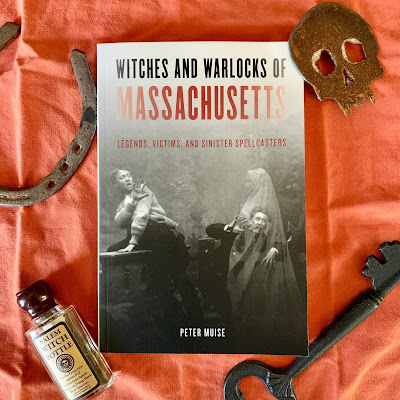
Speaking of books, I will give a shameless promotion for my own new book, Witches and Warlocks of Massachusetts. I've been appearing on a lot of podcasts recently; I was recently on the Weird Tales radio show, which was a lot of fun. 

Witches and Warlocks of Massachusetts is available wherever you buy books online!


August 01, 2020

A Werewolf in Pawtucket, Rhode Island

Many, many years ago when I was a small child I saw Abbot and Costello Meet Frankenstein (1948) on some local TV station. Although this movie is a very broad comedy, I was still really scared by the monsters in it, particularly by the Wolfman. I was probably five years old so maybe this is understandable, or maybe I was just a really cowardly kid. Regardless, the Wolfman was portrayed by Lon Chaney Jr., and his transformation from a mild-mannered human to a hirsute and ferocious monster terrified me. 

Lon Chaney Jr. in Abbot and Costello Meet Frankenstein

He was also the most sympathetic of the movie's monsters, though, so I was also fascinated. Once I got over my fear of werewolves I learned to love stories about them. Sabine Baring Gould's The Book of Werewolves (1865) is a good source for European legends, as is Montague Summers's The Werewolf in Legend and Lore (1933). Both of those are easily available, but sadly, there isn't too much written about New England werewolves. Maybe that's because we don't have a lot of werewolves here, which could be a good thing depending on how you feel about ravening monsters.

The word werewolf comes from an Old English term, werwulf, or man-wolf, and refers to a human who can transform into a wolf. The reasons for this ability vary in old legends and include things like curses, deals with the Devil, or witchcraft. The idea that someone can become a werewolf after being bitten or scratched by one is a more recent pop culture innovation. Lycanthropy (the fancy term for werewolfism) was originally considered a moral condition, not an infectious disease. 

There are lots of New England legends about people transforming into animals, but they're usually about witches, and witches don't like to change into wolves. Witches prefer to transform into more discrete animals like birds, cats, and even horses. It's easier to cause mischief that way. No one suspects an innocent-looking bird but people are pretty suspicious when a wolf shows up. Still, during the Salem witch trials Tituba confessed to seeing cats, birds and wolves in the company of witches, implying that these were either demons or witches in animal form. 

That's not the only local connection between witches and wolves. There is also an obscure legend that one of Cape Ann's Dogtown witches, Daffy Archer, may have been a werewolf or had one at her command. You can read more about the Dogtown werewolf here

Some of New England's other werewolf legends come from French-Canadian immigrants, who brought stories of the loup-garou with them from Quebec. A loup-garou is someone, usually male, who has signed a deal with the Devil and can transform into a wolf. They are scary and dangerous, but happily can be repelled by prayer and religious symbols, as this tale from Vermont shows


Those stories are over a hundred years old, but I just read another werewolf account, and it's relatively recent. It appears in Albert Rosales book Humanoid Encounters: 2000 - 2009. According to Rosales, on December 16, 2008, four students in Pawtucket, Rhode Island decided to take a walk in the woods after finishing their exams. They followed an old waterway deeper and deeper into the woods. As they walked it became increasingly quiet. 

Noticeably quiet. No birds. No squirrels. No breeze.

Scarily quiet.

The students suddenly became aware that they were not alone. Someone - or rather something - was in the woods with them. The creature was about six feet tall. It stood upright like a man, but had the head of a wolf. The students stood still in terror, petrified that the creature would approach them. 

The wolf creature looked around, sensing it was not alone, but did not see the students. Finally it ran off further into the trees and was lost to sight. After waiting to make sure it was really gone the students left the woods. One of the witnesses was convinced the creature was a werewolf. 

What did the others think it was if not a werewolf? Rosales's book doesn't say. It also doesn't include some details that would be useful, like how old the students were or their names. Still, I'm happy to find another local werewolf story to add to my collection. This reads like a classic paranormal encounter: the journey out of consensus reality into the woods, the eerie expectant stillness, the advent of a strange entity, and the return back to the normal world. 

The moral aspects of older werewolf stories are missing here. There's no witchcraft or deal with the Devil. Instead, we just have some young folks who have an encounter with a monstrous being in the woods. The lesson is not a moral one, but rather an ontological one: there are still monsters lurking out in the trees. 

January 14, 2019

Super Blood Wolf Moon: Science, Folklore, And A French-Canadian Werewolf

This month New England will experience the super blood wolf moon. 

Say it out loud: "Super blood wolf moon."

Howl it to the cold night sky: "Super Blood Wolf Moon!"

It sounds like the name of a metal band from the early 2000s, doesn't it? "Hey bro, I hear that Lustmord is opening for Super Blood Wolf Moon at the TD Garden. I need to get my tickets." It also sounds like dialogue from a horror movie. "If you kids know what's good for you, you won't go to the witch's grave during the super blood wolf moon!" Too bad no one ever listens to old geezers in horror movies...


Well, the super blood wolf moon is a real thing. It starts on January 20 at 9:35 p.m. Eastern Time and ends on January 21 at 2:50 a.m., and it shows you how amazing life is when science and folklore come together. It's as  amazing as heavy metal and horror movies combined but quieter and with a lot less gore. 

The super blood wolf moon is the official name for the full moon in January. I'll break the name down piece by piece:

1. SUPER: A full moon is called a super moon when the Moon is at its closest point to to the Earth. It appears larger than normal in the sky. There are often 3 or 4 super moons in any given calendar year. The most recent one was on December 22.

2. BLOOD: A super moon sounds kind of fun, but a blood moon sounds ominous. Don't worry though. It's not as bad as it sounds! Although the Moon will turn blood red on January 20 - 21, it is not an omen of doom. It is actually just a lunar eclipse caused by the Moon passing through the shadow cast by the Earth. "Blood moon" is a piece of folk terminology; astronomers just use the term "lunar eclipse." 


3. WOLF: The Moon has a different folk name each month. For example, November is the Beaver Moon, December is the Cold Moon, and January is the Wolf Moon. Here is the complete list of names used by The Old Farmers Almanac:

Wolf Moon (January)
Snow Moon (February)
Worm Moon (March)
Pink Moon (April)
Flower Moon (May)
Strawberry Moon  (June)
Buck Moon (July)
Sturgeon Moon (August)
Corn Moon (September)
Hunter Moon (October)
Beaver Moon (November)
Cold Moon (December)

These names are supposedly derived from those originally used by the Algonquin tribes of the Northeastern United States. Different naming systems are used around the world, but this seems to be the most common one in the U.S. and has roots here in New England. Each name refers to what happens in the natural world during that month. Worms become active in March, flowers bloom in May, and in January the hungry wolf howls. Game is scarce at this time of year, and the Algonquins could hear wolves howling outside their encampments in the icy woods. 

So there you have it - Super Blood Wolf Moon! Hopefully it seems less ominous to you now, although I find the idea of hungry wolves more than a little spooky. Which brings me to my special bonus story this week - a tale about a loup-garou, the French-Canadian werewolf. 

There aren't many werewolf stories from New England. It was said the local Algonquin shamans could send out their souls in the shape of animals, but they didn't specialize in wolf forms. The same was true of the witches in local Puritan folklore. They could assume the shape of birds, dogs, cats and even horses to torment their victims but they didn't usually turn into wolves. 

Still from The Howling (1981)
However in the late 19th century many French-Canadians moved to New England to work in the region's textile mills. They brought their folklore with them, including the following story of a loup-garou, or werewolf. It comes from Rowland Robinson's 1894 book Danvis Folks, which while fiction incorporates folklore that he heard in Vermont. Happy Super Wolf Moon!

*****

Many years ago on a dark snowy night a man left his warm house and hitched the horse to his sleigh. His wife was ill, and maybe close to death, so he was going to get the local Catholic priest.

As he rode down the forest road, all he heard was the hiss of the sleigh's runners and the thudding of the horse's hooves. The snow was good for sleighing and soon he was near the church.

Suddenly, the horse slowed down and the sleigh barely moved forward. The man whipped the horse, but to no avail. It was as if the sleigh was suddenly burdened with a two ton load.

Looking back, the man saw a large black wolf standing on its hind legs. It had its front paws on the rear of the sleigh and was preventing it from from moving forward. The wolf's yellow eyes burned bright in the darkness.

Fear gripped the man's heart. No ordinary wolf was strong enough to stop a sleigh. This was something far worse! It was a loup-garou, a man who had sold himself to the Devil in return for the power to transform into a wolf. Sometimes the loup-garous just ate corpses, but sometimes they liked their meat to be fresher. 

The creature jumped fully onto the sleigh, and the sleigh shot forward as the horse pulled harder than ever. The loup-garou walked to the front of the sleigh and put its front paws on the driver's shoulders. The monster was so heavy the man thought he would be crushed.

In a panic he searched his pockets for his knife. If he could cut the loup-garou its devilish magic would be dispelled and it would turn back into a human. But in the dark night, distracted by the monster's hot breath on his face, he couldn't find his blade. Death seemed imminent.

At this point the sleigh reached the church. Hearing the commotion the priest opened the front door. When he saw what was happening, he said a brief prayer. Instantly the monstrous wolf turned back into a man, who fled into the forest with a whimper.

Luckily the priest had a good supply of whiskey to calm the man's nerves. The priest returned to the man's house and prayed over his wife, who recovered soon afterwards. 

January 02, 2011

The Loup-Garou!

English Puritans and their descendants were the main cultural force in New England for centuries, but there have always been other ethnic groups here with their own folklore. Here's a great wintry story about the loup-garou, the French Canadian werewolf. It's from from Rowland Robinson's 1894 book Danvis Folks, which included folk stories the author heard in Vermont.

************


Loup-garou image courtesy of Wikipedia.

Many years ago on a dark snowy night a man left his warm house and hitched the horse to his sleigh. His wife was ill, and maybe close to death, so he was going to get the local Catholic priest.

As he rode down the forest road, all he heard was the hiss of the sleigh's runners and the thudding of the horse's hooves. The snow was good for sleighing and soon he was near the church.

Suddenly, the horse slowed down and the sleigh barely moved forward. The man whipped the horse, but to no avail. It was as if the sleigh was suddenly burdened with a two ton load.

Looking back, the man saw a large black wolf with its front paws on the rear of the sleigh. Its hind legs stood in the snow, and was stopping the sleigh from moving forward. The wolf's yellow eyes burned bright in the darkness.

Fear gripped the man's heart. No ordinary wolf was strong enough to stop a sleigh. This was something far worse! It was a loup-garou, a man who had sold himself to the Devil who could turn into a wolf. Sometimes the loup-garous just ate corpses, but sometimes they liked their dinner to be fresher.

The creature jumped fully onto the sleigh, and the sleigh shot forward as the horse pulled harder than ever. The loup-garou stalked to the front of the sleigh and put its front paws on the driver's shoulders. The weight was so heavy the man thought he would be crushed.

In a panic he searched his pockets for his knife. If he could cut the loup-garou its devilish magic would be dispelled and it would turn back into a human. But in the dark night, distracted by the monster's hot breath on his face, he couldn't find it.

By this point the sleigh reached the churchyard and the priest opened the front door. Seeing what was happening, he said a brief prayer. Instantly the monstrous wolf turned back into a man, who fled into the forest.

Luckily the priest had a good supply of whiskey to calm the man's nerves. Even luckier, his wife recovered from her illness and didn't die.

**********

Rowland Robinson apparently wrote fourteen fictional books which incorporated real folkore from New England. Unfortunately, he wrote most of his dialogue in dialect so it's hard for a modern reader to understand. For example, here's a direct quote from the loup-garou story, which is told by a Vermonter of French-Canadian descent. Robinson is trying to capture the storyteller's Quebecois accent:

"De hoss was scare an' run lak hol' hurricanes, 'cause de loup garou gat hees behin' foots off de graound an' can' pull back som more."

My guess at a translation: "The horse was scared and ran like old (?) hurricanes because the loup garou got his behind feet off the ground and can't pull back some more."

If you don't mind a lot of crazy dialect writing, you can find the entire text of Danvis Folks on Google Books for free.