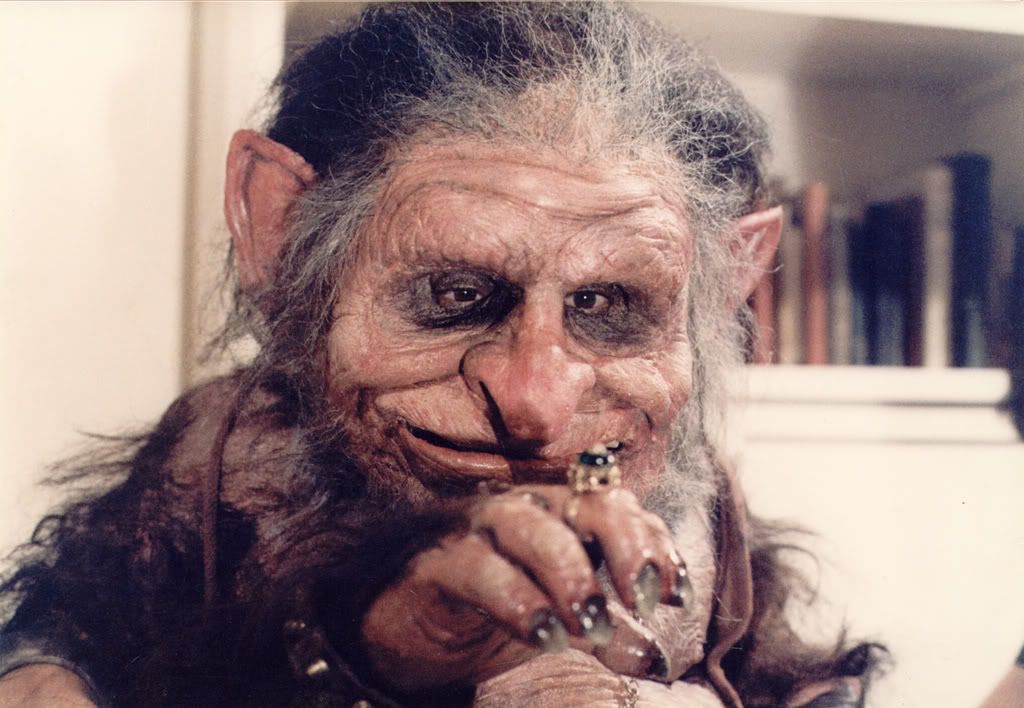
Showing posts with label fairy. Show all posts

April 22, 2023

A Pukwudgie Sighting in Massachusetts

Sometimes people write to me about strange experiences they've had. Just a few weeks ago, a woman I'll call Mary sent me an email about a weird encounter she had while walking a dog. 

Mary lives in Norwell, and was taking care of a friend's large Labrador retriever while the friend was traveling. The dog would wake Mary up every morning between 4 and 5 am to take it for a walk. Mary would usually bring the dog to a small nearby watershed - a patch of woods and swamp - for its morning perambulation. 

Mary and the dog went on these early morning walks for a few weeks without anything strange happening, but that changed on March 1. It was pitch black, and as they walked on a road near the watershed the dog stopped in its tracks and let out a low growl. Had it seen a raccoon, or maybe a coyote? Feeling nervous about being alone in the dark with a wild animal nearby, Mary looked around to see what startled the dog. It was not a raccoon, or a coyote. It was something much stranger. 


Crouched near the woods was a small humanoid creature. It was covered in what looked like matted, black fur. Mary thought the creature stared at her with glowing green eyes, but isn't sure if she just imagined this detail. Whatever the creature was, it was something she had never seen before. She and the dog ran home. 

A few days later the dog went home to its owner, and Mary thought that was the end of her strange experience. But on the night of March 13, Mary heard some unusual sounds coming from outside her house. It sounded as though something were quietly but insistently tapping on the side of her house, or possibly on the window. At first Mary thought maybe her daughter had locked herself out of the house, but that was not the case - she was safely inside. Nervously, Mary's thoughts then turned to the small humanoid she had seen near the woods. Was it outside her house, tapping on the walls and windows?

The next day she talked with some people at work about what had been happening, and one of them suggested she had encountered a pukwudgie. Pukwudgie is a one name for the small, hairy, magical humanoids that are said to live in the woods in New England. Basically, they are a type of fairy. Not a pretty, tutu-wearing fairy like Tinkerbell, but a scragglier, rough-around-the-edges fairy. They're the type of fairy you'd expect to see in the woods around here, which are rough, rocky, and filled with poison ivy. 

Pukwudgie is something of a modern term, at least in New England. The Native Americans in New England had other names for these beings, like makiawisug, mekumwasuck, or mikumweswack. Pukwudgie was originally a word used by the Ojibwa Indians of the Midwest to describe the small magical beings they encountered, but it has since became a popular word in New England, and particularly in Massachusetts. (You can read more about the history of the term pukwudgie here.)


Pukwudgies are believed to be mischievous at best, and malevolent at worst. Traditionally, the local Native Americans believed that the little people would help humans if treated with respect. That is not the case with pukwudgies, who supposedly like to shoot people with darts, lure them off cliffs, and in general lurk around and frighten anyone who encounters them. If I can speculate, perhaps this change in behavior is because most New Englanders don't know how to treat them with the respect they deserve? 

Mary's encounter is similar to several other well-known pukwudgie encounters. For example, in 1990 a Raynham, Massachusetts man named Bill Russo was walking his dog late at night near some woods when he saw a small hairy humanoid creature, which tried to lure him into the woods. He declined the offer. And Christopher Balzano describes a very similar situation in his 2007 book Dark Woods: Cults, Crime and the Paranormal in the Freetown State Forest. A woman named Joan was walking her dog in the Freetown State Forest when she noticed someone watching her. It was a small, grey-skinned humanoid with hairy arms and a hairy head, and it stared at her with deep green eyes. After encountering the pukwudgie in the woods, Joan noticed the pukwudgie lurking around her house several times. Apparently it had followed her home. Creepy!

After I got the email from Mary, I asked Balzano if he had any advice for people who encounter pukwudgies, particularly if the pukwudgie seems to be lurking around their house. He said the best thing to do is just ignore them. Eventually, they'll go away and the strange phenomena will stop. That sounds like good advice to me. I think that the more attention you give to weird phenomena, the more of it you'll notice. You can just get sucked down the rabbit hole!

In a subsequent email, Mary told he that she had some lucky things happen to her on the day she encountered the creature in the woods. So maybe seeing it had been a fortuitous event, even if it was spooky? In the end, the situation was oddly ambiguous, much like the pukwudgies themselves. 

November 12, 2022

Mother Carr, the Witch of Weare: Turn Your Clothes Inside Out

A few weekends ago I went to the library and randomly looked through the histories of some New Hampshire towns, hoping to find interesting stories about witchcraft and ghosts. Many 19th century town histories include those local legends, and I was happy to find several stories I had not read before. 

Some of those stories were about Mother Carr. She lived in Weare, New Hampshire in the early 1800s, and many people suspected her of being a witch. There are several accounts of her allegedly bewitching her neighbors, including this one.

Antique postcard of Weare, NH from Wikipedia

One summer day some of Mother Carr's neighbors went berry-picking in the woods. It was a very successful trip. They returned carrying buckets that overflowed with ripe juicy berries. When Mother Carr saw all the delicious berries she asked if she could have some, but her neighbors refused. She stomped off angrily, telling them they would regret their stinginess. (Cue the ominous music...)

A few weeks later, the same group of neighbors went into the woods to pick berries again. And once again, they filled their buckets with plump, juicy berries. But as they began to make their way back to Weare they became lost. They wandered around for hours, unable to find the path that led home. No matter how hard they tried they couldn't find their way out of the woods, even though they had been there many times before. 

Suddenly, one of the berry-pickers remembered Mother Carr's angry words, and realized she had cursed them. They would never find their way home as long as they were under her spell! Someone suggested that if they turned their clothes inside out the spell would be broken. It sounded foolish, but everyone was afraid of being stuck in the woods overnight, so they turned their coats, shirts, pants and skirts inside out. To their amazement, it worked. Although they were tired and bedraggled, they were able to find their way out of the woods.

Antique postcard of Weare, NH from Wikipedia

That is the end of the story. It might sound alien to a modern reader, but turning your clothes inside out is a very old form of folk magic. However, it was most often used to prevent fairies from leading you astray, not witches. As the 17th century English poet Richard Corbet wrote in his poem "Iter Boreale":

As in a conjurers circle, William found

A menes for our deliverance: Turne your cloakes,

Quoth hee, for Puck is busy in these oakes:

If ever yee at Bosworth will be found,

Then turne your cloakes, for this is Fayry-ground.

Special thanks to Beachcombing's Bizarre History Blog for posting this piece of poetry! I am not 100% sure of the metaphysics behind this folklore, but I think turning your clothes inside out is supposed to confuse the fairies, which makes them stop hexing you. 

But why would people in New Hampshire do this when they were lost in the woods? When the English Puritans came to New England they didn't bring much fairy folklore with them, but they did bring a lot of witch lore. Instead of blaming misfortunes on fairies they blamed them on unpopular neighbors (like Mother Carr) they thought were witches. Practices that were once used to protect against fairies were used to protect against witchcraft. 

I found this story in William Little's 1888 book The History of Weare, New Hampshire, 1735 - 1888. These old history books are amazing. You never know what you'll find!

March 19, 2021

Tiny Cavemen, A UFO Abductee, and Fairy Folklore in Massachusetts

Did tiny cavemen live on an island in the Connecticut River in the 1970s? Let's face it, that's a bizarre question to ask. Obviously, the answer is no. And yet that claim was made by Betty Hill in 1998.

Her name may be familiar. Betty and her husband Barney claimed they were abducted by a UFO in New Hampshire on September 19, 1961, and their experiences were made into a book (The Interrupted Journey) and a movie (The UFO Incident). The Hills' story was one of the first UFO abduction narratives in America and helped popularize the concept of alien abduction.

The Hills were active in the civil rights movement of the 1960s, but are now best remembered for their UFO encounter. Barney Hill died in 1969 at the young age of 46, but Betty lived until 2005, when she died at age 85. She continued to see UFOs throughout her life, and became a beloved figure in the UFO/paranormal community. Many people came to Betty with their own stories of unexplained phenomena.

Image from Pinterest

In 1998, she contributed several of these stories, all focused on Bigfoot and set in New England, to a book titled The Psychic Sasquatch and Their UFO Connection by Jack Kewaunee Lapersitis. (The Psychic Sasquatch is one of those weird and amazing books that everyone should read.) Betty Hill claimed the following happened near Springfield, Massachusetts:

My informant said that at one spot in the middle of the Connecticut River there was a good-sized island that was uninhabited. Then one day it was inhabited by small, prehistoric-appearing people. They don't know how many of them there were, maybe 50. They lived on the island for three years. No one ever succeeded in getting near them. The police had gone out to the island on boats and had gone onto the island. These small, primitive people could outrun anyone. They would take off running and then could not be found... It is not known how they lived or what they did for food. No fires were ever seen on the island, but they lived there year-round for approximately three years. Then, just as suddenly as they appeared, they disappeared.

... Planes and helicopters had flown over the area, hoping to get pictures, but these little people - they're not really tiny people, but maybe four feet tall or so - would take off running at such speeds that no one could even get pictures of them. These prehistoric looking people would be there one instant, then would start running and in the next instant they would just disappear. 

Hill claimed she was given this information by a local police chief, who also told her the little people were naked and covered with "sparse hair."

There is a lot to unpack here. First of all, the only source for this story is Betty Hill and The Psychic Sasquatch. I don't doubt the sincerity of Betty Hill or Jack Lapersitis, but if small cavemen had really been living on an island in Massachusetts for three years I think more people would know about it. Hill claims anthropologists went to the island, and that local residents would stand on the riverbank trying to see the speedy little cavemen. I think someone would have alerted the press if this had happened.

On the other hand, these speedy miniature cave folk reminded me of New England's most famous magical little people, the pukwudgies. When I say "magical little people," I mean fairies. Like these cavemen, the pukwudgies are generally described as being small and hairy. The word pukwudgie originally comes from the Ojibwa, a Native American group in the midwest, and made its way into New England folklore via local 19th century poets like Henry Longfellow, town historians, and Wampanoag storytellers on Cape Cod. Puwudgie is generally said to simply mean "little people," but poet and folklorist John Greenleaf Whittier thought it meant "little vanisher," which certainly is descriptive of the cavemen Betty Hill discusses. 

Vintage brownie illustration found here

People who encounter fairies across Europe and North America often say they wear archaic or old-fashioned clothing. It is rare to meet a fairy wearing yoga pants and a hoodie. This may be because fairies represent the past, whether that's an older way of life, a culture that has vanished, or because they are actually spirits of the dead who remain nearby. The tiny naked cavefolk could easily fit into all these categories. 

Some fairies also appear naked. For example, in Scotland the fairies called brownies generally appear as small, naked, hairy beings. Brownies were said to perform chores for the humans whose homes they inhabited, but would disappear if given a gift of clothing. 

I'm not necessarily saying the tiny cavefolk on the Connecticut river were fairies or brownies, but just that the story about them has themes similar to fairy and pukwudgie stories. If there are fairies in New England, and many people believe there are, I can certainly see why they'd appear as small hairy humanoids. It just feels like the right fit for our stony, woodsy biome and occasionally inclement climate. Flowing gowns and diaphanous wings would not fare well here.  

If anyone has more information on this story please let me know in the comments or by email. I would love to know more about this topic.  

December 13, 2018

A Christmas Elf (or Alien?) Sighting in the New Hampshire Woods

Well, it's the Christmas season, which is one of the few times in the year when we are allowed to believe in all sorts of strange things. Flying reindeer? Check. Large man with a sack who sneaks into your house at night but doesn't steal things? Check.

Christmas elves? Check. Lots of people (mostly children) believe that Santa Claus is helped in his yearly labors by a gaggle of elves who live at the North Pole. This is mostly taken on faith, since I don't think there have been many Christmas elf sightings reported around the world. However, one may have been seen in the wintry woods of Derry, New Hampshire on December 15, 1956.

That was the day that Alfred Horne was out alone in the forest, chopping down Christmas trees for the impending Yuletide holiday. As you all know, weird things can happen when you're out in the woods by yourself in any season, but late fall and early winter are prime times for weirdness. The days are short, the sun is low in the sky, and those entities that like the darkness are more likely to make an appearance.

After a while Horne he realized that he was not alone. There was someone (or perhaps something?) standing nearby watching him as he worked. The entity was about two feet high. It had a large head with big floppy ears. In place of a nose it just had two nostril slits, and its eyes were covered with nictitating membranes like a snake's. To make things even stranger, the entity was bright green, stark naked, and had stumpy arms and toeless feet.

Photo from Tumblr (and ultimately Henrik Vind).
Horne watched the entity for twenty minutes. In turn, the entity watched Horne. Finally, Horne decided to capture it. He realized that no one would believe him unless he had the little green humanoid as proof. But as he tried to grab the entity it emitted loud, blood-curdling shrieks. Horne fled from the woods in panic, leaving the little green man behind.

What exactly was this entity? Because it was seen ten days before Christmas, and Horne was out chopping down Christmas trees, I like to think it was a renegade Christmas elf. Perhaps it had wandered down from the North Pole and got lost in the New Hampshire woods, as so many hikers still do.

Alfred Horne seemed to think the creature was an extraterrestrial of some kind. After fleeing the woods that December day Horne didn't tell anyone about the creature until six years later, when he wrote several letters to the astronomer and UFO investigator Walter Webb. The story has appeared in several publications and books since then, including Joseph Citro's Passing Strange, which is where I first read it. 

I still think the little green man could have been an elf, though. For one thing, the line between extraterrestrials and fairy-folk is blurry (at least in my opinion). They both tend to be small, they both often have disproportionately large heads, and they both like to abduct people. But more importantly, Derry, New Hampshire has a tradition of fairy folklore. The town was settled by Scotch-Irish immigrants and they seem to have brought their fairy lore to America with them. Written legends about a "Derry Fairy" date back to the early 20th century. Descriptions of the fairy are vague - in some stories she is a beautiful lake-dwelling fairy queen named Tsienneto, but in other stories a wizened, wrinkled wood nymph appears. So perhaps Horne's little green man was actually a little green woman?

I don't think the strange little entity has been seen again since that day in 1956, but maybe if you stay awake on Christmas Eve this year you might find out Santa's little helpers have eyes like snakes and green skin. Make sure to leave out extra milk and cookies just in case. 

September 09, 2018

Malicious Pixies on the North Shore: A Story from Marblehead

What comes to mind when you hear the word 'pixie?' I tend to think of cute things that are boyishly feminine like pixie haircuts or manic pixie dream girls like Zoey Deschanel. I remember from my distant teenage Dungeons and Dragons days that pixies were little flying fairies similar to Tinkerbell. Our culture tends to portray pixies as twee and sparkly. 


I like twee and sparkly, but those may not be the correct words to describe pixies. Like most fairies, older legends often describe them as ambiguous beings whose relationship with humans can be problematic. They like to have fun at the expense of humans. Here, for example, is some fairy folklore from 19th century Marblehead, Massachusetts:

The pixies, on the contrary, were malicious. They, too, were tiny, but of a brown color; they delighted to bewilder people; a person who was "pixilated," as they called it, would wander about for hours. The only remedy for such afflicted persons was to turn their garments. The belief in this was very strong. I knew a woman fairly well educated, as the education of women went sixty years ago, who told me in perfect good faith that she herself had been "pixilated" and had wandered an hour or more unable to find her home, until at last, recognizing that she was in the power of the little brown people, she turned her cloak, when the glamor vanished; in a moment she saw where she was, and was soon in her own house. (Sarah Bridge Farmer, "Folk-Lore of Marblehead, Mass.", The Journal of American Folklore, Vol. 7, No. 26 (July - Sep., 1894), pp. 252 - 253.)

This account probably comes from the 1830s, but in the 19th century fairy folklore was quite rare in New England among those of European descent. Most of the region had been originally colonized by Puritans from England's East Anglia region, which while rich in witch-lore was poor in stories about fairies. The coastal town of Marblehead, on the other hand, was founded by fishermen from many parts of England, including some with rich fairy folklore. In England, stories about pixies are most common in in Devon and Cornwall. 

Turning your garments (i.e. wearing them inside out) is a well-knonw defense against fairy enchantment in English folklore, and is summarized in the rhyme "Turn your cloak/For fairy folk." It was apparently well-known in Marblehead, if this note from Caroline King Howard is any indication:

Judge Story used to tell with great delight, that when he was a boy living in Marblehead, his mother always warned him, when he went to the pasture, to drive home the cows, to turn his jacket inside out for fear of the pixies. (Caroline King Howard, When We Lived in Salem, 1822 - 1866)

It's my understanding, and I could be wrong, that fairies become confused when you wear your clothes inside out. In their confusion they break the spell and set you free. Causing some confusion of any kind will often break a fairy spell. For example, a famous folktale tells how a woman's child has been replaced by a fairy changeling. When the woman brews egg shells in a pot (which is unusual) the changeling becomes amazed and disappears. Her child reappears in its place. Yay! A happy 
ending!


The Native Americans in this region told (and still tell) stories about small magical beings similar to European fairies. Like their European counterparts, these small beings love to mislead travelers and sometimes even kidnap them. Belief in these beings was widespread across the New England tribes and almost certainly predates European colonization. While it is possible that current Native American stories about them show European influences, it is also possible that Europeans and Native Americans encountered similar beings but on different continents. Perhaps there is some truth behind those old folk tales. If you get lost in the woods get ready to turn your coat inside out...

July 19, 2018

Encountering Fairies at Mount Monadnock

One of the many nice things about this blog is that people tell me stories about the strange things they've encountered. I've heard quite a few ghost stories, but it is very rare that people tell me stories about fairies.

Very rare, but it does happen. The other day some friends came over for brunch, and I showed my friend James a copy of Magical Folk, a book about fairy folklore to which I had contributed a chapter.  In response, James told me the following story.

*****

A few years ago James, his spouse Kevin, and one of their friends went camping near New Hampshire's Mount Monadnock. The campground at Monadnock State Park has around thirty standard campsites close to parking lots, plus five remote campsites that can only be reached by hiking. James and his companions chose to stay at one of the standard campsites.

After they set up their tents they decided to go for a hike along one of the trails that led to the more remote sites. The trail led them up away from the other campers and deeper into the park. After hiking for a while they still hadn't seen any of the the remote campsites, but instead found a beautiful clearing in the woods.

James described it as looking like a "fairy dell." There was a waterfall, and a small wooden bridge going over a stream, and lots of lush flowers. It was an idyllic space, but as they absorbed its beauty James became uneasy. Although they were ostensibly alone in the clearing he felt like there was someone there with them. James sensed that they were being watched. His companions began to fell uneasy too and they soon left, making their way back to their campsite.

A beautiful photo of Mt. Monadnock from Wikipedia. 

When James fell asleep that night he had a strangely vivid dream. He dreamed about his mother. She had cooked something really delicious and kept urging James to eat. In the waking world James had a very good relationship with his mother, but something didn't seem quite right in the dream. Although it looked like his mother, James had the uncomfortable feeling that the figure in his dream was not really his mother but was instead someone pretending to be her. She kept offering him food, but he kept refusing it. Finally he woke up.

Over breakfast he told Kevin and their friend about his strange dream. To his surprise, they both said they had very similar dreams that night. They had both dreamed that trusted, loving people from their lives had offered them food, but they both had felt that somehow things were not quite right. Neither of them had accepted the food.

*****

When James finished his story he said to me, "You know, in a lot of traditional stories the fairies try to get humans to eat fairy food. If a human eats it they're trapped in the fairy world forever. I feel like we encountered something in that clearing, and it wanted us to stay there. I'm glad none of us ate the food in our dreams."

I'll try to put James's story into a regional context. When the Puritans first came to New England they said that there weren't any fairies here. The Puritans had mostly come from East Anglia, a part of England that had a lot of witch lore but not much in the way of fairy lore. Unsurprisingly, New England has a lot of folklore about witches. And had a lot of witch trials.

However, the Indian tribes that lived in New England did have a lot of folklore about small magical beings that lived in the woods, mountains and rivers. This folklore became part of the mainstream culture in the 19th century when it was shared with anthropologists and folklorists. European immigrants from places like Ireland and Scotland also moved into New England around the same time, bringing their fairy folklore with them. People began to see fairies in New England. And in the 20th and 21st century, local fairies called pukwudgies gained prominence in the national media.

New England is no longer a place without fairies. Different cultures describe fairies in different ways, but they seem to agree on a few things: fairies live in the woods, fairies are tricky, and fairies try to entice people to join them. Did my friend actually have a fairy encounter in Monadnock Park? I can't say for sure, but his story is definitely part of a long tradition of people encountering strange things in the New England woods.

October 25, 2017

New England Pumpkin Lore: Cozy and A Little Creepy


October is definitely pumpkin season. The stores are full of pumpkin-flavored treats, jack-o-lanterns are appearing on my neighbors' porches, and someone recently motored across Boston Harbor in a giant pumpkin. Pumpkins are everywhere this month. There is some interesting New England lore about pumpkins, some of it homey and comforting, some of it kind of spooky. I guess that describes October too.

Pumpkins are of course native to the Americas. Historians say they were first cultivated in Central America and eventually adopted by the various American Indian groups that lived in New England. Samuel de Champlain, an early visitor to New England's shores, saw Algonquin Indians growing beans, maize and pumpkins along the banks of Maine's Saco River in the early 17th century. Pumpkin and squash were often included in dishes like succotash and were also dried for eating over the cold winter months.


When the Puritans colonized New England they adopted many local crops into their diet, including pumpkins. And because many of their English crops didn't grown well here, the early Puritans apparently ate a lot of pumpkin. A lot. It was seen as less desirable than traditional English foods, but Edward Johnson (1598 - 1672), the founder of Woburn, Massachusetts, wrote the following:

.. let no man make a jest at Pumpkins, for with this fruit the Lord was pleased to feed his people to their good content, till Corne and Cattel were increased.

Take that, pumpkin haters!

The colonists atet pumpkin in variety of ways. Boiled and mashed pumpkin was a popular dish. Mashed pumpkin was also added to breads, while dried pumpkin was used to sweeten alcoholic drinks. In addition to mashing, another popular preparation was to hollow out a pumpkin and fill it with cream. The pumpkin would then be baked until the flesh became soft and the center custardy. It sounds delicious, and I did once try to make something like this. It didn't work too well, but I think I was using the wrong type of pumpkin.

Modern New Englanders are more familiar with pumpkin custard as the filling in pumpkin pie, not actually baked in a pumpkin. Surprisingly, the earliest pumpkin pie recipe from New England (written down in the 1760s by a wealthy Boston Tory family) calls for slices of fried pumpkin layered with apples and dried fruit in a pastry shell. It sounds good, but that's not what we would call pumpkin pie today. After the  Revolution the pumpkin custard pie that Americans still know and love become dominant.


So, there's the homey, cozy lore about pumpkins. They're also obviously associated with Halloween, which here in America is part harvest festival and part celebration of death and the macabre. Corn stalks, hay bales, apple cider, and cute little pumpkins are all part of the holiday's harvest aspect. Ghosts, witches, horror movies and scary carved pumpkins are part of Halloween's macabre side. Pumpkins can be cute or scary depending on how they are used.

Halloween was not really celebrated in New England until the late 1800s. It was one of those holidays, like Christmas, that the Puritans and their Yankee descendants avoided. But even though there was no Halloween, New Englanders still carved pumpkins in the fall months and lit them with candles. For example, local poet John Greenleaf Whittier (1807 - 1892) includes the following line in his 1850 poem "The Pumpkin":

Oh, fruit loved of boyhood! the old days recalling,
When wood-grapes were purpling and brown nuts were falling!
When wild, ugly faces we carved in its skin,
Glaring out through the dark with a candle within!

Halloween wouldn't have been celebrated when Whittier was a boy, and in fact that poem celebrates Thanksgiving.

Nathaniel Hawthorne seems to be the first writer to use the term "jack-o-lantern" to describe a carved candle-lit pumpkin. He used it in his 1835 story "The Great Carbuncle." A carbuncle is a type of gemstone, and the titular one shines with a blinding light.

Hide it under thy cloak, say'st thou? Why, it will gleam through the holes, and make thee look like a jack-o'lantern!

Again, that was written well before Halloween would have been celebrated in New England. Hawthorne seemed to like jack-o-lanterns. In his 1852 story "Feathertop," a witch brings to life a scarecrow with a carved pumpkin for its head, but again there is no reference to Halloween in the story, which takes place in May.

I'm not quite sure how the jack-o-lantern became exclusively associated with Halloween, but somehow, as immigration changed New England and holidays like Halloween and Christmas became accepted, it took it's place as the reigning symbol of Halloween.

Before it was used to describe carved a pumpkin, the term jack-o-lantern denoted either a lantern-carrying nightwatchman or a will-o-the-wisp, one of those wandering orbs of light, perhaps of supernatural origin, that appear in forests and swamps to lead travelers astray. Will-o-the-wisps were often thought to be lights carried by malevolent fairies seeking to trick unwary humans. One of the rare pieces of English fairy lore from early New England mentions jack-o-lanterns in this sense of the word:

... Marblehead (Massachusetts) was a sort of compendium of all varieties of legend. For instance, the belief in the Pixies of Devonshire, the Bogles of Scotland, the Northern Jack o' Lantern was prevalent there; _ and my father has told me that he was often cautioned by the fishermen, just at twilight, to run home or the Bogles would be sure to seize him (William Wetmore Story, The Life and Letters of Joseph Story, 1851)

When you're out and about this Halloween, be careful as you walk towards that glowing pumpkin. Maybe it's been carved by friendly neighbors, but maybe it's a trick to lead you into the dark October night.

*****

Source for the jump rope rhyme: B.A. Botkin's Treasury of New England Folklore. The information about early pumpkin recipes and preparation comes from Keith Stavely and Kathleen Fitzgerald's America's Founding Food


September 20, 2017

A Weed That Cures Witchcraft and Elf-Sickness

Today is cloudy and dark. A hurricane is churning off the coast. Autumn officially starts in a few days. All this puts me in the mood for some witchcraft. So here goes!

Whenever I walk around the Boston area, I see a lot of plants growing wild. They grow in yards, they grow in parks, they grow in empty lots and along the sidewalks. I suppose you might call them weeds, but that term seems a little derogatory, doesn't it? Many of these plants are actually herbs that historically have been associated with healing. We've just forgotten what they were used for.

Some of them I recognize, like mugwort, dandelion, and mullein, but I'm still learning the names of others. For example, I believe this inconspicuous looking plant growing on Memorial Drive is actually dock weed (or dock). I'm glad to know where it is. It might come in handy in case I am bewitched or afflicted by elves.


According to Pamela Jones's book Just Weeds: History, Myths and Uses (1994), the Medieval Anglo-Saxons valued dock weed as a cure for "elf-sickness." Like many other Europeans, the Anglo-Saxons believed that elves shot people with invisible arrows and made them sick. Many Anglo-Saxon sources also link elves with witches since they were both sources of illness and suffering.

For example, one Anglo-Saxon book of cures contains a recipe for an herbal salve to treat sickness caused by "the elfin race and nocturnal goblin visitors and for the women with whom the devil hath carnal commerce." Another such book has a chapter dedicated to cures against "every evil wisewoman and the elfin race," while another, the Lacnunga, lists witches, elves, and Norse gods as possible causes for illness.

The Puritans who colonized New England did not worry about Norse gods, and they didn't really worry much about elves either. But they worried about witches a lot. A lot. The Salem witch trials of 1692 are the most famous New England trials, but there were many others before them, and even a few afterwards. For the Puritan settlers, witches were a real concern and they were always looking for ways to combat their malevolent magic.

For example, in 1685 a woman living in East Hampton, Connecticut* named Elizabeth Howell became strangely ill. She felt sharp piercing pains as if being stuck with pins, and claimed to see a strange black creature lurking at the foot of her bed. She also supposedly vomited up a pin. Before she died, Howell cried out that she was being bewitched by a neighbor, Elizabeth Garlick.

Goody Garlick was arrested and brought to trial for witchcraft. Several people testified against her, including one Goodwife Simons, who claimed that while suffering from fits two neighbors arrived with dock weed to cure her illness. When she learned that the dock weed had been provided by Goody Garlick she threw it onto the fire. She suspected that Goody Garlick was bewitching her and didn't trust the dock weed. Perhaps it would just make her feel worse! But it's clear that her neighbors thought the dock weed would help cure her. I think it's fascinating that a centuries-old belief dating back to the Anglo-Saxons appeared in 17th century Connecticut.

So there you go. Random weeds growing near the sidewalk actually have a connection to witchcraft, and perhaps even elves. New England is a great place to live!

*****

* East Hampton is now part of New York but for a time in the 1600s it was part of Connecticut. 

I got most of my information about Goody Garlick and the dock weed from this Smithsonian article and this article in the East Hampton Star. I also found another Anglo-Saxon leech book that mentions burning herbs as a cure for elf-sickness, but historians don't seem to think that is why Goodwife Simons threw the dock weed into her fire. 

March 21, 2017

Fairies, Lost Children, and Cannibalism in 1830s Maine

Last year I did a lot of research into New England fairy folklore for an upcoming project. I found a some strange and wonderful things, including an article called "The Water-Fairies" by Harley Stamp in the July - September 1915 issue of The Journal of American Folklore.

The article is an allegedly true account of an encounter four Penobscot hunters had with some supernatural creatures in Maine in 1835. I say "allegedly true" only because the narrative doesn't match the current normative culture's standards for reality, but standards (and perhaps reality itself) may have been different two hundred years ago.

The story starts off with the Penosbscot hunters traveling into the wilderness to find game. They canoe up the Kenduskeag (an offshoot of the Penobscot River) and make camp near what is now the town of Kenduskeag. As they eat their evening meal they are besieged by strange noises:

Suddenly, while we were eating, we heard a noise or rumbling, like water rushing down from the mountains which surrounded us. We all stopped eating to listen. The noises continued, and then at intervals of about two minutes we heard what seemed to be millers driving their dogs into the logs and throwing their bars across them, then the filing of saws. We heard the sails of vessels flapping, the blowing of horns and drums... then from the south we came a rolling noise like thunder, and also one like a whistle heard through a tunnel; besides these, many strange sounds (forty-two every two minutes); and it seemed as if each one was louder and more distinct than the others. 

One of the hunters thinks the noises are coming from witches on the mountains, while another thinks they are being produced by devils. They consult the oldest and wisest member of their party, a man named Neptune. He thinks the sounds are coming from a nearby lake, which he has been told is inhabited - but he doesn't say by what. (Suspense!)

The next morning the hunters hike up into the nearby mountains, where they find a large wigwam made of whale bones. No one is inside, but a big pot is boiling on the cooking fire. When they open it they find the arm, foot, and head of a child. Yikes! They also notice large forks and spoons (each about six feet long) resting against the wigwam's walls. They run back to their camp in terror, and that night they again hear the same sounds.

If I can interject here, I will just say that this is a very creepy set-up. Hunters alone in the wilderness, strange nocturnal noises, and a pot full of child body parts. At this point I would turn around and head home, but the hunters don't do this. They need to catch some game to feed their families, so the next morning they canoe further up the river.

The banks of the river are wide and sandy, and they see what at first look like multiple otter tracks in the sand. But on closer inspection they discover the tracks are actually tiny human footprints. Weird, but things get even weirder as they go further up the river. They come upon a miniature village made entirely of clay. It contains houses, stables, horses, and even people, but all child-sized, inanimate and sculpted of river clay. As they look through the village, Neptune tells them that it was made by water-fairies, or warnungmeksooark in Penobscot. He had heard they lived nearby and had always hoped to see them because they can foretell the future. They are known to create sculptures from clay.

The Kenduskeag, from Wikipedia.

They return to their canoe and plan to continue up the river, but when they turn a bend they come across a huge crowd of water fairies running in many directions along the bank. The hunters don't really get a good idea of what they look like though, because the fairies see the hunters and dive into the water.

Again, I would probably turn around and head home at this point, but one of the hunters, Sauk Ketch, decides to capture a warnungmeksooark. His friends bury him in the sand and then hide in the bushes. When the water-fairies finally emerge from the river and he rises up from the sand and grabs two of them. The rest disappear into the river.

The hunters are shocked when they see what a water fairy looks like:

... he had the most beautiful fine long hair; but his face was narrow, with so long a chin that it rested on his breast. His nose was so big and broad that you could see it on each side of his head when his back was toward you. His eyes were very narrow up and down; and his mouth was the shape of a sharp A, the point running up under his nose. He wore no clothing...

The hunters are even more shocked when the water fairies eventually lead them to see the king of their tribe, who is sleeping nearby.

... we saw before us, on the rock, a huge man. His gray hair was long and in ringlets. His neck was as large as a barrel. His feet were large, and he had on a strange sort of dress. On his feet were black shining moccasins with silver clasps. He had close-fitting leggings. His coat was olive-green outside, and bright blue and red inside... As his mouth was open, I saw he had two large teeth only, on his upper jaw, one of which was broken off. 

The water fairies explain that their race is divided into twelve tribes, each ruled over by a king. The kings are able to travel through the air, and can live in water or on land. The kings catch children who fall into lakes or rivers and bring them to someplace safe.

That sounds nice, but what finally happens to the children that they save? Well, once a year the twelve kings gather together, kill the children, and eat them. Apparently the pot the hunters found contained the remains (or the beginnings) of their feast.

At this point I would definitely leave. And you know what? The hunters leave and head back home. That's the end of the story.

There are a lot of interesting things about this article. Water-dwelling fairies are found in the folklore of many northern New England Algonquin tribes, and they are generally benevolent. Even in this story the warnungmeksooark themselves seem pretty nice, but their kings are another matter entirely. Algonquin folklore also often describes malevolent beings who lure children to their doom, and the water-fairy kings seem to be a variant of this.

The sleeping king, particularly with his shiny buckled shoes, curly hair, and his brightly colored coat, seems to resemble someone of European descent. Maybe it could be a little bit of political commentary?

I really like the narrative arc of this story. The hunters slowly learn more as they travel further into the wilderness, and the strange noises and gruesome wigwam set a creepy mood. Neptune has always wanted to meet the water-fairies because they can tell the future. They do tell him they can do this, but he never gets to ask them any questions. My expectations for the story were foiled!

People do still see fairies in New England, but not quite like the warnungmeksooark. However, the frantic running of the water fairies does remind me of the these tiny high-speed cavemen seen on the Connecticut River. Perhaps they are the same entities? If so, let's just hope their kings aren't anywhere nearby.

January 22, 2017

A Spectral Flying Dwarf In Connecticut

My friend Simon Young at the Fairy Investigation Society sent me the following story via an old newspaper clipping. Unfortunately the year of publication is missing, but it seems to be from a paper called The Globe-Democrat and is probably from the late 19th or early 20th century.

The date is January 11 (of whatever year), and the byline is New Haven, Connecticut. The headline reads:

AN ACCOMMODATING GHOST
A Massachusetts Dwarf Who Appears or Disappears In Night or Day - He Is Cut In Two By A Workman's Spade

Who can resist a headline like that? The article goes on to describe how for the last thirty years the people of North Haven have reported seeing a spectral dwarf in the vicinity of Shear's Brickyard.

Many men and women who have been riding and walking along the highway after nightfall have seen the strange figure of a dwarf about three feet high. Sometimes he would be dressed in one color of clothing and then of another. When people told of what they had seen they were received with incredulity by some, and other would put faith in the stories. 

On the night of January 9, five men employed at the brickyard had a vivid encounter with the mysterious dwarf. Owen McNulty, Oscar Jansen, Septa Maganzo, Pasco Servisco, and Lorenzo Partico were walking home from the brickyard at about 7:00 pm when the dwarf appeared in the road in front of them. He was about three feet tall, and wore a black velvet coat trimmed with fur and a "cocked hat" (a tricorn or perhaps bicorn hat). His clothes looked like they were fashionable 100 years ago, and he carried a lantern in his hand.

Owen McNulty was carrying a spade home from the brickyard, and swung it at the dwarf. It passed through the entity's body, and the dwarf disappeared. The men panicked and ran off, crossing themselves for protection.

I just want to interject and ask why do so many people attack supernatural beings when they encounter them? From shooting at Bigfoot to attacking dwarfs with spades, people in these accounts often react violently. And you know what? It never works.

Anyway, back to the story. The next day the five men went back to the spot where they had seen the dwarf. McNulty once again had his trusty spade. The black-clad dwarf appeared again, even though it was daytime, and without his lantern. Not learning his lesson from the previous night's encounter, McNulty swung his spade again at the dwarf. He succeeded in cutting the dwarf into two pieces, but he was probably not prepared for what came next.

Rather than fall over and die, the two halves of the dwarf's body floated forty feet up into the air and rejoined together. Then, with a blinding flash of light, the dwarf disappeared.

The men went back to boarding house where they all lived and described to their landlady what they had just witnessed. In response, she told them that many people had seen the same thing and that it wasn't really that unusual. I guess flying ghost dwarfs were just a common occurrence in the neighborhood!

The article ends by noting that there is a tradition in the neighborhood that "many years ago a sailor of dwarfish stature sailed up the Quinebec river (sic), his boat was capsized, and he drowned." I am assuming that Quinebic is a variant spelling of Quinnipiac, the large river that flows through North Haven. Connecticut readers, let me know if this is correct.

American newspapers in the 19th century often ran stories about ghosts, monsters, and other strange occurrences. They were a good way to increase readership, and people didn't have access to the almost unlimited weird news we now have via the internet and shows like Ancient Aliens or Finding Bigfoot. Newspapers had to do it all.

I suppose this story could be a hoax, but the article does include names and a verifiable location, so perhaps these men really did encounter something. And maybe that something really did have a long tradition of appearing to people in the neighborhood.

The people of North Haven explained the dwarf as a ghost (who was apparently once from Massachusetts), but he also sounds suspiciously like a fairy. Although quite powerful, fairies are often small in stature and often appear in the garb of an earlier era. But the distinction between fairies and ghosts are blurry. Whether by living under ancient burial mounds or including deceased humans in their company, fairies are often associated with the dead. This may also be why fairies often appear in antiquated clothing - they're just wearing what they wore while alive.

Ghost or fairy? It's really impossible to say. I think at some point it just becomes futile to categorize or define paranormal occurrences. All we really have are the strange stories people tell and our inclination to categorize what is inherently disorderly.

I've included the full article below in case you want to read the original:


October 19, 2016

Foul-Mouthed Fairies and Spirit Possession in 1846

The Massachusetts town of Wrentham is perhaps currently best known as the location of some famous outlet malls, but the town is actually quite old. It was founded in the 1600s, and like a lot of old New England towns has at least one weird incident in its history. And so I relate the following set of bizarre events...

A prominent physician named Dr. Larkin lived in Wrentham in the early 1800s. Larkin was married, had at least one child, and was a member of one of the local Protestant churches. In short, he was part of the town establishment.

Unlike most of his neighbors, though, Dr. Larkin became interested in mesmerism in the year 1837. Also known as animal magnetism, mesmerism was founded by the German Franz Mesmer in the late 18th century. Mesmer believed that all animals were filled with a vital life force which could be manipulated to produce healing effects. Mesmerists would manipulate the life force through a variety of means including the laying-on of hands and hypnosis.

Franz Anton Mesmer (from Wikipedia)

A young servant girl named Mary Jane lived with the Larkin family at this time. The Larkins were upstanding members of the community, but Mary Jane was something of an outsider. She had been born in Nova Scotia, was Roman Catholic (how shocking!), and was subject to strange fits. Dr. Larkin tried but was unable to find a physical cause for her fits or to treat them.

One day in 1844 Dr. Larkin had an "a-ha!" moment. Why not try to cure Mary Jane's fits through mesmerism? Mary Jane's fits improved slightly, but surprisingly when she was under hypnosis she was able to accurately diagnose the ailments of Dr. Larkin's other patients. Her diagnoses were so reliable that Larkin depended on her whenever he encountered an illness he couldn't diagnose.

So far so good. What doctor wouldn't want a magical office assistant? But of course that's not the end of the story.

Mary Jane claimed that while she was hypnotized she was attended to by a group of spirits. Some of them were quite benevolent. For example, a group of kind and lovely fairies from Germany would appear to her. Their leader was a female spirit named Katy whom Mary Jane claimed was her guardian angel. Katy was described as being beautiful and good, and it was she who supposedly diagnosed the patients. Sometimes when the good fairies appeared strange knocking sounds would be heard throughout the Larkin house, which seemed unusual, but they were minor inconveniences compared to the help the fairies provided.

Unfortunately, sometimes other spirits spoke through Mary Jane. These spirits were foul-mouthed and loved to spout obscenities at the doctor and his family. These nasty beings didn't just stop at swearing. They also engaged in poltergeist activity.

Her entranced lips, as if moved by automatic action over which she had no control, gave utterance to the most blasphemous oaths and rude speeches; at the same time the furniture was often moved about violently by unseen hands, and heavy weights were lifted from place to place. On one occasion, the whole family being assembled round the couch of the magnetized sleeper, and every door being shut, a heavy flat-iron, last seen in the kitchen - quite distant off - was suddenly placed in their midst, and at the request of Mrs. Larkin, as suddenly disappeared, and was next found in the kitchen...(American Spiritualism: A Twenty Years Record of the Communion Between Earth and the World of Spirits, Emma Hardinge, 1870)

The leader of the foul-mouthed spirits was a deceased sailor who swore as much in death as he did in life. Mary Jane sometimes called this spirit Captain Goodhue, and declared that he was king of the fairies. Goodhue could accurately (if obscenely) describe what Dr. Larkin did even when he was away from home. He also drank copious amounts of rum through Mary Jane.

The ghosts of other deceased spirits also began to speak through Mary Jane, and Larkin recorded the life stories of more than 270 of these entities. He supposedly was able to verify that many of their stories were true.

By 1846 Mary Jane's behavior had become even stranger. The drunken sailor's spirit would pull Mary Jane's limbs out of joint, and although this caused her no pain it made her unable to move until Dr. Larkin put them back in place. Other spirits hovered around Mary Jane, pinching her and causing her great pain. She told the doctor she was willing to endure this suffering because it would help stave off Mrs. Larkin's death, whose impending approach the spirits had warned her of. Mary Jane had accurately foretold the death of one of Dr. Larkin's children so he took her warning (and sufferings) quite seriously.

All these bizarre events drew the attention of Dr. Larkin's neighbors, and many of them began to mutter unfavorably about him. As you can imagine, people in a small 19th century New England town didn't take well to spirit possession, heavy drinking, and swearing maid-servants. Some neighbors were particularly annoyed because they were often called in to help the doctor put Mary Jane's limbs back into their sockets. A committee was convened to investigate, and Mary Jane was found guilty of disturbing the peace. (Some sources say the charge was actually necromancy.)

Dr. Larkin pleaded with the police not to arrest Mary Jane until she had completed the painful suffering necessary to save his wife. Although skeptical they honored the doctor's wishes, and waited the allotted time before arresting the servant girl. She was finally sentenced to sixty days in Dedham's jail for lewdness, indecency, profanity, and disturbing the peace. Upon hearing the sentence Mary Jane is reported to have said, "Is that all? Well, I think I can stand it."

As for Dr. Larkin, he was threatened with excommunication from his church unless he signed a document declaring that he didn't believe the living could communicate with the dead. Church membership was crucial for his professional success, so he signed.

There's so much happening in this story that I don't know where to begin. I guess I can start by saying I used two sources: Emma Hardinge's book and a newspaper article from the December 5, 1846 issue of The Portsmouth Journal of Literature and Politics. Hardinge was a Spiritualist and believed that everything that occurred at Larkin's was really caused by spirits. The Portsmouth Journal is quite skeptical and believes Dr. Larkin was taken in by a conniving servant. Real spirits or a hoax? I will let you decide for yourselves.

There is very little fairy lore from early New England, which makes this story even more unusual than it is. The Puritans who colonized this region brought over plenty of witch, ghost and Devil lore from England, but almost no fairy lore. I think it's significant that Katy was Roman Catholic and from Nova Scotia, a region whose colonizers did bring fairy stories to the New World. I suspect that she was probably Irish or Scottish.

Some of her behavior while possessed by the spirits was reminiscent of that shown by the afflicted girls in the Salem witch trials. I wonder if the town leaders had that in mind when they arrested her for disturbing the peace? They may not have wanted others in Wrentham to emulate her behavior.

Most modern Americans don't group fairies and dead spirits together, but the connection between the two is strong in some older European folklore. For example people often reported seeing deceased humans living among fairies, and it's not a coincidence that fairies dress in old-fashioned clothes. So-called fairy mounds in Britain and Ireland are often actually ancient burial mounds. And much like ghosts, fairies are often active around the dark time of year, including Halloween.

*****

Special thanks to Simon Young of the Fairy Investigation Society for forwarding me the article from The Portsmouth Journal which inspired this post!

August 09, 2016

A Troll in Somerville, Massachusetts?

One great thing about writing this blog is that I get to read lots of musty old books to find strange information. Usually those books are from the 19th century - a golden age of weird New England folklore - but sometimes those old books might only be from the 1980s.

For example, while I was on vacation recently I found a copy of Arthur Myers's book The Ghostly Register, which was published in 1986. That was only thirty years ago, but that's a long time to some people, and The Ghostly Register definitely has some strange information in it.

For example, it contains an account of a house in Somerville, Massachusetts that was haunted by a troll. I have never seen this mentioned anywhere else and thought it was worth sharing. Here are the details.

A young woman named Karen bought a Victorian-era house outside of Somerville's Davis Square in 1983. She liked living there, but there were a few things that seemed a little odd. The basement often flooded, which was annoying, but Karen suspected that something else was going on.

She often felt uncomfortable near the back wall of her house, particularly on the second and third floors. She kept her spare clothing up on the third floor but got such weird vibes that she did not go up there at night. She had tried sleeping in the back bedroom on the second floor, but did so only briefly because she felt uncomfortable there as well. She felt that there was something in the room with her at night:

"I had," she says, "a feeling of a presence at night, of its being almost like an an animal, as though it had claws or wanted to bite me."

A few years after buying the house Karen took a roommate. The roommate slept in the third floor bedroom and experienced many strange occurrences. She set up her bed about six inches away from the back wall, but every morning when she awoke she found that it had been moved flush against the wall. Her clothes and shoes would appear in strange places around the house, and lights would turn themselves on and off.

A still from the movie Troll (1986)

The two women finally realized their house might be haunted and approached a Cambridge psychic for help. But when the psychic came to investigate they were surprised to learn that the problems were being caused not by a ghost, but by a troll. The psychic said:

"Sometimes ... what we think of as ghosts - human beings who have died - are instead what might be called noxious rays, earth energies that are blocked. I felt this troll was stuck there. We did a ritual releasing of him. What came to me was to send him to another plane, where his energies could be transformed into a more positive and fruitful existence."
The troll was apparently connected with an underground spring that ran under the house and that caused the basement flooding. When the house was built on top of the spring the troll became trapped and would send its energy up along the back wall of the house. Karen had always felt its presence in the house, but the troll increased its activity once the roommate moved in and started to sleep near that wall.

The night after the ritual Karen heard a small voice speaking. It was the troll, begging her to let him stay. She also saw an image of her mind of a very small furry creature with claws. She didn't relent and told the troll he needed to leave.

It did. The strange occurrences in the house stopped, as did the basement flooding.

I find this story fascinating. For one thing, Myers gives the names of everyone involved and the address of the troll-haunted house. I have probably walked by the house several times. Here are a few more random thoughts:

1. Somerville is very, very densely settled. It has very little green space, so it's surprising that a nature spirit would show up there. I guess nature is everywhere, though, isn't it?

2. Myers's book was released in 1986. He doesn't say when the troll exorcism happened. In 1986 the horror film Troll was also released, which is about a troll taking over an apartment building. It stars Noah Hathaway as a character called Harry Potter, Jr. and Julia Louis-Dreyfus in her pre-Seinfeld days.

3. I find it very interesting that the psychic's diagnosis was a troll-haunting and not a ghost. You don't often read about troll's haunting houses in New England. I guess she was right, though, since her ritual worked. But maybe paranormal phenomena are shaped by our expectation. If you think the weird activity in your house is caused by a ghost, you'll see a ghost. If you think it's caused by a troll, you'll see a troll. If you think it's aliens, you'll see aliens.

4. This doesn't necessarily mean that paranormal phenomena exist just in our heads, though. Some writers (like Jacques Vallee or Patrick Harpur) suggest that there are actually entities out there that take different forms based on our cultural expectations. Maybe they're spirits, maybe they're daimones, or maybe they're extra-dimensional tricksters who just want to have a laugh at our expense. They could also be something lurking deep inside our subconscious, but I don't think that rules out any of the other possibilities. I'm sure there's a troll or two hiding somewhere deep inside my mind!

April 25, 2016

Pukwudgies in Freetown: Some Fairy Sightings in Massachusetts

Are there little magical people (fairies, if you will) hiding in the woods of New England? Most people would tell you no, but those who have actually seen them would disagree. And the fairies in these parts aren't the cute little ballerinas in tutus that you might expect. Like the landscape, they're rough and more than a little craggy.

It's only recently that legends about New England fairies have become popular, and there's a historical reason for that. 

When the Puritans came to these shores in the 17th century they brought a lot of their folklore with them. They brought their stories about witches and ghosts, and also their stories about the Devil.

This was portable folklore and wasn't specifically tied to the Puritans' old homeland of England. The Puritans thought that witches could be found among their own neighbors and friends here in the New World, and ghosts could be found wherever someone died under duress. And of course, the Devil could be found anywhere in the world.

The Puritans left behind other folklore, though, which was firmly tied to the English landscape. Stories of dragons and ogres didn't cross the Atlantic, nor did stories about fairies. Fairies were believed to reside in specific landscape features like hills or ancient burial mounds, or were attached to ancestral castles. The Puritans left those sites behind when they left England, and left the fairies with them.

Several New England writers commented on lack of fairies in New England. Sylvester Judd, a Unitarian minister of the 19th century, noted that, "There are no fairies in our meadows, and no elves to spirit away our children."

Massachusetts poet John Greenleaf Whittier wrote in a similar vein: "Fairy faith is, we may safely say, now dead everywhere ... It never had much hold upon the Yankee mind, our superstitions being mostly of a sterner and less poetical kind."


Nathaniel Hawthorne expressed similar thoughts. Although his novel The Scarlet Letter is full of witchcraft and divine omens, heroine Hester Prynne says the following of her child Pearl: "But how strangely beautiful she looks, with those wild flowers in her hair! It as if one of the fairies, whom we left in our dear old England, had decked her out to meet us."

Now I don't want to contradict Whittier or Hawthorne, but there were fairies here in New England. A few English settlers brought their beliefs with them, but the Native Americans who had long called this area home had rich traditions about small magical people who lived here.

For example, the Mohegans tell of the makiawisug, small beings who live under Mohegan Hill in Montville, Connecticut, while the Passamaquoddy of Maine tell stories of the benevolent nagumwasuck and the deadly meckumwasuck. The Penobscot have legends about small helpful beings called wanagumeswak, as well as more dangerous creatures like alambegwinosis, the underwater dwarf man.

Stories about these fairy-like creatures were written down in the 19th century, but didn't find a wide audience. Perhaps it's because their Algonquin language names were difficult for English speaking whites to pronounce, or perhaps it's because readers wanted stories about pretty whimsical fairies with diaphanous wings, not small hairy humanoids lurking in rivers and trees. Whatever the reason, these indigenous fairies were not particularly well-known outside of Native American communities.

That changed in 1934, when Elizabeth Reynard published The Narrow Land: Folk Chronicles of Old Cape Cod. Her book included many Wampanoag legends which were told to her by Wampanoag chieftain Clarence Wixon. Wixon was involved with the Pan-Indian movement, and actually used an Ojibwa term to describe the region's fairies to Reynard: pukwudgee. Sometimes also spelled pukwudgie, for some reason the term caught on with general readers and was even popularized in a 1980s children's book, The Good Giants and the Bad Pukwudgies.

Okay. That was a long introduction, but here's the main point of the post. Recently Tony and I went to the Freetown State Forest in Massachusetts. People have seen pukwudgies there. They are not pretty or whimsical, but are small, hairy and seemingly malevolent.


Christopher Balzano's wonderful book Dark Woods: Cults, Crime and the Paranormal in the Freetown State Forest contains two pukwudgie accounts. They are both kind of creepy.

In the first, a woman named Joan claims she was walking her dog in the forest on a spring day in the 1990s. Her dog ran off the path and dragged her into the woods. When the dog finally stopped she found herself staring at a strange little being standing on a rock:

She describe him as looking like a troll: two feet high with pale gray skin and hair on his arms and the top of his head... His torso made up the majority of his body and he had very short legs. His eyes were deep green, and he had large lips and a long, almost canine nose.

Needless to say, Joan was shocked to see the creature. She stared at it. It stared at her. Finally the dog ran back to the path, pulling her away from the pukwudgie.

That's a weird encounter, but here's the really unsettling part. Several times after seeing the creature in the woods, Joan woke up in the middle of the night to see it staring in her bedroom window. AAAH! The nighttime visitations finally stopped when Joan moved to another county.


The second account in Dark Woods is told by a man named Tom. Tom first saw a pukwudgie when he was a teenager. He had snuck out of his parents house one night to walk in the woods to clear his mind. As he walked down a path he saw a glowing light:

I noticed a dim light, like in the form of a ball, in front of me. It was white and swelled, like it was breathing... It rose to about my shoulders and then flew into the woods. 

Tom followed the light down the path until it disappeared. As he turned to head back home he noticed he was not alone. A short man covered entirely in fur stood nearby. He was about two feet tall, and had a nose like a wolf. The man ran off into the trees with an unearthly moan.

Tom was (un)lucky enough to see a pukwudgie a second time. One night he drove to one of the Freetown State Forest's parking lots and sat in his car. He turned off the engine and the headlights and turned the radio down low, enjoying the solitude.

He soon realized he wasn't alone. Standing in the darkness staring at Tom was the same little man he had seen in the woods. The pukwudgie was about 20 feet away, and he could see its eyes glowing red in the night. Abruptly the engine of Tom's car came on of its own accord, and the radio suddenly blared loudly. In a panic Tom drove home.

Tony and I did not see any pukwudgies while we were in the Freetown State Forest, although there definitely times when the woods did feel quite creepy. What would we do if we did see one? I would probably run like heck for the car. But I think I'd also be thrilled to see one of New England's own fairies.

February 28, 2016

Perry Boney, the Man Who Might Have Been A Fairy

Well, although this winter has been quite mild last night was still pretty chilly so I made Indian pudding and roasted buttercup squash for dinner. Pretty soon it will be too warm for roasting and I'll have to move on from wintry foods.

My last few posts have been about grim topics, so in anticipation of the slowly approaching spring here's a cheery yet weird legend from Connecticut. It's about a man named Perry Boney.

I had read about Perry Boney years ago in David Phillips's book Legendary Connecticut (1992), but then filed that information away deep inside my brain and basically forgot all about it. However, a few months ago a friend from the Fairy Investigation Society pointed me towards an online reference to Mr. Boney and suggested it might be something to research for the Society.

As you read this story, ask yourself this question: was Perry Boney human, or something else entirely?

Perry Boney lived during the early 20th century in a rural, mountainous area of Connecticut called the Great Basin. The area was populated mainly by lumbermen and a few farmers, although the ruins of old mills and industrial sites littered the landscape.

Neither a farmer nor a lumberjack, Boney made his living operating a very tiny general store near Green Pond Mountain. His store was really no more than a booth in the middle of the woods, and was so small that other than its proprietor it could only accommodate one adult or two children (and only if they were small). A painting of Custer's final battle (which was an ad for a whiskey company) hung on one wall.

Portulaca

A tiny path with a gate led to the store past petunias, candytuft, and portulaca, the latter growing in old iron stove. According to locals Boney planted the portulaca every year in honor of a female sweetheart who had died. No one knew who she was, though.

No one was really sure where Boney came from either. One day he and his tiny store were just suddenly there, almost magically. Small children were convinced he could talk with the fairies that lived near the mountain brooks, and some thought he was a fairy himself. He certainly looked the part. He was small and thin, with wild unruly hair, and large brown eyes that seemed to look right through whoever he talked to. His habit of playing the flute on moonlit nights added to his fairy mystique, but some skeptics said the music was really just the wind sighing in the trees.

The adults of the Great Basin may not have thought Boney was a fairy, but there was definitely something unusual about him. How, for example, did he actually make any money? Whenever he ran out of something at his store he would walk to a general store in nearby Sherman, where he purchased items at the same price he sold them in his store. If he bought candy for five cents in Sherman, he sold it for five cents at his tiny store. If he bought corn meal for fifty cents, he sold it for the same price. How did he manage to run a store if he never made a profit?

Boney also had a very friendly relationship with animals that was quite unusual. A large, tame raccoon lived in Sherman, and came running out to meet Boney whenever he came into town. Boney would speak to the racoon in strange, whistling language that no one else had ever heard, and the racoon would wait for him on the steps of the Sherman general store. When Boney was done with this shopping the racoon walked him home to his tiny store near Green Pond Mountain.

Locals knew to never buy shotgun shells from Boney's store. He didn't like hunting, and sold shotgun shells that had an almost explosive recoil, emitted huge clouds of black smoke, and echoed so loudly that they scared off any nearby game.

Boney's departure from the Great Basin was almost as mysterious as his arrival. A local man passed the store several days in a row and noticed that the door was swinging open in the wind. On the fourth day he decided to investigate. As he walked towards the store he saw Perry's body lying dead by the portulaca, holding one flower in his hand.

At least that's what he said. Other locals didn't believe it. No one else ever saw Boney's body, and the man who said he did later admitted that he had taken the Custer painting and sold it. Maybe he had said Boney was dead just so he could feel justified in taking the painting. And if Boney was dead, why could people still hear his flute music at night?

Candlewood Lake, from Pinterest.

Whether he was dead or not, he had abandoned his store. By the 1930s it had been torn down and a ski-chalet style house erected on the spot. The people who knew Perry Boney were scattered to the winds in the 1926 when a power company announced it was building a dam across the Rocky River. By 1927 the dam was complete. Water slowly filled the Great Basin, submerging the farms, lumber camps and old mills.

The Great Basin is now Candewood Lake, the deepest lake in Connecticut. Scuba divers sometimes report seeing old buildings, covered bridges, and even Model-T Fords at the bottom of it. No one has yet reported seeing a little man with wild hair playing a flute.

*****

The main sources for the Perry Boney legend are David Phillips's Legendary Connecticut (1992) and They Found A Way (1932) by Iveagh Hunt Sterry and William Garrigus. The 1938 book Connecticut: A Guide to Its Roads, Lore and People from the Works Project Administration has directions to the site of Perry Boney's store, but I don't know if they are still valid today.

The original online reference to Perry Boney that got this all started is here