Showing posts with label witch caves. Show all posts

November 16, 2020

Where the Witches Hid: Four Legendary Witch Locations in Massachusetts

When the Salem witch trials happened in 1692, most of the accused were arrested and put on trial. A handful, however, got wind of their arrest and fled Salem. Philip and Mary English escaped to New York, while John Alden either fled to either New York or Duxbury. Constable John Willard ran off to Lancaster, but was arrested there and ultimately executed in Salem. 

The Salem witch trials loom large in the history of Massachusetts, and many legends have developed around them. Here are four legendary locations where victims of the Salem witch trials supposedly hid from their persecutors. Is there any truth to these legends? Read on...

Witches Woods (Beverly)

There is a forested area in Beverly called Beverly Commons, but it was once known as Witches Woods. One explanation for this name is that Giles Corey, one of the more famous victims of the Salem witch trials, fled Salem Village home after being accused and hid in Beverly. 

I haven't found any evidence that Corey hid in Beverly before his arrest. Corey's fame rests on the fact that he was crushed to death with heavy stones while being interrogated by Salem's sheriff. Folklore claims that he stubbornly refused to answer any questions as the stones were piled on his body and his only dying words were, "More weight." His story and reputation grew over the years, and in the 19th century a poem called "The Ballad of Giles Corey" even claimed he was a sinister wizard and not a victim of injustice. But there's nothing to show he fled to Beverly. 

I certainly understand the temptation to connect an infamous historic personage like Giles Corey to a locale with an odd name. But I think Witches Woods got its name for an even stranger reason. According to Caroline King Howard, a wealthy Salem resident who vacationed in Beverly with her family in the 1840s, Witches Woods was said to the location of a haunted farmhouse. The farmhouse usually appeared as an old ruin, but at other times it seemed to be inhabited and in good repair. Travelers often got lost in the woods near the strange house, wandering for hours in an area that was not that large. A headless ghost also reputedly haunted the woods, wandering sadly among the trees with his head under one arm.

The Garrison Witch House (Rockport)

After farmer John Proctor of Salem Village was accused of witchcraft, his pregnant wife Elizabeth fled north to Rockport on Cape Ann. Her sons lived in that town and built a house to shelter their mother. The house, called the Witch House or the Garrison Witch House, is still standing today.

This is another legend that is probably not historically accurate. Elizabeth Proctor was imprisoned with her husband but her execution was delayed because she was pregnant. She was not executed and she and her child were released from prison in May of 1693. There's not evidence that she fled to Rockport.

The website Vintage Rockport points out that the Garrison Witch House was originally just called the Garrison House and may actually predate the Salem trials, possibly being built in the 1670s. But Vintage Rockport also points out that the house has been called the Witch House since at least the early 1900s. Here's a postcard from 1926 showing the Witch House:

I do wonder how and why the legend of Elizabeth Proctor became attached to this house. I also wonder if the house was originally associated with some other witch whose name has long been forgotten. Although the Salem witches are the most famous in the state, there were hundreds of witches in Massachusetts, both legendary and historical, who are less well known. 

It's also possible the term "Witch House" might have just meant "old creepy house." When I was a child in Haverhill there was a spooky looking Victorian house a few blocks from us. It loomed above the street on an embankment and was in perpetual disrepair. I sometimes heard people refer to it as the "Witch House." No one said a witch actually lived there, but it looked like one might. 

Witch Rock (Rochester)

Witch Rock is a large boulder in Southeastern Massachusetts. When I first wrote about it several years ago I was aware of four interconnected theories explaining its name:

1. The rock was originally the site of local Native American religious ceremonies. When the Puritans arrived they mistakenly identified these ceremonies (and the rock) with witchcraft.

2. When the Puritans arrived they noticed that the Native Americans avoided the rock and therefore they named it Witch Rock.

3. According to a Rochester legend, the soul of an executed witch is trapped inside the rock, along with some nefarious demons. The witch and demons can sometimes be heard howling from inside as they try to escape through the boulder's cracks.

4. The local Native Americans thought a witch was trapped inside the rock.

Commenters on my blog pointed out that there was also a fifth explanation. One of Rochester's early settlers was a man named Mark Haskell. According to tradition, Haskell was asked to be a juror in the Salem witch trials. He refused, and to avoid persecution he fled south to Rochester. He took shelter near a large boulder, which was named Witch Rock in commemoration. This story seems to be well-known among Haskell family genealogy buffs, and Mark Haskell is often referred to by them as Witchcraft Mark. 

I really don't know which of these theories is correct. Perhaps there is some truth to all of them? The boulder has been called Witch Rock since at least the late 19th century, and even today it is painted with the image of a witch and is often the site of Halloween festivities. The legend lives on!

Witch Caves (Ashland)

Many years ago Tony and I traveled out to Ashland to find the mysterious Witch Caves. 

After the witch trials ended in 1693, the families of those who were accused moved west out of Salem to Framingham. According to tradition, they sheltered in a series of caves while they built houses in their new home. The caves are now located in a large park in Ashland, which split from Framingham in the 1840s.

It took us a while, but I think we found the caves that day. They were filled with dead leaves a yard deep and didn't look that safe, but here are a couple photos from way back in 2012. Forgive the low quality!


Did refugees from the Salem witch trials live in these caves? It's possible. Families from Salem did settle in this part of the state - a Framingham street near the park is named Salem's End Road, and historians have confirmed that a house on that road was built by Sarah Clayse, who was the sister of Rebecca Nurse and Mary Easty. 

Rebecca and Mary were executed as witches during the Salem trials, while Sarah was only imprisoned. After the trials ended she and her husband Peter left Salem for Framingham. They didn't want to live near the people who had murdered their relatives. Several other Salem families followed them. So there is some basis to the Witch Caves legend. We don't know for certain that the refugees lived in the caves, but we do know that the settled in that area. 

Do you know any other legends about places where witches hid? Please leave a comment if you do. I'm curious to learn more.

November 01, 2017

Weird New England News: Brains, A Witch House and A Scary Clown

Most of my posts on this blog are about strange and interesting things from New England's past. But strange and interesting things continue to happen here. These three stories really caught my eye over the last week.

First, did you know that Yale University used to have a secret room full of human brains? I didn't until just this week, when The Boston Globe's medical publication STAT ran an article about it. For many years, Yale's medical school dormitory had a secret hidden away in its basement. Behind a locked door was a room filled with hundreds of brains floating in jars. Students weren't allowed access to the room, but the adventurous ones who broke in came out a little shaken. As if the dozens of brains weren't weird enough, there were also photos and drawings of medical patients from bygone days. The whole experience was unnerving.

“It was like a shop of horrors,” said Christopher Wahl, who visited multiple times while at the medical school in the late 1990s. “The overwhelming atmosphere was that you’re in a place that you maybe shouldn’t be in, lit by bare incandescent bulbs with a dirty floor in an old basement that smells of formaldehyde.”

It turns out the brains were collected by Dr. Harvey Cushing (1869 - 1939), a prominent physician and founding figure in the field of neurosurgery. For many years Cushing's brain collection was used to educate Yale students until it became outdated in the 1970s. Yale administrators then locked it away in a basement storage room, from which it spooked generations of medical students. The collection is now officially displayed in Yale's medical library, which is a decidedly less creepy location.

Photos from the Harvey Cushing Collection at Yale University.
A few take-aways from this story. First, New England is filled with colleges and they are all sources of rich folklore and strange stories. Second, brains locked in an unmarked basement room are scary; brains in a library's display are educational. It's all about the setting I suppose. Finally, apparently even medical students find old medical photos creepy.  

Next up in the weird news parade, a historic witch house in Framingham, Massachusetts is being restored. The house in question was once the homestead of Sarah Clayes (Cloyce), a woman who was accused of witchcraft in Salem's 1692 witch trials. Although Clayes's two sisters, Rebecca Nurse and Mary Easty, were both executed, Clayes survived the trials and fled to Framingham after they ended. Many other Salem families followed.

Photo from the Boston Globe.
The house, located on Salem's End Road, dates from the 1770s. This makes it too recent to be the actual house Clayes would have lived in, but it seems that the foundation is from her home. The property has been abandoned for at least fifteen years and a historic preservation trust is now working to restore it. After it is renovated the house will be sold to a private owner (with restrictions to preserve the building). Real estate around Boston is very expensive, but if you have a few million dollars this could be your chance to own a piece of New England history.

The article points out that Sarah Clayes was not really a witch, just another innocent victim caught up in the witch hunt. Despite this, the house is known in Framingham as the Witch House. Perhaps this is because supernatural, legendary witches resonate more with us than accused witches, and also because the "Witch House" sounds better than the "Accused Witch House." The Witch House is located close to a large park that supposedly contains caves where Clayes and other Salem escapees sheltered before building their homes. I have visited the park and maybe found the caves, which are known as the Witch Caves (not the Accused Witch Caves).

Finally, a scary clown popped up in Vermont this weekend. If you recall, last year America experienced a huge scary clown craze in the summer and fall. The first craze of this kind occurred around Boston in 1981, but last year's was much larger and more widespread. Was our nation's collective unconscious trying to tell us something before the November election? Clowns have continued to scare our nation since then with the release of the movie It and the current season of American Horror Story.

Happily, the clown in Marlboro, Vermont was not a supernatural monster or part of a secret conspiracy. Instead, he seems to have been a costumed Halloween partygoer who got intoxicated and wandered into the wrong house, where he passed out. When the police arrived to investigate they found cocaine on his person and arrested him, which is not something to laugh at.

April 01, 2012

The Devil's Den

We're blessed in this part of the country with an abundance of natural features named after Satan.

Just off the top of my head, I can think of the Devil's Chair, the Devil's Hopyard, Purgatory Chasm, the Devil's Beanpot and the Devil's Oven. Lots of towns also have at least one of the Devil's footprints imprinted on a boulder.

Clearly our Puritan ancestors were obsessed with the Evil One and held him accountable for almost every unusual rock, cave, or crevice. In some cases these natural features were also associated historically with the local Algonquians, whom the Puritans erroneously felt were Satan's minions.

That's the situation with the Devil's Den in Ashland, Massachusetts, a small cave where archeologists have found some evidence of early Indian activity. Tony and I decided to pay a visit while we were in Ashland looking for the witch caves. Why not see two interesting sites on one tank of gas?


We parked our car in Wildwood Cemetery and followed a trail that a local guidebook said would lead to the Devil's Den, but unfortunately we couldn't get there. This giant construction site blocked our access, and the trail had been removed. We actually could see the cave far on the other side of the construction site but had no way to get to it.


It turns out that Ashland is creating new athletic fields behind their high school and the Devil's Den has been at the center of some controversy. Some people in the town claim it has to be destroyed for the new soccer fields but the local historical society has been petitioning to save the cave.

The Devil's Den after being damaged. Photo taken from this site.
 Seriously? You're going to destroy a cave that is thousands of years old, named after Satan, and associated with ancient Indian groups so you can expand your athletic fields? It just seems like a decision everyone will regret in a couple years once the high school population starts to shrink again. I think it's important to preserve the things that make this part of the country interesting and unique. And besides, if I were a high school student I would rather have a cave called the Devil's Den than a soccer field, wouldn't you?

It seems the historical society has prevailed and the Devil's Den has been spared, although it has been damaged. I suppose the important thing is that the cave has been preserved, but if the Ashland soccer team has a bad losing streak we'll know who to blame. Satan!

March 25, 2012

The Witch Caves

Do you ever wonder what happened to the survivors of the Salem witch trials? Where did they, and the family members of those executed in Salem, go after the trial ended?

They went to Framingham, Massachusetts.

In 1693 the families of Rebecca Nurse, Sara Cloyes, Mary Esty and others got the hell out of Salem. Following an old Indian trail they relocated to Framingham, where they founded a small settlement called Salem's End. The trail still exists today as Salem End Road.

According to local legend, when the refugees first arrived in Framingham they had to shelter in caves before they built their houses. What remains of these caves is now located in Ashland Town Forest. (Ashland did not become an independent town until the 1840s).
 

Tony and I recently took a trip out to Ashland to visit the caves. The Town Forest, which was also once inhabited by the Magunkook Indians, is about 500 acres in size, and we had to walk for a mile from where we parked the car on Salem End Road.


The forest clearly has been used for many different things over the centuries. It was criss-crossed with lots of old stone walls, indicating it had once been farmland. In the 20th century it was used as a hunting ground by some of the local riding clubs.


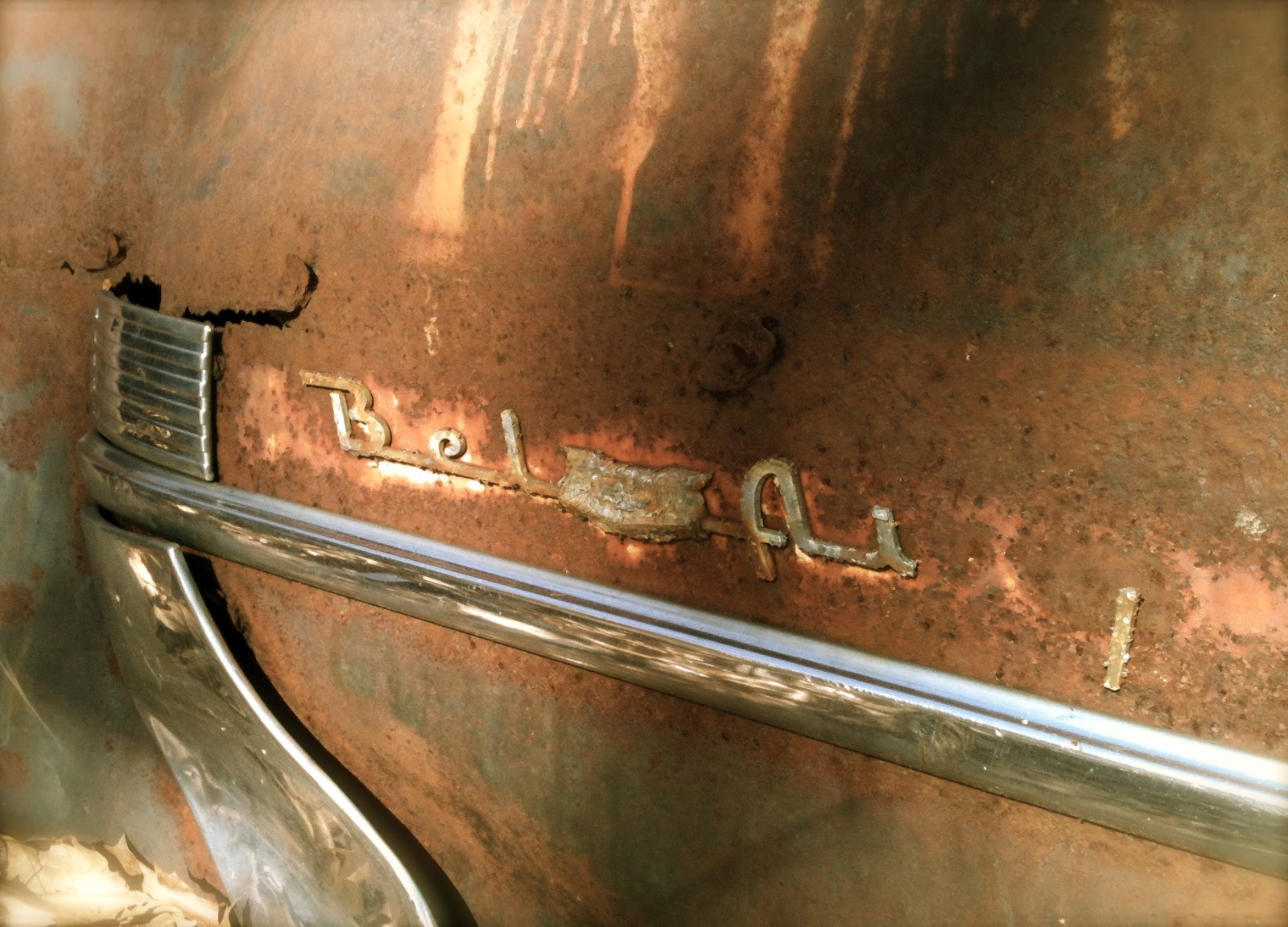
We found this old Bel Air, which looked like it was from the 1950s. The park abuts a very upscale neighborhood, so I thought it was interesting the town has left it there. Maybe like us the parks commission thinks it is kind of cool.


The forest is full of huge granite boulders deposited by glaciers, and the caves are located in a large ridge near a water tower.

Me, shortly before I skinned my shin looking for the cave. Adventure has a price I guess!

Those caves have to be here somewhere!

We had read that the caves have collapsed, or at least partially collapsed. However I've seen fairly recent photos of the caves so we weren't sure what to believe. We climbed around the boulders for quite a while looking for the caves. I have to admit we weren't really equipped for climbing giant rocks, and the ground was really slippery from all the dead leaves which were a couple feet deep in some places.

Just as we were about to leave I decided to check out part of the ridge that is very close to someone's backyard. (But I didn't trespass!) And yes, we actually found a cave. I think it's kind of funny that we walked for a mile and climbed up and down the boulders, but the cave is basically next to someone's house. If I lived there I would spend every day hanging out at the Witch Caves!


The cave we found looked pretty small, but I think centuries of oak leaves have probably reduced its original size. It seems to have multiple small chambers, and I can imagine desperate refugees crawling in there to shelter from rain or snow. If you were fleeing from people who wanted to execute you for witchcraft you'd probably be pretty desperate.

However, Tony and I didn't crawl into the cave for a couple reasons. One, we didn't know if the oak leaves were covering solid stone or hiding a pit, and we really didn't want to find out. Two, since the other caves have collapsed we didn't feel too secure about this one. Those are some big boulders in the photos!

If you go to the cave I don't recommend crawling into it. It's probably not safe. And after all, you're not being chased by villagers carrying torches and pitchforks.