Showing posts with label Norton. Show all posts

October 09, 2021

The Witches of Norton: Magic, Animals, and Poverty

Well, it's October now, the month which many people call "Spooky Season." Even thought it's always spooky season here at the New England Folklore blog, I do love this month and Halloween. It's the season for pumpkins, ghosts, and of course witches. 

New England is full of witch legends. Although the Salem trials are the most famous witchcraft incident in Massachusetts, lots of other cities and small towns held witch trials or have legends about witches. For example, Norton, a small town in the southeastern part of the state, was supposedly home to three witches in the 1700s. 

The most famous alleged witch in Norton was Ann Cobb. I am not sure exactly why Ann was suspected of witchcraft, except for the following. One day she went into town to purchase some items at the general store. She lived about two miles away from the town center, but arrived there only minutes after leaving her house. This was quite fast, so her neighbors suspected she had used supernatural means to travel so quickly. Perhaps she flew, or was transported by some sort of evil spirit? Historical sources don’t specify her neighbors' exact suspicions, but the event was so memorable the town named a bridge after her. (It still exists today, and bears the name Witch Bridge.) Apparently, it didn’t take much to be considered a witch in Norton. Ann Cobb was quite poor and was supported financially by the town in her old age. She died in 1798.

The Witches by Henry Fuseli

Dora Leonard was another Norton woman suspected of witchcraft. She supposedly caused various forms of mischief around town, like magically setting farm animals loose so they could wander free. Two boys also said she once caused them to miss a squirrel they were shooting at. Despite having a clear shot at a the animal, the boys missed it repeatedly. 

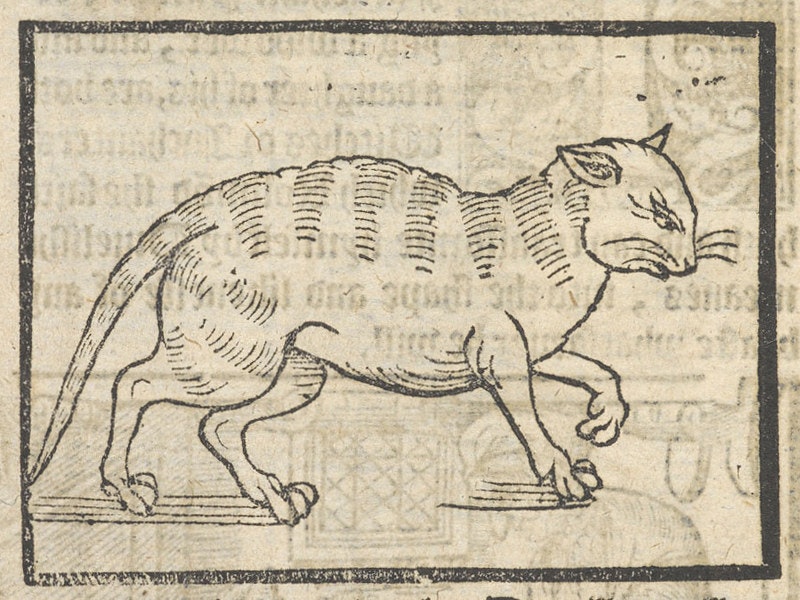
As they walked home, frustrated, they noticed a large cat watching them pass by. They believed the cat was really Dora and that she had used witchcraft to make them miss the squirrel. (It seems more likely they were just bad shots looking for someone to blame.) Much like Ann Cobb, Dora Leonard was poor and had to be supported by the town in her old age. As she lay dying in 1786, her house was supposedly filled with strange and terrible noises that frightened away the people attending to her death. Those details about her death are a standard trope in witch legends from New England. 

The third alleged witch in this small town was Naomi Burt. Local historian Duane Hurd wrote of her in 1859: “Naomi Burt was also accounted a member of the mysterious sisterhood of witches, and by her wonderful powers gave some trouble to those who fell under the ban of her displeasure.” Wagons lost their wheels when they passed her house, and oxen escaped their yokes. Children held their breath in fear as they ran past her home lest she bewitch them. Sadly, Naomi Burt took her own life on July 4, 1808, a harsh reminder that while these old tales of witchcraft are entertaining to read, it was hard to really be the person they were about. 

The Salem witch trials were the last trials of their kind in Massachusetts. They occurred in 1692, but people in New England continued to think their neighbors were witches for hundreds of years after that. They didn't bring them to court anymore, but instead whispered, gossiped about, and sometimes physically threatened anyone they thought was a witch. Often those suspected were poor women who depended on their neighbors' charity for survival. That's clearly the case with the Norton witches. Resentment at having to support someone easily curdled into hatred and accusations of witchcraft. 

In many cases, suspected witches were accused of making animals misbehave or preventing hunters from shooting their prey. Maybe this is because the witches were associated with the natural world more than the human world, as evidenced also by their ability to transform into animals. Perhaps they are protecting the animals from harm or mistreatment. "Free the oxen!" It's the more modern, romantic interpretation. 

James Audubon, The Dusky Squirrel

On the other hand, people in the 18th century would have had a very different opinion. A farmer depended on his oxen the way a modern person depends on their car, and a family needed their livestock for food. Any disruption threatened someone's ability to survive. And even though I love squirrels, those two boys probably would have eaten that squirrel for dinner if they killed it. Maybe they went to bed hungry that night.

Just to be clear, I am not saying these women were witches. They weren't. They were social outcasts accused of witchcraft. People just projected their fear onto them. Fear of hunger, of poverty, of illness, and of death. These are real fears we all have, but hopefully we don't project them onto our neighbors. So what's spookier: legendary witches, or real people who actually accused their neighbors of being witches? I think it's the latter.

If you want to read more witch stories for Spooky Season, and I know you do, I'll recommend my new book Witches and Warlocks of Massachusetts, which was just published by Globe Pequot last month. It contains dozens of legends and historical accounts of witches from across this glorious state. It's available wherever you buy books online, and hopefully in your local bookstore as well. 


October 06, 2020

The Norton Witches: Small Town Legends

Well, it's October. Spooky month, as people say. Every month is spooky on this blog, but I'll try to share some particularly nice stories this October. Let's conjure up those Halloween vibes! 

*****

I don't think I've ever been to Norton, Massachusetts but I may have passed through it. It sounds like a small, quiet New England town. They only got their first traffic light in 1997, so it's very quiet. But small New England towns often harbor strange secrets, as every Stephen King fan knows. 

For example, a rock behind the Norton's elementary school supposedly is imprinted with the Devil's footprint. The Evil One made it in 1716 as he carried off George Leonard, who had sold his soul for material wealth. 

Norton is also located inside the Bridgewater Triangle, an area famous for its paranormal activity. The town certainly has had its share of weird happenings. For example, a couple weeks ago I posted about a lizard man seen in Norton in 2001. More famously, in 1971 a Norton police officer named Thomas Downy saw something with an 8 to 12 foot wingspan flying overhead as he drove home through Easton late one night. Small towns seem to get the best monsters! 

Norton was first settled in 1669, so it's a relatively old town. These days people tend to blame paranormal phenomena on ghosts, aliens or dimensional gateways, but in the past witches were usually blamed for strange events and misfortunes. That was certainly the case in Norton.

The most famous witch in Norton's history is Ann Cobb. Interestingly, very little is known of her witchy exploits but a bridge in town is named after her (Ann Cobb Bridge). It is more commonly known as Witch Bridge or Witch's Bridge. Ann Cobb used to live near the bridge that now bears her name, which was about two miles away from the town center. According to a local legend, one day she set out from her home for the center and arrived there within minutes, much to the consternation of the townspeople. How had she traveled so quickly? People suspected that perhaps she flew, or was transported by some sort of evil spirit. The incident was enough to cement her reputation as a witch and to merit a bridge being named after her. Ann Cobb died in poverty as a ward of the town in 1798.

Dora Leonard was also suspected of being a witch. Farmers blamed Dora and her magic when their animals escaped from the barn or their pens. Two young boys also blamed her for their bad luck hunting squirrels. According to the boys, they had trapped a particularly large squirrel in a tree and shot at it repeatedly. They missed every shot, though, and the squirrel escaped unharmed. As the boys trudged home they saw a strange cat watching them. They told everyone who would listen that the cat was really Dora and she had bewitched their guns. Much like Ann Cobb, Dora Leonard was impoverished in her old age and the town took care of her financially. As she lay dying in 1786 her house was filled with strange noises. The neighbors who were attending her final moments fled in terror. 

Naomi Burt was the third Norton woman believed to be a witch. Like Dora Leonard, Naomi was said to cause mischief and minor mishaps. Wagons lost their wheels if they passed by her house and oxen escaped their yokes thanks to Naomi's witchcraft. Children particularly feared her and held their breath if they passed by her residence. Sadly, Naomi committed suicide on July 4, 1808. Old legends about witches are entertaining and spooky, but being impoverished and a social outcast can be grim and lonely. 

*****

My sources for this week's post are Duane Hamilton Hurd's History of Bristol County, Massachusetts. With Biographical Sketches of Many of Its Pioneers and Prominent Men, Part 2 (1883), and George Faber Clark's  A History of the Town of Norton, Bristol County, Massachusetts, from 1669 – 1859 (1859. This article from Patch.com also had good information about the Norton witches. 

September 14, 2020

A Lizard Man in Norton, Massachusetts

It happened on a warm night in the summer of 2001. A young man was working late at a store in his hometown of Norton, Massachusetts. At 11:30 pm he locked up and started to walk home.

He lived just a mile away, so even though it was quite dark he took a shortcut through the woods. It was a route he had taken many times before without incident. But tonight would be different. 

The path through the woods was dimly lit by distant streetlights. Partway down the path the man yawned, and was terrified to hear something roaring as if in response. It sounded like a large animal. He froze. In the dim light he saw someone, or rather something, emerge from behind a tree. The creature was nearly 8 feet tall and reptilian in nature, resembling a lizard with a man's face. It was powerfully built and looked like it could "have ripped the witness limb from limb if it wanted to." 

Photo from Spawn of the Slithis (1978)
This is all pretty weird, but here's where it gets weirder. As the young man stood there, terrified, he suddenly saw a flash of bright light in the sky. When he looked back at the tree the lizard creature was gone. Stranger still, the young man's watch said it was 1:45 a.m. More than an hour had passed and he didn't know what had occurred in that missing time. 

*****

That's the end of the story. It appears in Albert Rosales's book Humanoid Encounters: 2000 - 2009, and Rosales found the story online on a site called "Your True Tales." There are lots of interesting things about this story.

First of all, it's about a lizard man, which is pretty amazing. Lizard men do pop up in North American folklore and cryptozoology now and then; the most famous is the Lizard Man of Bishopville, North Carolina who was seen in that town for several years beginning in 1986. There aren't many stories from New England about lizard men, though. This one's kind of an anomaly.


The Lizard Man of Bishopville appeared in swampy areas. So did this one. Norton, Massachusetts has lots of swamps within its boundaries, including parts of the infamous 16,000 acre Hockomock Swamp. The Hockomock Swamp is the center of an area called the Bridgewater Triangle, which is famous for its paranormal activity. Norton sits squarely inside that triangle, so perhaps its not totally surprising a reptilian humanoid would appear in a giant swamp also known for its ghosts, UFO sightings, and Sasquatch encounters. 

So are there lizard monsters hibernating in the muddy swamps of Norton? Maybe, but maybe not. The strange flash of light and the missing time at the end of the story seem to indicate the creature is not really of this world. After all, strange lights and missing time are often associated with UFOs, not animals that live in the woods. If the Norton lizard man was just a physical creature he would have trudged off, not disappeared in a flash of light. 

Personally, I'd call the police or at least Animal Control if I encountered a large lizard creature. This person didn't, which is perhaps why this story is not that well known. Also, lots of weird things are said to happen in the Bridgewater Triangle. Giant snakes, phantom panthers, strange lights, Bigfoot, pukwudgies. If it's paranormal it's probably happened there. In another place or another time a lizard man would probably stand out. In the Bridgewater Triangle he's just another guest at the party. 

September 22, 2013

Places Named After the Devil in Southern New England

Last week I wrote about all the places in northern New England. I was surprised at how many there are, but when I compiled this week's devilish lists of southern New England locales I was totally flabbergasted. Here's the list; my comments are below.


Connecticut

Devil's Backbone, Bethlehem
Devil's Backbone, Bristol
Devil's Backbone, Cheshire
Devil's Backbone, Bristol
Devil's Belt, Long Island Sound
Devil's Den, Franklin
Devil's Den, Haddam
Devil's Den, Monroe
Devil's Den, Plainfield 
Devil's Den, Sterling
Devil's Den, Weston
Devil's Dripping Pan, Branch Brook
Devil's Footprint, Montville
Devil's Footprint, Branford
Devil's Gap, Brookfield
Devil's Glen Park, Weston
Devil's Gorge, Weston
Devil's Hopyard, East Haddam
Devil's Island, Danielson
Devil's Jump, Derby
Devil's Kitchen, Burligton
Devil's Kitchen, Thomaston
Devil's Meditation, Middlebury and Watertown
Devil's Mouth, Redding
Devil's Plunge, Morris
Devil's Pulpit, Hamden
Devil's Rock, Old Saybrook
Devil's Rock, Portland
Devil's Wharf, Deep River

  
Massachusetts

Devil's Back, Hull
Devil's Basin, Newbury
Devil's Bridge, Gay Head
Devil's Brook, Sharon
Devil's Brook, Stoughton
Devils Cavern, Amherst (see also Devil's Garden)
Devil's Coffin, Sutton
Devil's Corncrib, Sutton
Devil's Den, Andover (now often called Den Rock)
Devil's Den, Aquinnah
Devil's Den, Arlington (now Menotomy Rocks Park)
Devil's Den, Ashland
Devil's Den, Goshen
Devil's Den, Newbury
Devil's Den, Hemlock Gorge, Newton
Devil's Den, Oxford
Devil's Den, Rockport
Devil's Den, Weston
Devil's Dishfull Pond, Peabody
Devil's Foot Island, Woods Hole
Devil's Football, Hadley 
Devil's Footprint, Ipswich
Devil's Footprint, Norton
Devil's Garden, Amherst (see also Devil's Cavern)
Devil's Garden, Lynnfield
Devil's Hollow, Marshfield
Devil's Hopyard, Shelburne Falls
Devil's Kitchen, Lynnfield
Devil's Landslide, Wellesley
Devil's Lane, Warren
Devil's Oven, Sherborn
Devil's Oven, Westwood
Devil's Peak, Warren
Devil Pond, Westport (now called Devol Pond because it is more family friendly)
Devil's Pond, Rehoboth (sometimes called Sabin Pond)
Devil's Pool, Pelham
Devil's Pulpit, Great Barrington
Devil's Pulpit, Housatonic
Devil's Pulpit, Leominster
Devil's Pulpit, Nahant
Devil's Pulpit, Newbury (historic, may no longer exist)
Devil's Rock, Rochester
Devil's Rock, Sharon
Devil's Rock, Swansea

An old marker for Devil's Foot Rock in North Kingstown, RI.
 Rhode Island

Devil's Foot Cemetery, North Kingstown (an archeological site)
Devil's Foot Rock, North Kingstown
Devil's Foot Road, North Kingstown


Massachusetts is clearly the most devilish state, with 43 places named after the Prince of Darkness. Many people in New England do think Massachusetts is evil, and maybe this verifies that. Connecticut has 29 devilish locations, which is still pretty sinister, but Rhode Island only has three, and they're all related to the same rock. Rhode Island needs to step up its evil game!

All kidding aside, there's probably a historical reason for the preponderance of devil names in Massachusetts and Connecticut. Those two states were the Puritan heartland in New England, and the Puritans constantly saw the Devil's actions in the world around them. Rhode Island, however, was more liberal in its approach to religion and the people there didn't see the world in such stark good-and-evil terms. That's just my guess, mind you.

As in the northern states, the Devil has plenty of dens named after him. Tony and I have visited the one in Ashland, which unfortunately was damaged during construction of a new high school playing field. The den in Plainfield, Connecticut is famous for its large size, naturally occurring staircase, and freezing cold temperatures.

In the 1800s, boys in Newbury, Massachusetts had to be initiated by their friends before they entered the Devil's Den in that town. Climbing to the top of the nearby Devil's Pulpit boulder, they would repeat certain irreverent phrases that protected from the evil that dwelt within the cave. Even after initiation they could only enter in groups; a secret name was written on the floor of the cave that would kill anyone who entered alone. The cave was also known for interesting mineral deposits of serpentine and soft, gummy chrysotile, a naturally occurring form of asbestos. The boys would often chew the chrysotile, so I hope the irreverent phrases protected them from cancer.

All three states have footprints left by the Devil. In Ipswich, Massachusetts the footprint was left when George Whitefield, a cross-eyed Methodist evangelical preacher, threw Satan off the church steeple. In Norton, Massachusetts it was made when he absconded with the body of a man who sold his soul, while in North Kingstown, Rhode Island the Devil left his track as he carried off a Native American woman who killed her lover.

That's not the only connection these devilish places have to the local Indians. The Puritans incorrectly categorized all Indian deities as demons or devils, and this is reflected in the place names. For example, the Devil's Den at Aquinnah on Martha's Vineyard is where the giant Wampanoag hero Maushop (or Moshup) sleeps, and the Devil's Bridge is actually a rock formation the mighty giant created. The Devil's Hop Yard in Haddam, Connecticut was probably originally a gathering place for local Indian shamen, but the Puritans named it after the Devil.

The Devil's Hopyard was also the location of a malt house. Hops are used to make beer, so it's name may be appropriate. A local legend claims a man named Dibble owned the malt house, and the area was really called Dibble's Hop Yard. With time, the name devolved to Devil's Hop Yard. This story, which sounds so appealing to our rational minds, is not true. The area really was named after the Devil.

Other than searching the Web, I found lots of good information in David Phipps Legendary Connecticut and Jeff Belanger's Weird Massachusetts. The fascinating information about the Devil's Den in Newbury can be found here.