April 17, 2019

Vale End Cemetery: A Blue Lady, Terrifying Encounters, and Pukwudgies

Recently we took a trip to New Hampshire. We met up with our old friend Pasha, and then we did what anyone does on a beautiful early spring day: we went to look at haunted cemeteries.

Our first stop was Vale End Cemetery in Wilton, New Hampshire. Wilton is a beautiful town but Vale End has acquired an ominous reputation, particularly in the last few years. Demons, malevolent ghosts and pukwudgies have all been reported at this historic cemetery. To be honest I was a little scared as we drove up to New Hampshire!

HISTORY AND A BLUE LADY

The oldest grave in the cemetery, that of Phebe Cram, dates from 1752. The cemetery is first mentioned in town records in 1772, when the town voted to "fence the burying ground." In 1780 the town voted to upgrade the fence to a stone wall and to build a road to the cemetery. Someone donated more land to the burying ground in 1869, and in 1871 it was named Vale End Cemetery. 


I found that information in 1888's History of the Town of Wilton, Hillsborough County, New Hampshire by A.A. Livermore and Sewell Putnam. The authors don't mention anything about ghosts, demons or troll-like creatures at all. Not many town histories do but I was hoping to find some mention of Vale End's most famous ghost, the Blue Lady.

According to legends the Blue Lady has haunted Vale End cemetery for generations, but some of Wilton's older residents (and members of Wilton's historical society) say the story only dates to the 1970s. The Blue Lady is said to be the ghost of Mary Ritter Spaulding, who died at age 35 and was buried in the cemetery in 1808. Mary was the first wife of Captain Isaac Spaulding and shares a grave with his second wife, also named Mary Spaulding.

Mary Ritter Spaulding's grave
By all accounts Mary Ritter Spaulding was a kind and loving wife and good mother to her seven children. Some people even say that Mary worked as a healer in Wilton and cured illness with herbal remedies.  Her benign nature while alive is reflected in her activities as a ghost. The Blue Lady manifests primarily as a column of blue light above her grave and more infrequently as a woman in old-fashioned attire wandering through the cemetery. Does she have unfinished business? Is she watching over the loved ones buried around her? Most people who see the Blue Lady say the encounter is spooky and odd but not terrifying.

I do find the Blue Lady interesting. The column of light is so impersonal but also feels almost religious somehow. Her title, the Blue Lady, reminds me of the many times people have seen the Virgin Mary as an apparition in blue. I'm not saying that the Virgin Mary is appearing in this cemetery, but maybe people's experiences of paranormal phenomena are colored by pre-existing cultural patterns. Maybe the first person who reported seeing the Blue Lady at Vale End made an an unconscious connection between two kind, loving mothers named Mary.

A SHOCKING DEATH AND... DEMONS?

Up until the early 2000s legends about Vale End focused on the Blue Lady. That changed and the cemetery has since acquired a more sinister reputation. The change seems to date back to November 1999, when paranormal investigator Fiona Broome and some associates were investigating hauntings at Nashua's Gilson Road Cemetery. Broome's photographer Nancy had brought her teenage daughter along, but the daughter became frightened during the investigation. Nancy and her daughter left and decided to visit a friendlier cemetery: Vale End in Wilton. After all, the Blue Lady was quite benign compared to the restless spirits at Gilson Road.

Nancy and her daughter drove to Vale End that same night. Unfortunately their experience there was terrifying. As they walked towards the Blue Lady's grave they saw something dark rise up from a nearby grave. They ran back to the car in terror and drove off so quickly one mirror was knocked off as they swiped a tree.


Later that night the daughter called Fiona Broome. She was scared, and wondered if anything ever follows people home from graveyards. Fiona assured her nothing does.

Five days later Nancy the photographer was found dead in her car in a Wilton parking lot. A coroner claimed it was a sudden heart attack. Nancy wasn't known to have any heart disease, though, and Fiona Broome and other paranormal investigators wondered if something sinister really had followed her home from Vale End.

In the spring of 2000 Fiona and some colleagues decided to investigate Vale End at night. As they made their way towards the Blue Lady's grave Fiona saw a three-foot tall hairy red humanoid. She said the creature reminded her of a muppet like Elmo or Grover. As she walked towards it she slammed into what felt like an invisible force field - and an unmistakably evil presence. Dozens more of the small humanoids began to appear and she and her colleagues fled the cemetery, but not before taking photos. Only when she was ten miles away did the feeling of evil fade.

When Fiona developed the photos they were completely black and showed nothing, except for one with a vaguely humanoid red blob. Was it one of the small humanoids? Perhaps, but when one of Fiona's friends turned the image around she thought it looked like a classic image of Satan.

OUR VISIT TO VALE END

You can read Fiona Broome's full account on her website. She discourages anyone from visiting Vale End, particularly at night, but her story of demons and small humanoids has of course had the opposite effect. A lot of people have a hunger for the supernatural, and what better place to feed that hunger than a cemetery possibly haunted by demons?

Some people have recently speculated that those small humanoids she saw were actually pukwudgies, one of the names for New England's local magical little people. If you read the comments on this page, you'll see that someone even claimed to have successfully photographed one at Vale End.

Many cultures make connections between fairies and the dead, so I suppose it's not surprising that someone would see pukwudgies at a cemetery. I have written about them before, and hearing that people have seen them at Vale End was one reason I wanted to visit. So I don't know whether I am disappointed or relieved that we didn't see any when we were there. Probably relieved!


As I wrote earlier, I was a little scared on the way to Vale End, but nothing unusual or bad happened to us. The weather was beautiful and we all found the cemetery to be quite peaceful. There are a lot of interesting stones to see, like that of Samuel Greele, who was "suddenly killed by the fall of a tree on the 25th of September, 1798", or the marker for Edward Herrick which has this rhyming epitaph:


Afflictions sore longtime I bore
Physicians were in vain
Till God did please, and death did seize
To ease me of my pain

We of course also visited the grave of Mary Ritter Spaulding. Her gravestone is easy to find since it has been dramatically broken. We did not see a column of blue light but we noticed that people leave coins on her grave, probably as a way to honor the cemetery's resident ghost.

Vale End Cemetery is open during daylight hours only, not at night, which decreases your chances of encountering a malevolent entity. The Wilton Police patrol the cemetery and will remove you from the cemetery if they find you there after dark. You may not see a pukwudgie but you will see a patrol car! If you visit obey the rules and please don't disturb any of the stones. And you might want to leave a coin for the Blue Lady.

April 07, 2019

Ann Hibbins, The Wealthy Witch of Boston

I think most people are familiar with the Salem witch trials. They may not know every fact and date, but people know the Puritans executed a group of people for witchcraft in Salem. I suspect people are less familiar with the other witch trials that happened earlier than 1692, though.

Surprisingly, more than one hundred people were accused of witchcraft in New England before the Salem witch trials ever happened. Many of these accusations were made informally, but many made it all the way to the court system. That's quite a few accusations considering New England was only settled in the early 1600s. Shockingly, fifteen people were executed for witchcraft in New England between 1648 and 1692.

One of those executed was Ann Hibbins of Boston. If you've read Nathaniel Hawthorne's novel The Scarlet Letter you may remember Ann Hibbins. Hawthorne portrays her as an aged but wealthy woman who has sold her soul to the Devil. She futilely encourages heroine Hester Prynne to join her in the woods for the witches Sabbath, and even suggests that minister Arthur Dimmesdale might like an introduction to Satan:

“So, reverend Sir, you have made a visit into the forest,” observed the witch-lady, nodding her high head-dress at him. “The next time, I pray you to allow me only a fair warning, and I shall be proud to bear you company. Without taking overmuch upon myself, my good word will go far towards gaining any strange gentleman a fair reception from yonder potentate you wot of!”

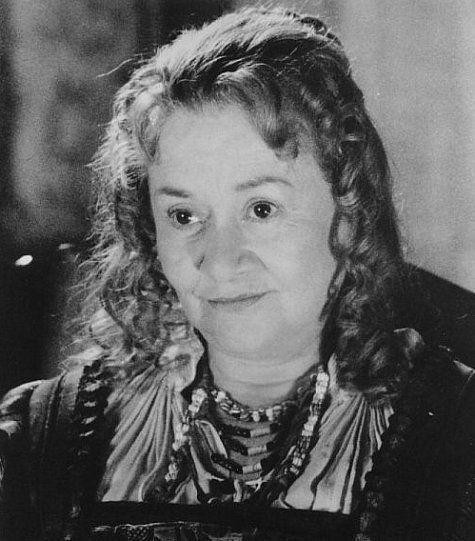
Hawthorne is having a little authorial fun here with a historical figure. In his novel Ann Hibbins is an actual witch practicing dark magic, but he uses her mainly as a contrast to the fictional Hester Prynne, who although adulterous is not evil. When The Scarlet Letter was made into a Demi Moore movie in 1996 the screenwriter took even more liberties with the character: she was portrayed as a goddess-worshipping Wiccan.

Joan Plowright as Mistress Hibbins in The Scarlet Letter
The real Ann Hibbins was neither an evil witch or a Wiccan, but was a wealthy Puritan woman who emigrated to Boston in the 1630s with her husband William. They were well-connected politically since William was related through a previous marriage to the colony's governor Richard Bellingham. A year after settling in Boston William's connections got him appointed a deputy to the General Court, the legislative body of Massachusetts. He achieved the higher title of Assistant in 1654. Both Ann and William also became members of Boston's prestigious First Church.

Not everything was perfect in the New World. They had some financial problems in Boston, including losing a significant amount of gold in a trade deal that went bad. Still, the Hibbinses were wealthier than most Bostonians, and William was even allotted three hundred acres of land in the Boston village called Muddy River (now the town of Brookline). Known as Stanford Farm, it was one of the largest allotments in the village. William also acquired several other pieces of land in Muddy River.

Map from Brookline Historical Society. 
They didn't really need to worry about money, but ultimately it was money that led to Ann being accused of witchcraft. Ann had hired a carpenter named John Crabtree to work on their house in Boston but was unhappy with the completed work. She refused to pay him the amount he wanted and complained to neighbors and friends about him. Her husband tried to mollify her by asking another carpenter, John Davis, to provide an unbiased estimate of a fair price. However, Ann was also unhappy with the estimate Davis provided and proceeded to slander him along with Crabtree.

Ann's behavior was considered inappropriate for someone of her status, and particularly for a member of the prestigious First Church. The church's leaders felt she should have behaved more moderately. They also thought she was being disobedient to her husband. After several hearings with Ann (who remained unrepentant) the First Church excommunicated her. This was a very strong rebuke, particularly since Boston was practically a Puritan theocracy at the time. 

William remained a member of First Church, though, and his influence was able to protect Ann from any further repercussions. But when he died in 1654 Ann suddenly found herself in a vulnerable position, and in 1655 she was brought to trial for witchcraft. Interestingly, historians have not found any of the testimony given against her. We don't really know the specifics of the accusations against her, but they probably didn't really matter for the trial's outcome. She was an unpopular older woman with a bad reputation. The jury found her guilty and condemned her to death. 

The verdict was refused by the colony's magistrates, and the case was sent to the General Court itself, the ruling body that William had served on. Surprisingly the General Court also found her guilty and sentenced her to die by hanging. It has been speculated that they returned the guilty verdict to defuse public outrage. She was executed on June 19, 1656.

Although she was unpopular and cantankerous, it seems that many people at the time felt her execution was unjust. For example, the Reverend William Hubbard wrote in the 1670s that:
Vox populi went sore against her, and was the chiefest part of the evidence against her, as some thought.... Many times persons of hard favor and turbulent passions are apt to be condemned by the common people for witches, upon very slight grounds. 
Stories about witches are scary. Accounts of demons, black magic and Sabbaths in the woods are good spooky stories to tell at night. But I think historical accounts of witch-hunts are even scarier, particularly in the clear light of day.

March 26, 2019

Weird New England News: Goat Elected Mayor, Haunted Supermarket, Vermont Pigman and UFOs.

There are lots of strange things happening around New England lately. To begin with, a town in Vermont recently elected a goat as mayor. The good citizens of Fair Haven (population 2,500) have chosen Lincoln, a three-year old female Nubian goat, as their new leader. I suppose there's some joke in there about politics going to the dogs (or the goats) but I'm unable to find it right now.

Her honor the mayor. Photo: Boston Globe.

Happily, Lincoln is only the honorary mayor and will not be making any major civic decisions. That's probably a good idea, since during her first day of office she defecated on the floor of Town Hall. Fair Haven is actually run by a board of selectman and a town manager, and it was the town manager's idea to elect an honorary mayor as a way to raise money for a new playground. Lincoln beat out several other candidates, including a hamster named Crystal, to win the job.

It all seems like good-natured fun, but The Boston Globe points out that sometimes these things can take a dark turn. For example, in the 1980s a goat named Clay Henry was elected mayor of Lajitas, Texas. Clay Henry became a tourist attraction for his ability to guzzle beer but was violently killed by his own son, Clay Henry Jr., during a fight over a female goat. Clay Henry Jr. took over as mayor and local beer-drinking beast. His son, Clay Henry III in turn became the town's third goat mayor but was castrated by a neighbor who became furious when he saw the goat drinking beer on Sunday, a day when liquor sales were illegal. The mayor survived the attack. Hopefully things stay more peaceful up in Fair Haven.

Meanwhile, shoppers have reported a ghost at a Market Basket in Wilmington, Massachusetts. Market Basket, a locally-owned supermarket chain beloved for its fresh produce and low prices, was founded by Greek immigrants Athanasios and Efrosini Demoulas in 1917. In recent years the chain has been at the center of multiple lawsuits by members of the Demoulas family fighting for ownership, and in 2014 thousands of employees protested to support the rights of Arthur T. Demoulas, who is now the current owner. The ghost is perhaps just the latest chapter in the ongoing saga.

Photo: CBS Boston.

People who have seen the ghost report that she appears as a young woman in Victorian garb.Why is a modern supermarket being haunted by a Victorian ghost? No one seems to know but at least one person said she had earlier seen the ghost in her home, which is located nearby. Perhaps the ghost just wants to see what's on sale? A spokesperson for Market Basket made the following comment:
“As far as we know all of our stores are ghost-free,” Justine Griffin said in a statement to the Globe. “But if there’s anything to it, she’s probably attracted to our Victorian-era prices.”
Apparitions may be haunting Market Basket, but UFOs are haunting the skies of Connecticut. The Connecticut Post notes that eleven UFOs have been reported in the state so far this year. A wide variety of phenomena were seen, ranging from classic saucer-shaped objects to those that were large and triangular. Several witnesses in different towns reported seeing strange green flashes in the sky on different days. Last year 100 UFOs were reported in Connecticut so perhaps sightings are slightly down this year? 

Image: Connecticut Post.

No one in Connecticut has reported any strange extraterrestrial humanoids yet. Perhaps this is a blessing, since personally I find ET sightings to be kind of spooky. If you do want to learn about a spooky humanoid, I can direct you to the New England Legends podcast. This week they are talking about the Pigman of Northfield, Vermont. They also give a shout out to this blog!

Image: YouTube.

The Pigman is one of my favorite New England cryptids. This swine-headed monster was first seen lurking outside a high school dance in the 1970s and gained notoriety in the 1990s through the books of Vermont writer Joseph Citro. Is he a missing teenager who went feral? The unholy offspring of a lonely farmer and a farm animal? A high school trickster who sold his soul to Satan on Halloween? Accounts of his origin vary, but people in Northfield agree that he still lurks in the woods outside of town. One of these days I hope to visit Northfield and visit the Pigman's stomping grounds. Here's hoping I don't find him. 

Special bonus: here's an image of the Pigman looking buff that I found on Pinterest. I guess the feral life is good for your physique? The covered bridge in the background adds the right New England touch. 
Image: Pinterest.
 

March 14, 2019

From Monster to Mer-Bro: Four Centuries of New England Mermen

The more things change the more they stay the same. Yes, it's a cliche, but there's a grain of truth in it. Sometimes things seem like they are new but they are actually not. 

Take Gorton's Seafood, for example. Gorton's was founded in Gloucester, Massachusetts in 1849. The company is still going strong and their longtime mascot, a fisherman wearing yellow rain gear, is widely recognized. But in recent months the company has tried appealing to a younger demographic by airing humorous ads featuring brawny mermen (a.k.a mer-bros) and a laid-back Neptune, god of the sea. Has Gorton's lost touch with its historic New England roots with this new advertising campaign? Not really. Although salty fishermen are an important part of our culture, mermen and their kin have also been reported in this area for hundreds of years.


An old-school merman. 
Mer-bros eating Gorton's fish sticks.
One of the earliest written accounts appears in Englishman John Josselyn's 1674 book An Account of Two Voyages to New England. Josselyn visited New England in 1638 and 1663, and on one of those trips he hear the following story from a colonist in coastal Maine:
One Mr. Mittin related of a triton or merman which he saw in Casco Bay. This gentleman was a great fowler, and used to go out with a small boat or canoe, and fetching a compass about a small island (there being many small islands in the bay), for the advantage of a shot, was encountered with a triton, who laying his hands upon the side of the canoe, had one of them chopt off with a hatchet by Mr. Mittin, which was in all respects like the hand of a man. The triton presently sunk, dyeing the water with his purple blood, and was no more seen.
A triton is a type of merman from classical mythology. They are named after the god Triton, son of Poseidon, and like the sea itself are fickle and sometimes dangerous. Perhaps Mr. Mittin was well-read in Greek myth and unwilling to see if this particular triton was friendly or not. Interestingly, in one of the Gorton's commercials a mer-bro sheds purple tears. Coincidence?


The Puritans who colonized New England did not look fondly upon ancient Greek gods or aquatic humanoids, apparently thinking both were demonic in nature. This outlook can be seen in their response to the song that Thomas Morton wrote for the raucous May Day celebration in 1628 at Merrymount Colony in Quincy, Massachusetts. It invoked Neptune and Triton, along with more overtly erotic gods like Priapus, Ganymede (Jupiter's young boyfriend), and Hymen, the god of marriage. After learning of Merrymount's pagan-themed celebration the Pilgrims at Plymouth dispatched armed troops to arrest Morton and burn down his colony. Morton was trading furs and arms with the local Indians, which threatened the Plymouth colony's economy, but his pagan and libertine tendencies were a threat to morality.

You can burn down a rival settlement, but the mer-folk are not so easily eradicated. In 1714 a minister named Valentyn sailing past Nantucket's Great Point glimpsed a merman in the water. At first Valentyn and the ship's crew thought he was human:
We all agreed he must be some shipwrecked person. After some time I begged the captain to steer the ship more directly toward it. … We had got within a ship’s length of him, when the people on the forecastle made such a noise that he plunged down, head foremost, and got presently out of sight. 
The man who was on watch at the masthead declared that he had… a monstrous long tail.
That story is quoted in Edward Rowe Snow's book Legends of the New England Coast. Snow also claims that years later, in the early 1900s, a lighthouse keeper at Great Point saw something humanoid emerge from the ocean and crawl into the nearby woods. Other local residents also said they saw signs that something not quite human had been among the trees. Gorton's mer-bros are goofy and fun; the Great Point merman sounds a little bit spooky to me.

Speaking of spooky, Rhode Island horror writer H.P. Lovecraft's 1931story "The Shadow Over Innsmouth" centers on a race of monstrous aquatic humanoids called the Deep Ones who live off the coast of Massachusetts. The citizens of the decaying port city Innsmouth have made a deal with the Deep Ones. The Deep Ones give them plentiful fish harvests and golden treasure from their aquatic realm. In return, the people of Innsmouth give the Deep Ones human sacrifices and have conjugal relations with the scaly monsters. Yikes! In Lovecraft's 1926 story "The Strange High House in the Mist," various sea-gods, including Neptune and a band of tritons, pay a visit to the titular house. At least in this story they aren't demanding sex or human sacrifice. 


Lovecraft wrote fiction; he never thought the Deep Ones were real. But even during his lifetime some of his acquaintances thought he was writing about real occult practices and entities. That movement only grew after his death and some occultists have even claimed the Deep Ones are actual beings. For example, the British occultist Kenneth Grant claimed that he successfully summoned the Deep Ones to appear during a ritual. (Note: they weren't particularly pleasant!) Similarly, the American ceremonial magician Michael Bertiaux claims he has contacted the Deep Ones at an isolated lake somewhere in Wisconsin. Lovecraft based the fictional Innsmouth on Depression-era Newburyport, so perhaps the Deep Ones really are lurking in the waters just off our coast.

Unlike the Deep Ones, Gorton's mer-bros are cheery and goofy. Is this just an advertising gimmick or are there other happy mermen in New England's past? Yes, there are. Elizabeth Reynard's 1934 book The Narrow Land contains several stories given to her by Mashpee Wampanoag Indians. One of these stories tells of Matilda Simons, a widowed Wampanoag woman struggling to feed her three children. When the Christian god doesn't answer her prayers she turns to the old Indian gods. In response, the sea god Paumpagusnit sends several aquatic giants from the ocean to help her. They speak in "the guttural voice of the sea" and save Matilda's family from starvation by bringing gifts of fish. 

So perhaps the mer-bros are not as newfangled as they at first appear. While they are part of the current trend to use folkloric creatures in advertising (like those beef jerky ads starring Sasquatch), these fishmen are also have deep roots here in New England. 


Speaking of deep New England roots, recently I was a guest on Jeff Belanger's fantastic New England Legends podcast. Jeff is a font of weird knowledge and we had a great time chatting about witches, monsters, and why there are so many strange legends from New England. I hope you'll listen if you can!

March 04, 2019

For Sale: The Home of A Salem Witch Trial Victim

Would you like to own a home connected to Salem witch trials? Now is your chance. The historic Solart-Woodward House in Wenham, Massachusetts just went on the market. The house has four bedrooms, two and a half bathrooms. and is priced at $599,000. That seems like a good price in this current market.

Although there have been additions since, the original part of the house was built in 1670. That's an old house. A friend of mine used to live in a house built in the 1680s, and you could feel the history seeping out of the walls. I imagine the Solart-Woodward house would feel the same.

The Solart-Woodward House
As you might expect, the house has a tragic history attached to it. It was built by John Solart, a French immigrant and the father of Sarah Good, one of the first people accused in the Salem witch trials. Solart operated the house as an inn but drowned himself a few years later. His wife (Sarah's mother) inherited Solart's wealth after the suicide and quickly remarried. Sarah and her sisters sued but failed to get any of the inheritance.

Sarah married Daniel Poole, an indentured servant who incurred heavy debts. She inherited these when he died in 1682. Sarah's second husband, William Good, paid off her debts but had to sell most of his property to do so. He and Sarah became homeless, wandering through Essex County begging for food and shelter with their young daughter Dorothy (often erroneously referred to as Dorcas in older scholarly works).

Many witch accounts from colonial New England follow a familiar pattern. A poor person (usually a woman) asks a wealthier person for food or money. When the wealthier person refuses them the poor person mumbles threats. The wealthy person then hits a string of bad luck (sick children, dying farm animals, household mishaps) and accuses the poor person of being a witch. Puritans were expected to take care of each other and offer hospitality, but resented it when they felt they were being taken advantage of. Witch accusations often arose from that resentment.

That resentment could sometimes turn deadly. It did for Sarah Good. When the afflicted girls of Salem began to name witches Sarah was among the first. As a poor female beggar she was an obvious target. She denied being a witch until the end, but the judges still found her guilty. They thought the contortions of the afflicted girls were credible evidence. They were convinced when four-year old Dorothy Good admitted to being a witch and accused her mother. They took William Good literally when he said he felt like his wife was a witch when she treated him poorly. Absurd as it now seems, it all added up to a death sentence for Sarah.

Sarah Good was executed on July 29, 1692. A well-known story claims that she uttered a dying curse. After she was sentenced to hang the Reverend Nicholas Noyes asked her once again to admit her guilt. She refused, reportedly saying, "I am no more a witch than you are a wizard, and if you take away my life God will give you blood to drink!" Sarah was executed, but twenty-five years later Reverend Noyes died from internal hemorrhaging. Blood gushed out of his mouth as he expired. Witnesses thought back to Sarah Good's dying curse.

Sarah Good's problems and death were caused by poverty. Ironically, after the witch trials ended William Good sued for damages and won. He received thirty pounds, which was several times more than the average laborer earned in a year.