Showing posts with label witches. Show all posts

April 09, 2022

Wilmot Redd, the Witch of Marblehead

This is my second post about Marblehead. As I mentioned in my last one, Marblehead is incredibly charming and beautiful. It's the archetypal old New England seaside town. And as we all know, old New England towns often have some weird legends attached to them...

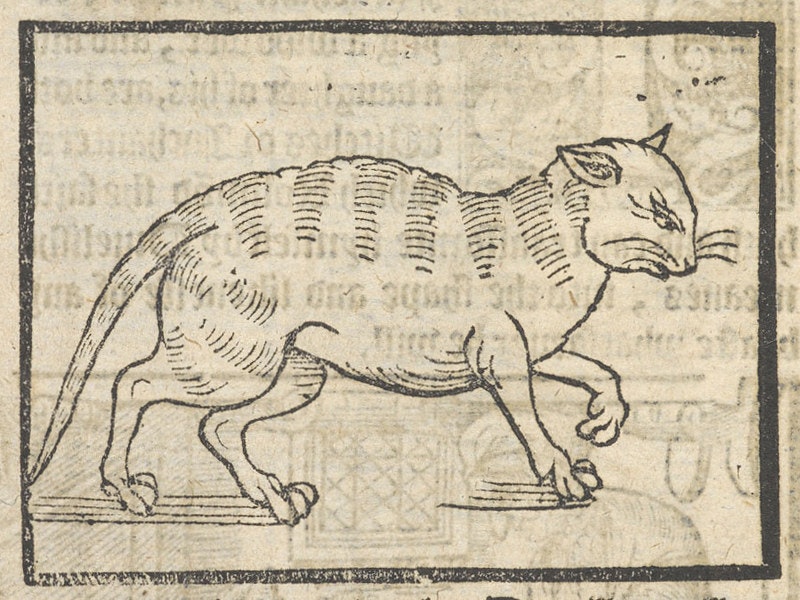
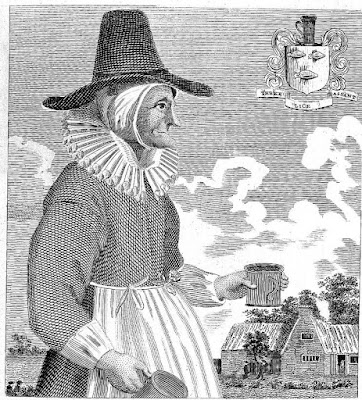
Engraving of a witch by James Caulfield, courtesy the Wellcome Collection

In Marblehead, that weird legend is about Mammy Redd, a fearsome witch who lived in the 17th century. According to various 19th century sources, Mammy Redd was a hideous old woman who terrorized the people of Marblehead. In New England Legends and Folklore (1883), Samuel Adams Drake wrote the following about her:

This woman was believed to possess the power of malignant touch and sight, and she was able, so it was whispered, to cast a spell over those whom she might in her malevolence wish to injure. To some she sent sickness and death, by merely wishing that a 'bloody cleaver' might be found in the cradle of their infant children.

A popular rhyme about Mammy Redd from the 19th century described another of her evil powers:

Old Mammy Redd

Of Marblehead

Sweet milk could turn

To mould in churn

Other versions of the rhyme specify that the mold looked like "blue wool," which sounds pretty gross. Ruining dairy products (milk, cream, or butter) is a classic New England witch's hex. 

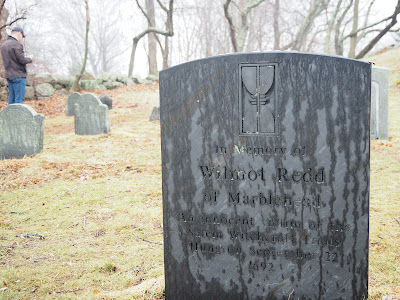
Photo by my friend Onix Marrero

The legend of Mammy Redd is based, quite loosely, on Wilmot Redd (or Read, depending on the source), a Marblehead woman who was executed during the Salem witch trials. She was the wife of a fisherman and, like many of the woman accused of witchcraft by the Puritans, was older and cantankerous. Some sources describe her as "grouty," which means rude or ill-tempered. She was not a witch, but was simply unpopular. 

Most records from her trial are lost, but those that remain describe an argument Redd had with a neighbor, Mrs. Syms. Syms believed Redd's maid had stolen some bed linens, and  exchanged harsh words with Redd. At the end of the argument, Redd supposedly cursed Syms, telling her she would never defecate or urinate again. Soon after, Syms began to suffer from constipation and had difficulty urinating. These problems only ended once she moved away from Marblehead. 

This is an absurd thing to be executed for, but the Salem judges accepted even the most ridiculous accusations at face value. During her questioning, the afflicted Salem girls (the driving force behind the witch hunt) claimed they saw Wilmot Redd's spirit offering them the Devil's black book to sign. This alleged vision sent the girls into convulsions. While most people in the courtroom took them seriously, Wilmot Redd did not. When a judge asked her opinion of the girls' convulsions, she said "My opinion is they are in a sad condition." Grouty to the end, Wilmot Redd was hanged on September 22, 1692 at Gallows Hill in Salem. 

Photo by Onix Marrero

Like everyone executed for witchcraft in Salem, Redd's body was discarded in an unmarked grave somewhere near Gallow's Hill. Perhaps her family retrieved it and secretly reburied her, perhaps not. Many years later, the town of Marblehead erected a monument to her in Old Burial Hill graveyard. As you can see from the photo, people leave coins at her grave to honor her memory. 

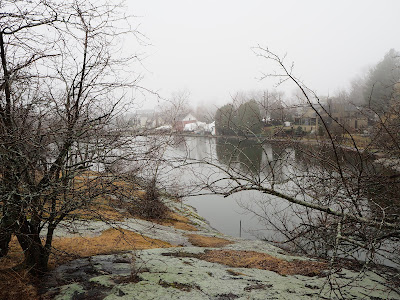
The town also named this small behind pond behind Old Burial Hill Redd's Pond in her honor. She and her husband lived next to the pond in the 17th century, and although her house is long gone her memory and legend still survives to this day. 

Photo of Redd's Pond by Onix Marrero

*****

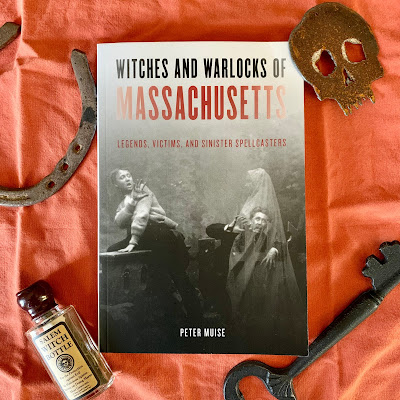
If you like witch legends and the history behind them, you might like my newest book, Witches and Warlocks of Massachusetts, which is available wherever you buy books online. 


October 06, 2020

The Norton Witches: Small Town Legends

Well, it's October. Spooky month, as people say. Every month is spooky on this blog, but I'll try to share some particularly nice stories this October. Let's conjure up those Halloween vibes! 

*****

I don't think I've ever been to Norton, Massachusetts but I may have passed through it. It sounds like a small, quiet New England town. They only got their first traffic light in 1997, so it's very quiet. But small New England towns often harbor strange secrets, as every Stephen King fan knows. 

For example, a rock behind the Norton's elementary school supposedly is imprinted with the Devil's footprint. The Evil One made it in 1716 as he carried off George Leonard, who had sold his soul for material wealth. 

Norton is also located inside the Bridgewater Triangle, an area famous for its paranormal activity. The town certainly has had its share of weird happenings. For example, a couple weeks ago I posted about a lizard man seen in Norton in 2001. More famously, in 1971 a Norton police officer named Thomas Downy saw something with an 8 to 12 foot wingspan flying overhead as he drove home through Easton late one night. Small towns seem to get the best monsters! 

Norton was first settled in 1669, so it's a relatively old town. These days people tend to blame paranormal phenomena on ghosts, aliens or dimensional gateways, but in the past witches were usually blamed for strange events and misfortunes. That was certainly the case in Norton.

The most famous witch in Norton's history is Ann Cobb. Interestingly, very little is known of her witchy exploits but a bridge in town is named after her (Ann Cobb Bridge). It is more commonly known as Witch Bridge or Witch's Bridge. Ann Cobb used to live near the bridge that now bears her name, which was about two miles away from the town center. According to a local legend, one day she set out from her home for the center and arrived there within minutes, much to the consternation of the townspeople. How had she traveled so quickly? People suspected that perhaps she flew, or was transported by some sort of evil spirit. The incident was enough to cement her reputation as a witch and to merit a bridge being named after her. Ann Cobb died in poverty as a ward of the town in 1798.

Dora Leonard was also suspected of being a witch. Farmers blamed Dora and her magic when their animals escaped from the barn or their pens. Two young boys also blamed her for their bad luck hunting squirrels. According to the boys, they had trapped a particularly large squirrel in a tree and shot at it repeatedly. They missed every shot, though, and the squirrel escaped unharmed. As the boys trudged home they saw a strange cat watching them. They told everyone who would listen that the cat was really Dora and she had bewitched their guns. Much like Ann Cobb, Dora Leonard was impoverished in her old age and the town took care of her financially. As she lay dying in 1786 her house was filled with strange noises. The neighbors who were attending her final moments fled in terror. 

Naomi Burt was the third Norton woman believed to be a witch. Like Dora Leonard, Naomi was said to cause mischief and minor mishaps. Wagons lost their wheels if they passed by her house and oxen escaped their yokes thanks to Naomi's witchcraft. Children particularly feared her and held their breath if they passed by her residence. Sadly, Naomi committed suicide on July 4, 1808. Old legends about witches are entertaining and spooky, but being impoverished and a social outcast can be grim and lonely. 

*****

My sources for this week's post are Duane Hamilton Hurd's History of Bristol County, Massachusetts. With Biographical Sketches of Many of Its Pioneers and Prominent Men, Part 2 (1883), and George Faber Clark's  A History of the Town of Norton, Bristol County, Massachusetts, from 1669 – 1859 (1859. This article from Patch.com also had good information about the Norton witches. 

May 20, 2020

I Am Giving a Free Online Witchcraft Talk on May 27, 2020

I will be giving a free online talk about Massachusetts witchcraft legends on Wednesday, May 27, 2020 at 7:00 p.m. Eastern time. Learning about spooky New England legends is the perfect way to spend a quarantine evening, isn't it?

Don't be like these folks - practice social distancing!

The event is sponsored by the Tewksbury Public Library but is open to everyone. If you want to attend you'll need to register in advance. 

I'll be talking about everything from the first witchcraft trials in the 1640s to modern 21st century legends about witch-haunted places. Massachusetts has such a rich history of witch legends - I hope you can join me!

February 27, 2020

Eight Movies About New England Witches You Should Watch

Although the Puritan era witch trials ended centuries ago, the fear of and fascination with witches still lingers in New England. Witchcraft doesn't die. It just bides its time and waits. 

Here is a short list of films, primarily horror movies, that deal with New England witches of several varieties. Watch them for entertainment or as cautionary tales. You'll never know what you might see out in the woods or what that mysterious neighbor is really up to. And don't forget: a witch hunt is always scarier than a witch.


Horror Hotel (aka City of the Dead) (1960)
College student Nan Barlow (Venetia Stevenson) has an interest in the history of New England witchcraft. At the urging of her advisor (Christopher Lee) she decides to visit Whitewood, Massachusetts, where  a witch named Elizabeth Selwyn was burned at the stake in 1692. Whitewood is a perpetually foggy and slightly surreal village filled with eccentric inhabitants but Nan settles in at the Raven's Inn to pursue her research. She soon discovers evidence that that Elizabeth Selwyn may not be dead. What else do you expect when your adviser is Christopher Lee?


I feel compelled to point out that witches in New England were executed by hanging, not by burning. That's just a minor quibble about an overall great horror movie, though. Horror Hotel starts out pretty mild but becomes surprisingly scary and has a shocking plot twist about halfway through. The black and white cinematography is atmospheric and creepy. Don't watch this one alone at night.

Dunwich Horror (1970)
I think I was ten or eleven years old when I first read H.P. Lovecraft's story "The Dunwich Horror." I was so scared I had to stop reading halfway through (although I finished it the next day). This 1970 film version isn't particularly scary but is still a lot of fun. Once again we have a college student getting into trouble, but this time it's all-American sweetheart Sandra Dee as Nancy Wagner, a student at Miskatonic University in Arkham, Massachusetts. After a lecture by her professor Nancy is returning a copy of The Necronomicon to the library when she's approached by Wilbur Whateley (Dean Stockwell), a dreamy young occultist from rural Dunwich who just wants a peak inside the forbidden book. Her professor interrupts but Nancy ends up giving Wilbur a ride home. Faster than you can say "Yog-Sothoth!" she's drugged, hypnotized, and the focus of a demonic sex ritual...


This is definitely a product of it's time, with a psychedelic monster in the attic and hallucinations involving sinister pagan hippies. Nancy's ritualistic rape still feels shocking, though, particularly in this #MeToo moment and is the one serious note in what is otherwise campy Lovecraftian fun.

Crowhaven Farm (1970)
Maggie (Hope Lange) inherits an old farm in Essex County, Massachusetts after a relative dies in a bizarre accident. She and her husband Ben (Paul Burke) decide to leave New York City and relocate to the farm, hoping it will rekindle their failing marriage. After she learns a coven of witches was executed there in the 1600s, Maggie begins having visions of angry Puritans and to feel a strange sense of deja vu. Things get really weird when Maggie and Ben take in an orphaned adolescent girl who becomes sexually fixated on Ben. Will Maggie learn the  secret of Crowhaven Farm in time to save her marriage - and her life?


Crowhaven Farm was made for television and is fondly remembered by people who saw it when they were kids. I've only seen it as an adult. I thought it was kind of funny that the producers tried to pass off mountainous Southern California as Massachusetts and that the characters talk about Lowell like it's a huge metropolis. On the other hand, the orphaned girl is creepy in a few different ways and the movie does have a nice shocking ending.

The Dark Secret of Harvest Home (1978)
Another made for TV production, this two-part miniseries was based on Tom Tryon's bestselling 1973 novel Harvest Home. As in Crowhaven Farm, a couple leaves the big city for the country hoping to find a peaceful life. But the Connecticut village of Cornwall Coombe is more than your average rural farm community. It's also home to a pagan fertility cult ruled over by the Widow Fortune (Bette Davis), and she takes her religious duties very seriously. Every seven years the villagers choose a new man to preside as Corn King over the Harvest Home celebration. But why won't anyone tell the newcomers what happens at the festival?


I was debating if I should include this one on the list. On one hand, the villagers of Cornwall Coombe aren't Satan-worshipping spellcasters like some of the witches on this list. On the other hand, Tom Tryon was obviously inspired by the writings of anthropologist James Frazer and poet Robert Graves, two writers whose work also inspired the modern witch-cult of Wicca. And the Widow Fortune's interest in herbalism would resonate with a lot of Instagram witches today. Think of this one as the American version of The Wicker Man.

Hocus Pocus (1993)
Once again Puritan-era witches return from the dead, but this time they're played by Bette Midler, Sarah Jessica Parker and Kathy Najimy. Oh, and the movie's a comedy from Disney! But despite the comedic overtones the plot is still rather dark. Three executed witches who are accidentally resurrected by a teenage boy trying to impress his crush devise a plan to suck the souls out of all the children in Salem on Halloween to gain eternal life. Not the lightest of comedies!


This was a modest hit when it was released in theaters but gained a huge following in subsequent when it aired on cable and as a VHS and DVD rental. Hocus Pocus still brings in millions of viewers when it airs on cable, particularly around Halloween. I guess those witches do have some magic after all! One bonus attraction for New Englanders: many of the outdoor scenes were shot in Salem and Marblehead, giving the movie some authentic Massachusetts flavor.

The Crucible (1996)
All the movies I've mentioned so far have been horror movies, but The Crucible isn't. Based on Arthur Miller's classic 1953 play, this drama points out what the other movies don't: there weren't really any witches in Salem, just innocent people persecuted because of ignorance and hatred. Although The Crucible isn't 100% historically accurate it drives home its point with strong performances from Daniel Day-Lewis as John Proctor and Winona Ryder as his accuser Abigail Williams.


Although The Crucible was praised by critics and nominated for multiple awards it didn't take in much money at the box office. I guess viewers would rather be scared by fictional witches than be reminded about the dark side of this country's past.

The Lords of Salem (2012)
When Salem radio DJ Heidi Hawthorne (Sheri Moon Zombie) plays a record from an unknown band called the Lords of Salem she has an eerie vision of witches worshiping Satan. Her co-workers at the radio station brush it off as just a hallucination, but Heidi's not so sure, particularly when other strange things start to occur. Heidi's downstairs neighbors give her an ominous Tarot reading. A local historian interrogates Heidi about the Lords of Salem's music, which is oddly familiar to him. And most importantly, a hideous naked witch keeps materializing in Heidi's apartment...


The Lords of Salem was directed by horror-rocker Rob Zombie and I think it's probably the best movie he's made. It's beautiful to watch, with innovative costumes, sets and special effects. Although it is another variation on the "dead witches won't stay dead" theme it filled me with an impending sense of dread, making it one of the more effective movies on this list. Rob Zombie is also from my hometown of Haverhill, Massachusetts, and he ably captures the New England gloom with scenes shot on location in Salem.

The Witch (2015)
Another film made a New England native, Robert Eggers's The Witch made a big arthouse splash when it opened and also made a goat named Black Phillip a pop culture phenomenon. Much like Crowhaven Farm and The Dark Secret of Harvest Home, it too focuses on a family whose plans to leave their old home and start anew are thwarted by witches, but this time the family in question is kicked out of a 17th century Puritan settlement and moves deep into the New England wilderness. Eggers worked hard to make the film feel like a window into the past, going so far as to incorporate snippets from 17th century documents into the script as dialogue. I think audiences expecting a traditional horror film were puzzled but The Witch is now considered a classic in the folk horror genre. 


Well, that wraps up my list. If you have any other suggestions please leave them in the comments. I'm always looking for good movies about witches.

July 24, 2019

Bigfoot, Poltergeists, and Witches: 300 Years of Weird Phenomena

A few weeks ago I posted about the states where you are most likely to see a UFO.  Maine, Vermont and New Hampshire were in the top ten, which makes sense because they are all rural states where you can get a good look at the night sky. After I posted that I wondered to myself, "I wonder if there are any statistics about Bigfoot sightings?"

Well, the Internet has answered my question. A recent article on Ok Whatever examines statistics from the Bigfoot Field Researchers Organization to determine what states have the highest (and lowest) cumulative number of hairy humanoid sightings.

A Bigfoot carving in Mocksville, North Carolina. 
Washington leads the way with a whopping 666 sightings. And yes, that is the Biblical number of the Beast so apparently the beast in question is Sasquatch. Washington is large and very woodsy which is supposedly the terrain that Bigfoot really likes. California, another large state which also has huge forests, comes in second with 441 reports. 

New England doesn't fare well in this list with Rhode Island and Vermont in the bottom five. Rhode Island is small and densely populated which might explain why there have only been five reported Bigfoot sightings. Vermont, however, is heavily forested and parts of it are quite rural so I would expect more than nine sightings.

The remaining New England states don't have high numbers of sightings either:

Connecticut: 17
Maine: 17
Massachusetts: 35
New Hampshire: 16

Despite low numbers some of the New England sightings are still pretty creepy. And quite familiar to anyone who's read a lot of paranormal accounts or folklore. Take this reported encounter, for example. On May 27, 2016 a married couple in Hancock, New Hampshire was awakened at 3:00 am by strange screaming sounds in the woods near their house. The screaming was followed by a knocking on the outside of their house and the sound of multiple things rustling through the trees and undergrowth. The husband went out on the back deck:
I felt like there were multiple sets of eyes on me. As I stood there I could hear breaking limbs, tree shaking and what sounded like a creature with serious power. My 12 gauge felt like nothing and I knew I better get back in the house. The noises carried on for a half hour.
After hearing something rush right up to him and grunt in the darkness he retreated inside. The noises eventually stopped. In the morning the couple saw broken tree branches and trampled plants near their home.

A camper in Western Massachusetts reported something similar: rocks were thrown at him one night in the fall of 2016.
I was camping in Massachusetts on top of October Mountain by a pond through the evening something was throwing small rocks at my tent I smelled it foul smell like dead fish. Rocks coming on the opposite side about 50 yards away I heard wood knocking I had no idea what it was until I heard some noises a growling sound and some yells this was going on for about 25 minutes then I shined a flashlight Into the Woods, I do not see anything but after that the noises went away the next morning. I woke up I found some broken limbs near where the sounds were coming from.
Although some people actually do report seeing large hairy humanoids many others just report these strange phenomena: knocking sounds, shrieks, rocks thrown by unseen hands, and damaged trees. Is all this really being caused by Bigfoot, who some people claim is just a large undiscovered apelike animal? It sounds like poltergeist phenomena to me. And it would have been familiar to the earliest English settlers of this region.


This type of weird phenomena has been reported in New England for hundreds of years. Here is testimony from John Russell in 1683 about the experiences of one Nicholas Disborough of Hartford, Connecticut:
This providence becomes amazing things: things being thrown at him and his boy, night and day in house and field: sometimes in open places where one might see a quarter of a mile about and no appearance of hand or person to throw them. The things were stones, dirt brickbats, cobs of Indian corn. 
People in New Hampshire and Massachusetts also reported similar occurrences during the 17th century as well. Here is William Morse's description of a strange assault on his house in Newbury, Massachusetts in 1679:
On last Thursday night my wife and I being in bed we heard a great noise about the house of knocking against the roof with sticks and stones throwing against the house with great violence; whereupon I arose myself and my wife and saw not anybody but was forced to return into the house again the stones being thrown so violently against us...
The Puritans interpreted these phenomena as witchcraft and trials often ensued. In fact, William Morses' own wife was eventually convicted of witchcraft. I think in most cases the phenomena can be explained away as pranks played by angry neighbors or relatives, but it's interesting that the same weird things are supposedly happening to people in the 21st century. The only thing that changes is the explanation.

The Puritan settlers understood these phenomena through their religious worldview. Weird sounds and rocks thrown by invisible assailants were caused by witches in league with the Devil. The witches needed to be arrested and punished to stop the phenomena. Three centuries later modern New Englanders understand them through a scientific worldview. Those weird knocking noises and thrown rocks are interpreted as the work of a large as-of-yet undiscovered hominid creature that lives in the woods. We just need to capture a Sasquatch and then we'll understand why they behave the way they do. The Sasquatch explanation is an improvement over the witchcraft one because at least no one is being arrested and executed. 

So which is it, witches or Sasquatch? I suspect it's actually neither. I don't have a good explanation myself, but I suspect in 300 years people will have a totally different interpretation for the same old tricks.

June 27, 2017

Did H.P. Lovecraft Believe In Witches?

New England produced three of the world’s most famous horror authors: Edgar Allen Poe, Stephen King, and H.P. Lovecraft. They are all great in their own ways, but I find myself re-reading Lovecraft’s stories more than anything the other two wrote. Maybe it’s his overwrought prose, maybe it’s all those hideous tentacled monsters, or maybe it’s because he used a lot of authentic New England lore in his writings. Folk beliefs, legendary places and bizarre history all show up in Lovecraft’s work.

He also incorporated New England’s witchy history into several of his stories. In “The Case of Charles Dexter Ward,” a wealthy young Providence scholar learns that one of his ancestors was an evil alchemist who fled Salem to escape the 1692 witchcraft trials, while in “The Shunned House” a man in Colonial Providence is suspected of witchcraft:
“Etienne’s son Paul, a surly fellow whose erratic conduct had probably provoked the riot which wiped out the family, was particularly a source of speculation; and though Providence never shared the witchcraft panics of her Puritan neighbours, it was freely intimated by old wives that his prayers were neither uttered at the proper time nor directed toward the proper object.”
And of course, “Dreams in the Witch House” is full of witchcraft, as you might guess from the title. The story tells how college student Walter Gilman rents a room in an old house once inhabited by a witch named Keziah Mason. Mason escaped the Salem trials in 1692 by drawing strange diagrams on the wall of her jail cell; legends say she and her ratlike familiar spirit now haunt the house where Gilman is staying.

Still from the 2005 film Dreams In The Witch House.
 It turns out the legend is true, and soon she tries to get Gilman to become a witch:

“The expression on her face was one of hideous malevolence and exultation, and when he awaked he could recall a croaking voice that persuaded and threatened. He must meet the Black Man, and go with them all to the throne of Azathoth at the centre of ultimate Chaos. That was what she said. He must sign in his own blood the book of Azathoth and take a new secret name…”

Much of this is classic New England witchcraft lore (although the name Azathoth is Lovecraft’s own creation). Lovecraft incorporated other types of New England lore into his stories so it’s not really surprising.

H.P. Lovecraft

What is surprising is that Lovecraft believed that witches were real – at least to some extent. Lovecraft was a materialist and didn’t believe in magic or the supernatural, but he did think there was something real behind the legends.
“Something actual was going on under the surface, so that people really stumbled on concrete experiences from time to time which confirmed all they had ever heard of the witch species. In brief, scholars now recognize that all through history a secret cult of degenerate nature-worshipers, furtively recruited from the peasantry and sometimes from decadent characters of more select origin, has existed throughout northwestern Europe…” (H.P. Lovecraft, Selected Letters, 1929 – 1931, 1971, p. 178, edited by August Derleth and Donald Wandrei)
According to Lovecraft, this cult was once the dominant religion in Europe but was forced underground by the “more refined, evolved and poetic polytheism” practiced by groups like the Druids, the Romans and the Norse. In retaliation to attacks by these dominant groups the cult turned to malevolent magic and became identified as witches.

Lovecraft didn’t think many of these real witches came to New England as settlers, but he suspected that a few of them did make their way to Salem.
“For my part – I doubt if a compact coven existed, but certainly think that people had come to Salem who had a direct personal knowledge of the cult, and who were perhaps initiated members of it. I think that some of the rites and formulae of the cult must have been talked about secretly among certain elements, and perhaps furtively practiced by the few degenerates involved… Most of the people hanged were probably innocent, yet I do think there was a concrete, sordid background not present in any other New England witch case.” (H.P. Lovecraft, Selected Letters, 1929 – 1931, 1971, p. 181, edited by August Derleth and Donald Wandrei)
Although this theory may seem strange now, Lovecraft wasn’t the only person who thought this way. It was widely accepted in the early 20th century. In the letter laying out his theory Lovecraft acknowledges Margaret Murray’s influential 1921 book The Witch-Cult in Western Europe. Murray was a prominent British Egyptologist with an interest in folklore and witchcraft. The Witch-Cult claimed that people accused of witchcraft in Europe were actually members of a pagan religion that secretly survived the Christianization of Europe.

Margaret Murray

Murray’s book received a mixed response when it was released. Critics felt she took the alleged witches’ confessions too literally and distorted the historic record to fit her theory, but the general reading public was more appreciative and Encyclopedia Brittanica even asked her to author their entry on witchcraft. Lovecraft was just reiterating an accepted theory of his day. Current historians discount Murray’s hypothesis and don’t think there was a secret witch cult in Europe or Salem. 

So even though there wasn’t really a secret witch cult in Salem, H.P. Lovecraft thought there might be. It just adds to the strange mix of folklore that makes New England such an interesting place.

January 18, 2017

A Ritual Cat Burial In Charlestown, Massachusetts?

Last month as a Christmas gift I received the book A History of Boston in 50 Artifacts (2016) by Joseph Bagley. Bagley is the official archeologist for the City of Boston, and a couple years ago I went one a tour he led of an ancient Native American quarry in the Blue Hills.

I was pretty excited to read his book. The fifty artifacts Bagley examines range from prayer books to feminine hygiene devices, but the one that really caught my attention was a cat skeleton unearthed in Charlestown. Many, many cats have lived and died in Charlestown over the last 400 years, but this cat was possibly killed as part of a magic spell.

Its skeleton was found buried in a small pit underneath the main entrance to the former Three Cranes Tavern in Charlestown's City Square. The tavern operated from 1635 until 1775, but the archaeologists who found the cat skeleton estimated it was buried sometime in the early 1700s. The cat was killed by a blow to the back of its head. The blow punctured the poor cat's skull, and its body was buried in one piece. Also buried near the cat was a large pot.

Bagley speculates that the cat was buried there to magically protect the tavern, either from witchcraft or from vermin. This certainly seems possible, since it's unlikely the tavern owners would just randomly bury a cat under the front stoop. Archeologists have found many instances of cats buried under foundations or inside walls of old buildings in Europe. Occasionally dead mice or rats are also found placed inside the cats' mouths.

There are a few theories that try to explain this practice. An older theory, popular with the Victorians, is that these animals were killed to appease land spirits. That may have been the case in the distant pagan past, but the English colonists certainly didn't believe in land spirits that needed appeasing.

A more recent theory is that the cats were killed to prevent rats and mice from entering the house. This seems counter-intuitive (wouldn't a live cat be more effective?), but I think the idea is that the cat's spirit will somehow continue to hunt mice after death. This might explain why some buried cats are found with mice inserted in their mouths.
The Three Cranes cat skeleton. Photo from The Boston Globe.
A final theory is that burying a cat under the doorstep was believed to deter witches or their familiar spirits from entering the house. That sounds like a plausible explanation, since we know our New England ancestors were very concerned about protecting their homes from witches. Some of the most well-documented methods include nailing a horseshoe over the door and putting bay leaves around the windowsills, but there were many other methods as well. It seems possible that killing and burying a cat might be another one. Archaeologists in England also often find pots buried under old house foundations or doorsteps, and they theorize that they were believed to deter witches from entering, possibly by trapping the witches spirits in them. This would explain why the Charlestown cat was buried near a pot.

There is a whole field of archaeology that deals with magic. Its foundational text is Ralph Merrifield's The Archaeology of Ritual and Magic (1987), which should probably be on my reading list. It should probably be on everyone's list! If you find this topic interesting, you may want to read this interview with Brian Hoggard, a British archaeologist working on this topic today.

My cat is sitting nearby as I write this post, and he tells me that a live cat is definitely better at averting evil than a dead one. I would have to agree. After all, the cat skeleton didn't do much to protect Three Cranes Tavern on June 17, 1775. The Battle of Bunker Hill happened that day, and the British troops burned the tavern and the rest of Charlestown to the ground. The tavern foundations were excavated prior to the Big Dig and can now be visited in City Square.

Although I enjoy writing about these old folk magic practices, I don't recommend ever hurting or killing animals. Not only is it cruel, it is illegal.

December 20, 2016

Do The Witches Ride At Christmas?

I wanted to read something wintry to put me in the holiday spirit, so I picked up a collection of Icelandic folklore: J.M. Bedell's Hildur, Queen of the Elves, and Other Icelandic Legends (2016). I thought, "Iceland is cold and snowy, so I'm sure these legends will put me in a Christmas mood."

Although it doesn't always work out that way, this time I was right. Not only are these legends set someplace icy and dark, many of them are explicitly about Christmas. However, unlike the stories we tell about Santa, Rudolph, and Mrs. Claus, these Icelandic stories are quite spooky. Apparently really terrible things happen in Iceland during Christmas. Malicious supernatural beings are very active there in late December.

For example, in "The Magicians of the Westmann Islands," a group of magicians who have fled to an offshore island to escape the plague threaten to kill one of their fellow sorcerers by Christmas Eve if he doesn't return to them. The lone sorcerer has fallen in love with the last woman in Iceland (everyone else has died from the plague) and refuses to return to the magicians. They send an assortment of demons to kill him on, but happily his beloved defeats them with help from her dead grandfather. I don't know about you, but that's not the type of story I usually hear at Christmas here in the United States.

One recurring themes in the Icelandic legends is that you absolutely don't want to be home alone on Christmas Eve. You should go to church with your family because bad things happen to those who stay home alone on Christmas Eve. What type of bad things, you ask? Well, perhaps elves will break into the house and kill you, which happens in the title story "Hildur, Queen of the Elves." These are not the nice pretty elves that one finds in a Tolkien novel, that's for sure.

If the elves don't get you, the witches might. In "The Witch Ride", a minister marries a beautiful  young woman. Her only flaw is that every Christmas Eve she disappears and refuses to say where she goes. This goes on for several years, until one Christmas Eve a new farmhand is working alone on the minister's farm when he encounters the minister's wife. She throws a magical bridle over him and rides him like horse to the witches' Sabbath, where she presents the Devil with a bottle of human blood. Merry Christmas?

It's interesting to compare these stories to local New England folklore. The magical witch bridle is something that also appears in New England folklore, but Christmas Eve has no particular connection with witchcraft or evil here. New England's witches are active year round, and their malicious actions are motivated by personal grudges and feuds, not by the calendar.

In New England lore, Christmas might even be a time antithetical to witches. Benjamin Franklin's brother James printed the following in a 1792 edition of his almanac:

This month (December) is a great Enemy to evil Spirits, and a great Dissolver of Witchcraft, without the help of Pimpernal, or Quicksilver and Yellow Wax... Some Astrologers indeed confine this Power over evil Spirits to Christmas Eve only; but I know the whole Month has as much Power as any Eve in it: Not but that there may be some wandering Spirits here and there, but I am certain they can do no Mischief, nor can they be seen without a Telescope.

Shakespeare wrote something similar in Hamlet. Here is Marcellus, one of the guardsmen of Elsinore, talking about ghosts and witches at Christmas:

Some say that ever ‘gainst that season comes
Wherein our Saviour’s birth is celebrated,
This bird of dawning singeth all night long;
And then, they say, no spirit dare stir abroad,
The nights are wholesome, then no planets strike,
No fairy takes, nor witch hath power to charm,
So hallow’d and so gracious is the time.

How common was the belief that Christmas was antithetical to witches and ghosts? This article in Early Modern Literary Studies looks at the passage in Hamlet, and finds some evidence that it was a widely held belief, but also finds other evidence for the opposite - that people thought witches were actually very active at Christmas. I haven't found any other New England references to Christmas being antithetical to witches anywhere except the Franklin almanac (quoted in Stephen Nissenbaum's book The Battle for Christmas).

I do know that ghost stories were quite popular in England at Christmas-time up until the modern era, but here in New England the ghosts are not tied to a seasonal calendar. Summer, winter, fall or spring: they are active all year round, much like the witches.

The Puritans dispensed with the old seasonal calendar when they came to New England. They acknowledged few of the old holidays, and to them Christmas was just another work day. Perhaps when they trashed the holiday calendar they freed the ghosts and witches to work their mischief on any date, not just December 25th. But I do like the sentiment that at least one night a year might be hallowed and gracious, a night free from evil and danger.

October 03, 2016

A Terrible Critter with Eyes Like Fire Coals: Revisiting the Dogtown Werewolf

A few years ago I blogged about the Dogtown werewolf, but it seems like a good time to revisit this topic. I was just recently researching this topic for my friend Sam Baltrusis's upcoming book about haunted crime scenes, and a producer from a paranormal show had also asked me what I knew about the topic. But most importantly, I really like werewolves!

New England folklore is filled with stories about witches, ghosts and the Devil himself, but there aren't very many about werewolves. Although the French Canadians of Vermont and Maine tell some tales about the loup-garou you don't find many werewolf stories in southern New England. One of the few comes from Dogtown on Massachusetts's Cape Ann.

Dogtown Common is a large park situated between the cities of Gloucester and Rockport. Once a thriving Colonial village, today Dogtown is 3,000 acres of forest, swamps and boulders. The ruins of the old village can be still be seen among the trees, along with boulders that wealthy Gloucester financier Roger Babson carved with motivational slogans. It's a weird landscape that has inspired artists and poets, and is haunted by legends of witches and strange disappearances.

Dogtown may also be home to a werewolf, at least according to the late author Robert Ellis Cahill (b.1934 - d. 2005). Cahill is an interesting figure in New England folklore. Before becoming a writer Cahill had worked as a Massachusetts politician and spent four years as Essex County sheriff, operating out of nearby Salem in that latter job until he suffered a major cardiac arrest in 1978. Heart attacks had long been a professional hazard of Salem's sheriffs, a problem supposedly dating back to the witch trials of 1692. During those trials accused wizard Giles Corey supposedly cursed Sheriff George Corwin, who died of a painful heart attack at a young age. Many of his successors suffered from heart attacks as well. The curse only ended after the sheriff's office was moved from Salem to nearby Middleton.

Robert Ellis Cahill (from Wikipedia).
Perhaps his encounter with a folkloric curse led Cahill to the next phase of his career, which was writing books about New England's weird and spooky history. He published more than thirty short books which had titles like New England's Cruel and Unusual Punishments, New England's Mountain Madness, and Haunted Ships of the North Atlantic. It was in one of these books (New England's Things That Go Bump in The Night) that he discussed the Dogtown werewolf.

On the evening of March 17, 1984 a Boston man named David Myska saw a large, mysterious animal loping along the cliffs near Crane Beach in Ipswich. Myska thought it might be a mountain lion, but those felines have been extinct in Massachusetts for centuries. Myksa claimed it was too large to be a coyote. So what was it? The creature was also seen in nearby Rowley, and four days later a dead deer was found near Crane Beach. Its throat had been slashed and large tooth marks were found around its neck and chest. Oddly, none of the deer's flesh had been eaten.

Ipswich and Rowley are not Dogtown, but they are located just a few miles away across the Annisquam River. Could the animal seen in those towns been the same one sighted a few days later by two teens running down Raynard Street in Gloucester? They described it as “gray monstrous dog-like animal… It had big teeth and was foaming at the mouth.” Yikes. Raynard Steet leads directly into Dogtown.

According to Cahill, the history of Dogtown is littered with hints about werewolves. For example, he claims that the Indians who originally inhabited Cape Ann said they were descended from a race of dog-headed men. He claims they also believed that anyone who ate the wolfbane plant would revert to their ancestral form: hairy, fanged, clawed, and lupine. I haven't seen this folklore anywhere except in Cahill's book, so take it with a grain of salt. And whatever you do, don't eat wolfbane, which is highly poisonous, with or without salt.

Dogtown is famous for the witches who lived there in the 18th and early 19th century, and Cahill notes that one of these witches, Daffy Archer, wore a wolf's tooth around her neck as a pendant. Witches are famous shape-shifters, so I suppose it's not much of a leap to connect witches with werewolves. If Peg Wesson, an infamous Gloucester witch, could send out her soul in the shape of a crow perhaps some other witch could transform into a wolf.

Me in Dogtown. I didn't see a werewolf that day (that I know...)

Cahill also interprets a famous incident from Dogtown's history as a possible werewolf attack. On September 10, 1892, a Gloucester sailor named James Merry drunkenly decided to wrestle a bull pastured in Dogtown. The previous year Merry, inspired by toreadors he had seen in Spain, had successfully wrestled the same bull to the ground, so why not try it again? In his drunken stupor Merry forgot that bulls grow quickly, and the bull was much, much larger than it had been twelve months earlier. It won the rematch and gored Merry to death. The sailor's lifeless body was found the next morning in the pasture.

That's the official story, but Cahill claims that the moon was full the night of September 10, and that Merry was found with his throat torn out, something no bull would do. Cahill asks: could Merry have been killed by a werewolf?

I would say this is all pretty slender evidence for a werewolf, but Cahill does cite one story that makes me hesitate in saying he concocted the whole thing. In her 1879 book Reminiscences of a Nonagenarian, Sarah Emery tells the following tale about Amos Pillsbury, a man who lived in Dogtown and worked for her Emery's father as a laborer. One night Pillsbury was walking home from work, a route that took him through thick woods. As he traveled this dark road he encountered a "terrible critter":

"A terrible critter? What was it like Pillsbury?" father inquired.

"Oh, Mr. Smith, it was a terrible big critter, as big as Brindle's calf; its eyes were like fire coals, and it ran past me through the bushes, about a rod from the road, with every hair whistling like a bell. It must have been the wolverine."

"The what, Pillsbury?"

"The wolverine. My old granny used to keep us young 'uns quiet with stories about the wolverine out beyond in the woods. I used to be afeared to stir ten yards from the door o' nights; but, as I had never seen the critter afore, I had begun to think it was one of granny's stories, but I seed him last night, sartin sure ; and his eyes were like fire coals, and every hair whistled like a bell." 

Pillsbury here is using the word wolverine to refer to a wolfish creature, not to the Hugh Jackman character from the X-men movies or the large burrowing animal found in Alaska. It was something his grandmother had told him about since childhood, and he was so obviously scared by seeing it that local men hunted for the creature for two days. They didn't find any sign of it.

So does this all add up to a bona fide werewolf? I'd like to think so, but it might just be wishful thinking on my part. If it is, I'm not the only one who feels that way. A couple years ago we went to a performance/haunted house in Salem called Gallow's Hill, which re-enacts legends from the North Shore's past. According to the performers at Gallow's Hill, the Dogtown witches used werewolves to guard their houses. So, whether it's true or not, the legend of the Dogtown werewolf lives on.

August 28, 2016

Weird New England News: A Giant Snake in Maine, A Witch on Trial, and A Witchy Author

There's been some weird stuff happening in New England recently.

First up: is a giant snake on the loose in Westbrook, Maine? It seems like the answer is "yes."

The story began back in early June, when a woman reported seeing a large snake in Westbrook's Riverbank Park. She told the police it was as big as a truck and had a "head the size of a basketball." Snakes in Maine don't get that large, so no one took her claim seriously.

However, on June 29 a Westbrook police officer reported seeing a ten foot long snake feeding on a beaver in the Presumpscot River. A second officer arrived and the two watched the snake swim across the river to the other side, where they lost sight of it. Game wardens investigated but found no sign of the snake.

The summer passed without any further snake sightings, but on Saturday, August 21 a Westbrook resident found a gigantic snake skin near the river:

Photo courtesy Westbrook Police, via The Portland Press Herald.
The shed skin is estimated to be at least 12 feet long. Snakes shed their skin when they outgrow them, so Wessie (as the creature has been named) is bigger than 12 feet and probably still growing...

The snakeskin has been sent for tests to determine what species it is from. Derek Yorks, a wildlife biologist with the State of Maine, said Wessie is probably not indigenous because the snakes native to Maine don't grow larger than five feet. He also said Wessie would probably not survive the winter if s/he is not a local snake species. I don't know - we've have had some mild winters lately...

*****

An animal of another kind created a frenzy in Salem, Massachusetts, but rather than a giant snake it was a dog locked in a car on a hot day.

On Saturday, August 14, Lorelei Stathopolous was arrested by the Salem police for disturbing the peace. But Stathopolous says the police didn't do enough to help a dog locked inside a car on a hot day.

Stathopolous is a witch and owns Crow Haven Corner, Salem's longest-running witch shop. She is also an animal rights activist. On August 14 Stathopolous received a phone call from the manager of Hex, another witch shop in Salem, who told her that a dog had been locked in a parked car in front of Hex. The temperature was around 90 degrees.

Lorelei Stathopolous

Stathopolous called the police and ran down to the parked car. The police officers on duty didn't think the dog was in any danger because the window was cracked open. Stathopolous thought otherwise and urged the police to summon the fire department to free the dog. They refused. Stathopolous then tried to pour water through the window for the dog over objections from the police. When the owner of the car finally arrived Stathopolous urged the police to arrest him. They refused, but instead arrested Stathopolous for disturbing the peace.

Stathopolous will go on trial October 26. You can see WHDH's coverage of the story here.

*****

Finally, if you'd rather learn about the historic Salem witch trials, head to the Boston Public Library on September 20 to meet Stacey Schiff, author of the recent bestseller The Witches: Salem 1692. The talk is free, and will be hosted by Brenton Simons, CEO of the New England Historic Genealogical Society and author of Witches, Rakes and Rogues. 

August 16, 2016

Seductive New England Witches, Part One: Mrs. Paterson

Austin Osman Spare was born in London in December of 1886. From a young age he showed an aptitude for the arts, and by age thirteen he was working in a stained glass factory and taking art classes by night. He went on to study at the Royal College of Art and his father, a London policeman, secretly submitted one of young Austin's drawings to the prestigious Royal Academy. It was accepted and exhibited. Spare was on the road to art world greatness.

But things didn't work out exactly as expected. Spare briefly had a successful art career, but he's more famous for his work as an occultist and practitioner of witchcraft. Spare claimed that a witch named Mrs. Paterson set him on this unusual path.

As a child Spare had been raised Anglican, but in his early adolescence met an elderly fortune teller named Mrs. Paterson. Spare described her as a "colonial woman," and Paterson claimed she was from a venerable line of New England witches who had escaped the Puritan prosecution in the 1600s. Although quite old and not traditionally attractive Spare found himself drawn to her. Paterson seduced him, and for the rest of his life Spare was attracted to older women.

Austin Spare and Witch, 1947, by Austin Osman Spare

Although Paterson was poorly educated and had a limited vocabulary she had a powerful grasp of abstract metaphysical concepts. More impressively, she had strong occult powers. In addition to being an accurate fortune teller she was able to materialize her thoughts into physical manifestation, and often created visions of the future for her clients using this power. Spare claimed she taught him this talent but he could never use it as skillfully she could.

Mrs. Paterson possessed several other unusual talents. Using her ability to externalize her thoughts, she was able to easily transform herself from an elderly woman into a beautiful young one. Spare painted portraits of her in both forms.

Paterson could also travel to the Witches' Sabbat, and took Spare with her several times. Spare claimed the Sabbat occurred in "spaces outside of space" that were indescribable and could not be physically represented. Paterson gave Spare the witch name "Zos" after initiating him into the cult. In return, Spare called her his Witch Mother.

Drawing by Austin Osman Spare

Spare eventually turned his back on the mainstream art world to devote himself to his occult and magical studies, briefly associating with Aleister Crowley before striking out on his own. (An interesting note: Adolf Hitler asked Spare to paint his portrait, but Spare turned him down, rightly thinking he was evil.) He lived in squalid conditions in London's slums where he wrote books with titles like The Book of Pleasure, The Focus of Life, and The Anathema of Zos, and sketched and painted his poverty-stricken neighbors and spirits that he summoned. He died in relative obscurity in 1956, but his work on magical sigils (a way of encoding desires in visual form) was rediscovered by occultists in the 1980s. Today his art work is quite expensive; the largest collection of his work is held by Led Zeppelin's Jimmy Page.

And what of Mrs. Paterson, the New England witch who set him on this path? It's unclear what happened to her, if she really existed at all. Perhaps she is now residing in a space beyond space, but some writers think Spare simply made her up. People who start magical cults or new religions often claim they were taught by divine beings like angels, secret Ascended Masters, or extraterrestrials. After all, the magic has to come from somewhere. Mrs. Paterson fits into this pattern. Then again, if Spare really did have the ability to manifest his desires in the material world, perhaps the elderly witch emerged from his subconscious mind to teach him.

Witches, undated, by Austin Osman Spare
Whatever she really was, I find it interesting that Paterson allegedly came from New England. Britain has plenty of witches in its own history, so why would Spare need one of ours? There is a trend in the occult world to think that more 'primitive' people have the most powerful magic. Although 'primitive' is an ethnocentric and meaningless word when applied to cultures, occultists and New Agers have often thought that groups like American Indian medicine men, swamp-dwelling Voodoo practitioners, or rural Appalachian conjure folk have the secrets to the universe. Primitive people are allegedly closer to nature, and therefore closer to the source of magic. An elderly, uneducated fortune-teller from that wilderness called New England would probably have seemed primitive - and therefore powerful - to a Londoner like Austin Osman Spare.

Mrs. Paterson doesn't fit the mold of most traditional New England witches, who were not usually seductive. Accounts of the Witches' Sabbat from early New England witch trials were quite chaste and lack the descriptions of orgies that are found in European trial documents. There is some underlying sexual tension in tales of New England witchcraft - particularly those where the witch 'rides' her male victim all night long like a horse - but it is usually not explicit. If anything, Mrs. Paterson reminds me of the shape-shifting fairies and enchantresses from Medieval romances like Gawain and the Loathly Lady, where one of King Arthur's knights marries a hideous crone who later transforms into a lovely maiden.

"Dreams in the Witch House" from the Masters of Horror TV series, 2005
Paterson also reminds me of Keziah Mason, the ancient witch in H.P. Lovecraft's short story "Dreams in the Witch House." Like Paterson, Keziah Mason takes that story's male protagonist to the Witches' Sabbat, which lies beyond the boundaries of normal space. Unlike the highly libidinous Spare, Lovecraft was much more repressed, and Keziah Mason is not seductive in his story. (However, Keziah is both seductive and able to transform into an attractive young lady in the 2005 TV version directed by Stuart Gordon.)

Lovecraft and Spare were contemporaries, but I don't think they were aware of each other's work. Perhaps Mrs. Paterson was working behind the scenes? Lovecraft did once receive a letter from a female fan who claimed to be descended from the Salem witches. She offered to share her magical knowledge with him, but he declined her offer. Who knows what might have happened if he had taken her up on it.

January 31, 2016

The Dogtown Witches

Most of the witches in New England history bore that label unwillingly. They were innocents accused of witchcraft during one of the area's witch crazes, or they were social outcasts called witches by their suspicious neighbors.

But in a desolate part of Massachusetts's Cape Anne, a group of women seemed to have taken on the mantle of witch deliberately as a way to survive harsh economic times. They were the Dogtown witches.

Their story starts in the early 18th century. In the year 1721 the town elders of Gloucester, Massachusetts decided to open up more land for settlement. This coastal community north of Boston had been growing for almost 100 years, and space was growing tight in the main part of town.

Dogtown is very, very rocky.

When Gloucester was first established much of the land was covered with thick forest. Over time most trees had been cut down for firewood or lumber, and by 1721 a high, rocky plateau just outside town was almost completely treeless. The elders named this plateau the Commons Settlement and encouraged young families to build homes there.

At first all went well. The land was too rocky for farming, but craftsmen like barrel makers, blacksmiths and millers settled the area. Livestock grazed among the plateau's many large boulders. The Commons Settlement thrived.

Things were good for several decades, but when the Revolutionary War began many of the Commons' men were called away as sailors and soldiers. To make matters worse, Gloucester's meeting house was relocated. The meeting house was the town's civic and religious center, and it was originally located close to the Commons Settlement. However, wealthy families who lived on the waterfront resented the long commute to Sunday services and eventually persuaded the town to move the meeting house closer to the harbor. With this move the Commons Settlement changed from an up and coming neighborhood to an isolated backwater.

Old boundary walls in Dogtown.
Families began to leave the settlement for better locations, abandoning their homes and businesses, and people from the lowest levels of Gloucester society began to move into the empty houses. Freed slaves and elderly widows soon made up most of the Commons' population. Wealthier Gloucesterites began to derogatorily call the place Dogtown, and the nickname stuck.

The area is officially called Dogtown Common even today. Legend says it was called Dogtown because of the feral dogs who roamed its empty streets. That's quite possible, but there are other poor marginal communities in the US that share the same name. It may just be a standard American name for a bad place to live.

Boulder marking the site of Dogtown's old public square, now overgrown with trees. 

Some of the Dogtowners survived on charity and working menial jobs in town, but many of the elderly widows made their living as herbalists... and witches. This was of course risky work. Less than 100 years earlier the Salem witch trials had wreaked havoc in Massachusetts, but the Dogtown witches somehow avoided legal problems or violence.

Some of the women positioned themselves as healers and fortune tellers. For example, Daffy Archer sold a medicine made of snail mucous. Rachel Rich also sold a healing tonic, but hers was made of fox berry leaves, spruce tops, and other herbs, which sounds less icky. She also told fortunes by examining coffee grounds. Her daughter Becky did similar work but preferred to use tea leaves instead.

The Riches were mostly benevolent, but some of their neighbors followed a more malevolent path. Molly Jacobs was also a fortune-tellers but also threatened anyone who didn't give her money. Luce George operated in a similar way, but the most-feared witch in Dogtown was Thomazine "Tammy" Younger, Luce's niece.

House foundation.

Tammy Younger lived in a collapsing house near the main road that passed through Dogtown to Gloucester. Whenever she heard a wagon or horse approaching her house she would throw open the shutters and glare at the oncoming travelers. Then Tammy would threaten to curse them unless they gave her money to pass by safely. She was quite fearsome in appearance and was quite successful at collecting tolls from terrified travelers.

Tammy's reputation lingered even after her death in 1829. When she died her nephew ordered a coffin from John Hodgkins, a local carpenter. The Hodgkins family was used to having coffins in their home, but Mrs. Hodgkins felt an unnatural chill around Tammy's coffin - even though it was empty. She believed Tammy's ghost was lurking around their house and demanded that her husband move the coffin to the barn.

The last inhabitant of Dogtown, a freed slave named Cornelius Finson, died in 1839. After his death the settlement became the ghost town that it still is today. For many years it was a popular spot for picnickers, and wealthy philanthropist Roger Babson hired local masons to carve motivational slogans into some of the boulders. Babson came from one of Gloucester's prominent families, and he wanted people to remember the hard-working craftsmen who founded the settlement, not the witches who lived there at its demise.

One of Babson's boulders.

Over time the forest reclaimed Dogtown, and it's now 3,000 acres of thickly-wooded, rock-strewn wilderness. It's beautiful, magical and kind of spooky. Babson's boulders are still there, but they're hidden by the trees, and whenever I visit I don't think about hard-working craftsmen. I think about the Dogtown witches.

*****

There are quite a few books about historic Gloucester and Dogtown, but one of the best is probably Elyssa East's Dogtown: Death and Enchantment in a New England Ghost Town (2009). If you decide to visit Dogtown go with a friend. It is large, rocky, and there have been a couple murders there. The locals also claim there have been some unexplained disappearances.

Me wandering through Dogtown.