Showing posts with label Boston Massachusetts. Show all posts

May 17, 2019

"Come Away, Come Away": The Necromancer of Boston Harbor

Following up from last week's post, here's another interesting story from the John Winthrop's journal. Winthrop was one of the early Massachusetts Puritan settlers and served for many year's as the Massachusetts Bay Colony's governor. His journal contains lots of details about the politics of the colony but also includes a few weirder little tales.

One of them is this story of a necromancer who died when a ship exploded in Boston Harbor. A necromancer technically means someone who practices magic involving the dead, like raising the dead or communicating with their spirits. It also can be used more generally to mean a warlock or wizard. 

John Winthrop (1587 - 1649)

Winthrop's account doesn't begin with the necromancer, but starts instead with mysterious lights that were seen in the sky over the harbor. From January 18, 1644:

About midnight, three men, coming in a boat to Boston, saw two lights arise out of the water near the north point of the town cove, in form like a man, and went at a small distance to the town, and so the the south point, and there vanished away. They saw them about a quarter of an hour, being between the town and the governor's garden. The like was seen by many, a week after, arising about Castle Island and in one fifth of an hour came to John Gallop's point.

It's kind of a creepy paragraph. What do these lights, "in form like a man," mean? Are they perhaps an entity of some kind? They were seen again a week later:
The 18th of this month two lights were seen near Boston, (as is before mentioned,) and a week after the like was seen again. A light like the moon arose about the N.E. point in Boston, and met the former at Nottles Island, and there they closed in one, and then parted, and closed and parted diverse times, and so went over the hill in the island and vanished. Sometimes they shot out flames and sometimes sparkles. This was about eight of the clock in the evening, and was seen by many.
Now here's where things get really weird. Witnesses heard a strange voice calling out.
About the same time a voice was heard upon the water between Boston and Dorchester, calling out in a most dreadful manner, "Boy, boy, come away, come away": and it suddenly shifted from one place to another a great distance, about twenty times. It was heard by diverse godly persons. About 14 days after, the same voice in the same dreadful manner was heard by others on the other side of town towards Nottles Island.
Winthrop believes that these strange phenomena are tied to a pinnace (a type of small sailing ship) that exploded when a pistol onboard was fired into the ship's gunpowder supply. One of the crew was rumored to be a necromancer and possibly a murderer:
These prodigies having some reference to the place where Captain Chaddock's pinnace was blown up a little before, gave occasion of speech of that man who was the cause of it, who professed himself to have skill in necromancy, and to have done some strange things in his way from Virginia hither, and was suspected to have murdered his master there; but the magistrates here had not notice of him till after he was blown up. This is to be observed that his fellows were all found, and other who were blown up in the former ship were also found, and others also who have miscarried by drowning, etc. have usually been found, but this man was never found.
Winthrop doesn't explicitly explain the strange lights and voice, but I think we can piece together what he's hinting at. As a Puritan Winthrop would believe that a necromancer was in league with the Devil, the one in this story doubly so since he was (perhaps) a murderer. The voice speaking in a "dreadful manner" probably was that of the Devil himself coming to drag the dead necromancer to Hell. It sounds like it took a while for the Evil One to find him, but apparently he did in the end because his body was never recovered from the harbor.

Was there really a necromancer on board the ship when it sank? Maybe, but maybe not. The pinnace in question was owned by Captain John Chaddock, an adventurer who had a bad reputation in Boston. He and his men had sailed as mercenaries to fight in Nova Scotia's Acadian civil war but saw neither combat nor loot. Disappointed, they came to Boston. Three of of Chaddock's men died entering Boston Harbor when they fell from the ship's mast. Once Chaddock and his crew came ashore they drank, brawled and insulted the Puritans. Chaddock was fined 20 shillings for his conduct. The pinnace that exploded was carrying some of Chaddock's men to Trinidad. Overall, Chaddock was bad news.

Winthrop writes disapprovingly of Chaddock's behavior, so perhaps he was willing to believe the rumors that one of his ships carried a murderous necromancer. On the other hand, it's not impossible that one of the sailors may have practiced some type of magic. Books about magic and astrology were very popular in the 17th century, and many people, sailors included, practiced folk magic of one kind or another.

For example, in 1679 a sailor named Caleb Powell was accused of bewitching a teenage boy in Newbury. Several people testified that Powell had bragged about his knowledge of spirits and astrology, and others testified he had been trained in the black arts by a warlock named Norwood. The court ultimately found Powell innocent of the charge of witchcraft but did fine him for knowing too much about magic. 

So who knows, maybe the man who blew up in Boston Harbor really was a necromancer of some kind. Only he and the Devil know for sure.

April 07, 2019

Ann Hibbins, The Wealthy Witch of Boston

I think most people are familiar with the Salem witch trials. They may not know every fact and date, but people know the Puritans executed a group of people for witchcraft in Salem. I suspect people are less familiar with the other witch trials that happened earlier than 1692, though.

Surprisingly, more than one hundred people were accused of witchcraft in New England before the Salem witch trials ever happened. Many of these accusations were made informally, but many made it all the way to the court system. That's quite a few accusations considering New England was only settled in the early 1600s. Shockingly, fifteen people were executed for witchcraft in New England between 1648 and 1692.

One of those executed was Ann Hibbins of Boston. If you've read Nathaniel Hawthorne's novel The Scarlet Letter you may remember Ann Hibbins. Hawthorne portrays her as an aged but wealthy woman who has sold her soul to the Devil. She futilely encourages heroine Hester Prynne to join her in the woods for the witches Sabbath, and even suggests that minister Arthur Dimmesdale might like an introduction to Satan:

“So, reverend Sir, you have made a visit into the forest,” observed the witch-lady, nodding her high head-dress at him. “The next time, I pray you to allow me only a fair warning, and I shall be proud to bear you company. Without taking overmuch upon myself, my good word will go far towards gaining any strange gentleman a fair reception from yonder potentate you wot of!”

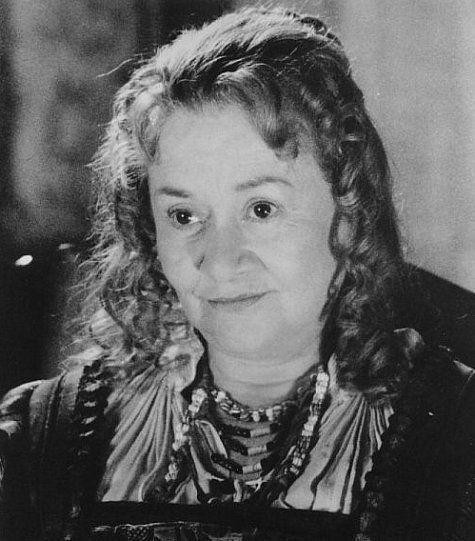
Hawthorne is having a little authorial fun here with a historical figure. In his novel Ann Hibbins is an actual witch practicing dark magic, but he uses her mainly as a contrast to the fictional Hester Prynne, who although adulterous is not evil. When The Scarlet Letter was made into a Demi Moore movie in 1996 the screenwriter took even more liberties with the character: she was portrayed as a goddess-worshipping Wiccan.

Joan Plowright as Mistress Hibbins in The Scarlet Letter
The real Ann Hibbins was neither an evil witch or a Wiccan, but was a wealthy Puritan woman who emigrated to Boston in the 1630s with her husband William. They were well-connected politically since William was related through a previous marriage to the colony's governor Richard Bellingham. A year after settling in Boston William's connections got him appointed a deputy to the General Court, the legislative body of Massachusetts. He achieved the higher title of Assistant in 1654. Both Ann and William also became members of Boston's prestigious First Church.

Not everything was perfect in the New World. They had some financial problems in Boston, including losing a significant amount of gold in a trade deal that went bad. Still, the Hibbinses were wealthier than most Bostonians, and William was even allotted three hundred acres of land in the Boston village called Muddy River (now the town of Brookline). Known as Stanford Farm, it was one of the largest allotments in the village. William also acquired several other pieces of land in Muddy River.

Map from Brookline Historical Society. 
They didn't really need to worry about money, but ultimately it was money that led to Ann being accused of witchcraft. Ann had hired a carpenter named John Crabtree to work on their house in Boston but was unhappy with the completed work. She refused to pay him the amount he wanted and complained to neighbors and friends about him. Her husband tried to mollify her by asking another carpenter, John Davis, to provide an unbiased estimate of a fair price. However, Ann was also unhappy with the estimate Davis provided and proceeded to slander him along with Crabtree.

Ann's behavior was considered inappropriate for someone of her status, and particularly for a member of the prestigious First Church. The church's leaders felt she should have behaved more moderately. They also thought she was being disobedient to her husband. After several hearings with Ann (who remained unrepentant) the First Church excommunicated her. This was a very strong rebuke, particularly since Boston was practically a Puritan theocracy at the time. 

William remained a member of First Church, though, and his influence was able to protect Ann from any further repercussions. But when he died in 1654 Ann suddenly found herself in a vulnerable position, and in 1655 she was brought to trial for witchcraft. Interestingly, historians have not found any of the testimony given against her. We don't really know the specifics of the accusations against her, but they probably didn't really matter for the trial's outcome. She was an unpopular older woman with a bad reputation. The jury found her guilty and condemned her to death. 

The verdict was refused by the colony's magistrates, and the case was sent to the General Court itself, the ruling body that William had served on. Surprisingly the General Court also found her guilty and sentenced her to die by hanging. It has been speculated that they returned the guilty verdict to defuse public outrage. She was executed on June 19, 1656.

Although she was unpopular and cantankerous, it seems that many people at the time felt her execution was unjust. For example, the Reverend William Hubbard wrote in the 1670s that:
Vox populi went sore against her, and was the chiefest part of the evidence against her, as some thought.... Many times persons of hard favor and turbulent passions are apt to be condemned by the common people for witches, upon very slight grounds. 
Stories about witches are scary. Accounts of demons, black magic and Sabbaths in the woods are good spooky stories to tell at night. But I think historical accounts of witch-hunts are even scarier, particularly in the clear light of day.

July 11, 2018

H.P Lovecraft and The Witch from Boston

Rhode Island native and horror writer extraordinaire H.P. Lovecraft liked to incorporate New England history and folklore into his stories. He was particularly fond of local witch-lore, which shows up in many of his best known stories.

For example, Richard Upman Pickman, the crazed artist in "Pickman's Model" (1927), is descended from "old Salem stock" and had an ancestor executed for witchcraft. In "Dreams in The Witch House" (1933), a hapless college student finds trouble when he rents a room once inhabited by a witch, while the title character in "The Case of Charles Dexter Ward" (1927) discovers through genealogical research that one of his ancestors fled Salem in 1692 due to suspicions about his "queer chemical or alchemical experiments."

H.P. Lovecraft, 1890 - 1937
Those are all fiction, but Lovecraft may have encountered a real-live New England witch in 1929 - or at least someone who claimed to be one. After Lovecraft's story "The Dunwich Horror" was published in Weird Tales he received a fan letter from a woman who lived in Boston. Lovecraft wrote about her to his friend Clark Ashton Smith on March 22, 1929:


By the way - that tale has just earned me an interesting letter from a curious old lady in Boston, a direct lineal descendant of the Salem witch Mary Easty, who was hanged on Gallows Hill Aug. 19, 1692. She hints at strange gifts and traditions handed down in her family, & asks me if I have access to any antient (ancient) secret witch-lore of New England... I shall answer the letter, & see if I can get the good old soul to relate some of the whispered witch-traditions! A story of Salem horror based on actual "inside dope" from a witch-blooded crone would surely be a striking novelty!

On April 14, 1929 he wrote Ashton Smith with a little more information about the woman:


It appears that her forebears were well acquainted with the Marblehead witches Edward Dimond and his daughter Moll Pitcher... & that she herself, through the Easty or Este line, is a scion of the D'Estes of Ferrara, Italy, & a descendant of no less a malign character than Lucrezia Borgia! Some ancestry!

Lovecraft and the Boston woman kept up a correspondence over several years. He wrote about it in an October 24, 1930 letter to his friend Elizabeth Toldridge:


... As for my spectrally affiliated New England correspondents - I have not again heard from the grotesque Maine person, but hear frequently from the old lady descended from Salem witches. She sent several modernly gruesome legends lately, but in general I find it more natural to invent cosmic horrors of my own than to utilize actual folklore incidents. I use actual local colour in treating of geography and customs; but when it comes to actual incidents and types of unreal phenomena, I have so far preferred to invent rather than adopt.

The woman died in 1933, as he indicated in a letter to his friend Robert Barlow:


An old lady in Boston whole I knew - & who died just a year ago - was a direct descendant of Mary Easty, one of the Salem witches hung in 1692 - & therefore a collateral descendant of the more famous Rebecca Nurse (Mrs. Easty's sister), whose ancient house (built 1636) in Danvers, Mass. [near Salem - formerly called Salem-Village] is still in existence...

Unfortunately, to my knowledge Lovecraft never mentioned the woman's name, at least not in any published letters. It would be fascinating to know who she was! Did she really have the ancestry she claimed? It seems unlikely she was descended from the D'Estes of Italy (and therefore Lucrezia Borgia), since the Easty/Esty family of Salem can be traced back to at least 1450 in England; Borgia was not born until 1480. Lovecraft's correspondent could have been descended from Mary Easty though.

Also, did she really have any arcane knowledge, either passed down through her family or even just learned from books? And did she say she actually claim she was a witch? Lovecraft's letters suggest that she was a witch but doesn't make it explicit. The Wiccan/pagan revival didn't really start until the late 1940s, but there were still a few people here and there who identified as witches (including at least one famous New England writer). It's possible this woman was one of them.

If anyone has more information about her please post it in the comments section. I would love to know more about the "curious old lady in Boston."


Lovecraft's grave in Providence, Rhode Island
Lovecraft was a materialist and skeptical of religion and the occult, but while he was alive some people thought his stories were about real occult phenomena. The elderly Boston woman seems to have been one of them, as was his acquaintance William Lumley. Lumley was an avowed occultist whom Lovecraft collaborated with on the 1938 story "The Diary of Alonzo Typer." In a letter to the author Robert E. Howard, Lovecraft noted that Lumley believed Lovecraft and some of his friends were "genuine agents of unseen Powers in distributing hints too dark and profound for human conception or comprehension." Lovecraft thought Lumley was a little crazy...

After his death, an increasing number of people thought that Lovecraft's stories contained real supernatural truths. His work inspired a host of occultists, including Kenneth Grant, Anton LaVey, and a slew of Chaos Magickians. So maybe there was something behind his stories after all? Somewhere, the ghost of an elderly lady from Boston is laughing.


*****

I want to thank two friends for helping me with this post. My friend Steve loaned me issue #31 of Lovecraft Studies, and my friend David Goudsward sent me the text of Lovecraft's letters. David is the author of H.P. Lovecraft in The Merrimack Valley and many other books on interesting topics. 

One additional note: Mary Este was not actually a witch, but an innocent person caught who was unjustly executed. Witches are one of the iconic images in New England folklore, but it's important to differentiate between folklore and reality. 

February 10, 2018

Haunted Gay Bars of Boston: the Ramrod and the 1270 Club

My last few blog posts have focused on 17th century stories about witches. This week I'm changing things up. Let's talk about haunted gay bars instead.

I should say, "Let's talk about haunted gay bars again." A few years ago I wrote about the rumor that Jacques Cabaret, Boston's famous drag bar, was haunted by a former performer's ghost and may even have been a temporary morgue to house victims of the 1942 Cocoanut Grove nightclub fire. My post was circulating around the internet again recently and some people reached out to share two other Boston haunted gay bar stories.


The first story is about the stately old building at 1270 Boylston Street. It was originally built as a horse carriage factory, but in the 1970s and 1980s it was home to a gay club called simply the 1270 Club. The 1270 Club featured some of Boston's best DJs and was a popular spot for dancing. The club's three floors were filled with a diverse mix of gays, lesbians, and even adventurous straight people who came for the music. Here is a quote from a 1981 Boston Globe article hinting at the club's mystique:
The 1270 Club is viewed as a mysterious club were heterosexuals don't dare tread because they've heard it's gay. For most of the week the club does cater to a predominantly gay clientele, but the exception is Wednesday when live rock is booked and the evening often becomes one of the best around town...  (Steve Morse, "Short Cuts," Boston Globe, April 9, 1981)
After the 1270 Club closed the building was the site of several other other gay bars: Maximum Security, Tatoo, and finally Quest. Currently the building is home to the Baseball Tavern, a straight sports bar.

That's the history, now here's the ghost story a friend told me. In the mid-20th century many gay bars were controlled by organized crime, and allegedly this was once the case with The 1270 Club as well. The straight mobster who owned the club didn't care about its gay clientele as long as he made money off them. He was living the good life until one night he brought two female prostitutes home to his suburban house. The three adjourned to a room above the garage for some erotic fun, but unfortunately in his eagerness the mobster forgot to shut off his car. The next morning the mobster and the two women were found dead from carbon monoxide poisoning.


According to the friend who told me this story, the mobster's ghost was sometimes encountered lurking around the 1270 Club by the staff. My friend knew someone who worked there who had encountered the ghost. I got the impression the ghost wasn't seen when the club was busy, but only before or after hours when a handful of staff were alone in the large empty building.

I don't know if the story is true, but it is interesting. The straight mobster undone by his own lust, dead and unable to profit any longer off the community he exploited, seems like a fitting ghost to haunt a gay bar. The 1270 Club was an important place for gays and lesbians in Boston when it was open, and a ghost story like this helps keep its memory alive in the community.


The other story I heard (from several people) is about the building at 1254 Boylston Street. This is just a few doors down from 1270 Boylston, so we have two spooky gay bars on the same block. This building houses the gay nightclubs Ramrod and Machine, but in an earlier incarnation it was just a gay leather bar called The Ramrod. The dancefloor at Machine is located in what was once the unused basement of the Ramrod. According to a couple informants, this basement space was used by one of the local medical schools to store human body parts. Leathermen partied one floor above a grim collection of medical specimens. Jars filled with formaldehyde-soaked body parts lined dusty old shelves in a space that today is filled with dancers, drag queens, and Ryan Landry's campy theatrical productions.


I didn't hear any actual ghost stories associated with Ramrod/Machine, just that the basement was once filled with human body parts. Which is probably creepy enough, right? It's interesting that the basements of Jacques and the Ramrod were both said to be storage areas for dead bodies, although for one it was only temporary. Is this just a folklore trope or were they actually used for this purpose?

That's all the information I have right now. I've been to both of these locations and never noticed anything paranormally weird, but please feel free to share anything you know in the comments. I always enjoy learning more about the place I live, even if the information is kind of gruesome. 

October 03, 2017

The Ghost Dog of Boston College

The other night I dreamed that I was being chased by a large invisible dog. It had been sent to kill me by some unnamed enemies. It never caught me, which I take as a good omen. I think I had this dream because before I went to sleep I was thinking about the one time I was actually bitten by a dog.

We tend to think of dogs as man's best friends, but there is a long history of ominous dogs in art, literature and folklore. Quite often they are associated with death. For example, European legends tell of the Wild Hunt, a band of demonic hunters and ghostly hounds that roam the land during the dark months of the year. Anyone who sees the hunt will die, so it's a phenomenon best left unexperienced. Other sinister black dogs can also be found in English folklore, including the infamous Black Shuck of East Anglia. Going further back in history, the Greeks claimed the underworld was guarded by a three-headed dog named Cerberus, while the Egyptian god of embalming had the head of a black canine.

These tales may sound like quaint stories from the distant past, but ghastly dogs still continue to rear their toothy heads. For example, the psychologist Carl Jung had the following dream:

"I was in a forest - dense, gloomy fantastic, gigantic boulders lay about among huge jungle like trees. It was a heroic , primeval landscape. Suddenly I heard a piercing whistle that seemed to resound through the whole universe. My knees shook. Then there were crashings in the under brush, and a gigantic wolfhound with a fearful, gaping maw burst forth. At the sight of it, the blood froze in my veins. It tore past me, and I suddenly knew: the Wild Huntsman had commanded it to carry away a human soul. I awoke in sudden terror."

When he awoke Jung learned that his mother had died in the night. The Wild Hunt struck again.

Demonic hounds also appear in art, both high- and low-brow. In his novel The Western Lands William S. Burroughs writes about "door dogs" which are "not guarders but crossers of thresholds. They bring Death with them." If post-modern novels are not your cup of tea, you can also find demonic dogs in horror movies like 1978's Devil Dog: The Hound of Hell.

Devil Dog (1978)
Here in New England, our most famous creepy canine is probably the black dog of Connecticut's West Peak. He's an adorable little black terrier, but you can only see his cute fuzzy face twice. If you see him three times you'll perish. This part of the country was first colonized by East Anglian Puritans, and it's tempting to see a connection between this black dog and the better-known English Black Shuck.

This has all been preamble, because what I really wanted to write about this week was Boston College's O'Connell House. O'Connell House was built in the 1890s as a private residence and was eventually left to Boston's Archbishop William O'Connell. O'Connell in turn gave it to Boston College. The 32,000 square foot mansion currently serves as the school's student union building.


As befits an old building on a college campus, there are a lot of ghosts stories attached to O'Connell. One of the ghosts that appears at O'Connell is said to be a small dog. In the October 31, 2002 issue of The Boston College Chronicle, one of the building's five resident student managers claimed she sometimes saw it in her room:

"Every now and then I'll be lying in bed and see this little dog sitting under my desk looking at me...  It's there and then it disappears. It's kind of eerie and definitely a mystery."

None of the resident managers owned a dog, of course. It was clearly a spectral being.


In 2001, famed psychic investigator Lorraine Warren visited O'Connell House. (Lorraine and her husband Ed's work as ghost-hunters inspired The Conjuring films.) She validated the students' experiences.

According to Zach Barber, O'Connell House manager and A&S '04, Warren sensed three spirits in the house.  
"She said that there were two ghosts in the attic that either hanged themselves or jumped, and there was also a dog spirit that she said was following her around the house," said Barber." She also said, "You must hear furniture moving around up there (in the attic) all the time." Barber confirmed that some O'Connell House staff members have, in fact, reported hearing such noises on the ceilings of the rooms below the attic in the past." (The Heights, Volume LXXXII, Number 22, 23 October 2001)

Boston College students have various theories about what the ghosts are: one is a child who drowned in a fountain, one is a madwoman who had been confined in the house, another is someone killed by a jealous lover. I haven't read any theories about the dog, though.


Why is this dog so well-behaved compared to some of its folkloric counterparts? Perhaps the students raise enough hell on their own and don't need any help from the dog, or perhaps the school's culture of Catholicism and rational inquiry help keep the little beast in check. Or maybe he's just a lonely little ghost-dog looking for affection. Hopefully we'll get some answers when the next group of psychics investigate O'Connell House someday in the future.

February 15, 2016

A Monster and A Martyr in Puritan Boston

The English writer John Josselyn visited New England for fifteen months in the 1630s. In September of 1639, while he was staying on one of the Boston harbor islands, the following occurred:

… The next day a grave and sober person described the Monster to me, that was born at Boston of one Mrs. Dyer a great Sectarie (sectarian), the nine and twentieth of June, it was (it should seem) without a head, but having horns like a Beast, and ears, scales on a rough skin like a fish called a Thornback, legs and claw like a Hawke, and in other respects as a Woman-Child (An Account of Two Voyages to New England, 1674). 

Josselyn is often called a credulous writer because his books are full of tall-tales, folklore, and monsters. But in this case, he was writing about one of the most famous monsters of 17th century New England. But was the monster real? Perhaps, although he had its birthday wrong...

The story begins with Mary Dyer, a devout Puritan who came to Boston from England with her husband William (a hat-maker) in 1635. For a while things went well for the Dyers in their new homeland, but they soon found themselves embroiled in a religious controversy.

The controversy initially focused on two groups of Boston ministers who had different theological ideas about God's relationship to men. The more conservative ministers felt that God established certain laws and would grant salvation only to people who followed those laws. This viewpoint is sometimes called the "covenant of works." The more radical ministers believed that God would save anyone who had faith in Christ, a viewpoint called the "covenant of grace." This controversy was called the Antinomian Controversy, from a Greek work meaning "opposed to laws."

Theology is kind of a dry subject, so I think it's hard for modern New Englanders to understand how divisive this controversy was to 17th century Boston. But think about it this way: Boston was a theocratic society founded by fundamentalist religious radicals who had fled England. The Antinomian Controversy pitted one group of fundamentalists against other fundamentalists who were even more radical than they were.

Ann Hutchinson's house stood at this spot on the corner of School and Washington streets in Boston.
The controversy nearly split Boston apart. Aside from the various ministers, one of the leading figures of the "covenant of grace" group was Anne Hutchinson, a wealthy and successful midwife. She was quite influential among the colony's women, and would often share her theological insights with dozens of women (and their husbands) in her large Boston house.

Mary and William Dyer were among those who attended the older, wealthier Hutchinson's talks and Mary soon became one of her most ardent supporters.

The controversy ended abruptly in 1637 when John Winthrop became the colony's new governor. The previous governor, who was more lenient, went back to England. One of the radical ministers was banished from Massachusetts, and several of his supporters lost their political positions. A new, less tolerant tone was set in Boston. Things didn't look good for Hutchinson and her friends.

It was in this political atmosphere that Mary Dyer gave birth on October 11, 1637. Anne Hutchinson and one other midwife were in attendance. Unfortunately the baby was stillborn and deformed. Unusual births among humans and animals were called "prodigies" at that time, and were seen as omens and warnings from God. Hutchinson and Dyer both understood their enemies would use the dead infant's strange appearance as a weapon against them and quickly buried it.

For several months Dyer's baby remained a secret from the authorities. In the spring of 1638 Governor Winthrop exiled Ann Hutchinson from Boston, and at the same time he learned about the Dyer's child. Along with a large group of ministers and magistrates Winthrop exhumed the infant's corpse. He described it in the following language:

...it had a face, but no head, and the ears stood upon the shoulders and were like an ape's; it had no forehead, but over the eyes four horns, hard and sharp; two of them were above one inch long, the other two shorter … all over the breast and back full of sharp pricks and scales, like a thornback … behind, between the shoulders, it had two mouths, and in each of them a piece of red flesh sticking out; it had arms and legs as other children; but, instead of toes, it had on each foot three claws, like a young fowl, with sharp talons.

Winthrop is essentially describing a demon. European manuscripts of the time were full of illustrations of demons, who were usually depicted as a hideous mix of the human and animal. Winthrop's message was clear: God punishes religious dissenters by making them give birth to monsters.

An illustration of a demon.


Before I bring this story to its unpleasant conclusion, let me just say that while I love stories about monsters and scary creatures, Mary Dyer's story isn't really about a monster. It's about politics, religion, and the role of women in society. While Dyer's baby was indeed sadly deformed, historians agree that Winthrop exaggerated the nature of those deformities to make a political point. The authorities in Boston felt threatened by the Antinomians, and they felt threatened by women like Anne Hutchinson and Mary Dyer, who believed they were as qualified to talk about theology as any man. It's disturbing to look back and see how Governor Winthrop used the Dyer's tragedy as a tool in a political struggle.

Mary and William Dyer followed Ann Hutchinson into exile and eventually helped found Newport, Rhode Island. But Mary Dyer didn't give up the fight. It seems like Winthrop's abuse of her tragedy just fueled her fervor. She became even more religiously radical, converting to Quakerism, whose tenets include the beliefs that anyone can hear God's voice and that men and women are equals in the church. Quakers were the most heretical sect in New England at the time and their presence was forbidden in Boston.

In 1657 Mary Dyer came back to Boston. The authorities imprisoned her as a Quaker and then sent her back to Rhode Island. She didn't give up. Determined that the authorities should repeal the law against Quakers she came back to Boston twice more. The second time she was sentenced to be hanged, but a last-minute reprieve was issued as she stood at the gallows. She was exiled again, with a threat that if she ever returned to Boston she would be executed.

Dyer came back to Boston again in 1660, the following year. She was quickly arrested and sentenced to hang on Boston Neck (now Washington Street in the South End*). On June 1 she was hanged. On the gallows a minister asked if she wanted the church elders to pray for her. Dyer replied "I never knew an elder here."


Dyer died as a martyr, and her death had the effect that she wanted. Many people who witnessed her execution were quite moved, and news of her death spread through the colonies. Dyer's story eventually reached the king of England, who issued an edict banning the execution of Quaker's.

Times have certainly changed. The Puritans are long gone. Massachusetts has a female senator in Washington. There's now a Quaker meeting house on Beacon Hill, and a statue of Mary Dyer sits in front of the Massachusetts State House. And no one calls stillborn babies monsters anymore.

 *A popular restaurant ironically called The Gallows is located there.

November 29, 2015

Boston's Haunted Gay Bar?

My last few posts have been about topics deep in New England's historic past, so today I'm shaking things up and writing about a more modern concern: does Boston have a haunted gay bar?

It's an interesting question. According to experts in ghostly matters, Boston is a well-haunted city. We're an old city in American terms, and we've had a rich history. Lots of wonderful and exciting things happened here, as did many violent and unpleasant things. Massacres, witch hangings, pirate executions, and weird murders are just a few of the grisly things that have happened here.


Those are exactly the type of conditions that should lead to lots of ghosts (if you believe in them). From my somewhat limited understanding of the topic, ghosts are usually the lingering souls of people who either died in some horribly traumatic way or are the souls of people who have some unfinished business. I do think there's some discussion in the paranormal and occult communities about whether a ghost is a person's actual soul, or perhaps just some kind of spiritual echo left behind after a traumatic or powerful event. In the latter scenario, an individual's soul moves on after death but they leave a psychic impression behind, which repeats certain actions over and over.

But I digress into theoretical matters. Whatever ghosts are, Boston allegedly has haunted houses, haunted dormitories, haunted theaters, and a haunted hotel. It might also have a haunted gay bar: Jacques Cabaret in Bay Village.


Established in 1938 as your standard straight bar, Jacques became a gay bar in 1940. In the 1960s and early 1970s it was primarily a bar for lesbians, but at some point it became cabaret featuring drag shows. It still hosts drag shows today. Tony and I used to go there quite often in the 1990s. The drinks were cheap and the shows were funny. The performers always said "The more you drink the better we look!" and there was a clear correlation between our alcohol consumption and enjoyment of the drag show. These days the shows at Jacques are quite popular with bachelorette parties.

Although my liver was often haunted with regret the morning after, I never encountered a ghost while visiting Jacques. Perhaps I am not on the right psychic wavelength, because it seems several people have reported ghostly encounters.

One of these is reported in my friend Sam Baltrusis's 2012 book Ghosts of Boston. In an interview with Baltrusis, the comedian Jim Lauletta claimed that he encountered something unusual while performing at the club in 2010. When descending the stairs into the basement one night he felt an unusual energy and thought he saw someone out of the corner of his eye. When he looked again the "someone" was gone.

Sylvia Sidney

After Lauletta said the energy felt like it had a "bit of an attitude," Jacques's manager suggested it might be the ghost of Sylvia Sidney, the bar's most famous performer. A drag pioneer known as the "Bitch of Boston," Sidney eschewed the gentle femininity most early drag performers cultivated and instead indulged in crude humor. Sidney died in 1998 at the age of 68, so perhaps her ghost still wants another moment in the spotlight. If you're feeling brave but don't want to summon Sidney's ghost, you can watch one of her performances on YouTube. Be warned: they're full of toilet humor, sex jokes, racial slurs, and nose-picking. Oh, and a really dirty story about Nat King Cole.

I don't believe that Sidney died in a particularly traumatic way, but her ghost may not be the only one haunting Jacques. According to a rumor that has circulated for many years, the bar may also be haunted by victims of the infamous and tragic Cocoanut Grove fire.


The Cocoanut Grove was a popular Boston nightclub located near Jacques on Piedmont Street. On November 28, 1942 the bar was filled with an estimated 1,000 people when a fire broke out. The flames spread quickly as they ignited flammable decorations, and the main exit became blocked as patrons tried to escaped through the club's revolving doors. Other exits had been locked earlier that night by the management to prevent people from sneaking in, while still other doors only opened inwards and were blocked as people fell against them. By the time the fire ended 492 people were dead, making it the second most deadly nightclub fire in the United States. The club's permitted capacity was only 460.

What's the connection to Jacques? Well, according to longstanding rumors in the gay community, Jacques was used as a temporary morgue for the victim's bodies. It is not proven, but is entirely possible. Photos show the bodies being laid out on Piedmont Street so it's not inconceivable that the police would have used a nearby bar as well. According to the rumor some of the victims still haunt the place where their bodies rested.

An interesting fact: an older friend of mine said he heard the rumor from Sylvia Sidney herself. Did she believe it herself or was it just part of her act? We'll probably never know, unless Sidney tells us the truth from other side.

*****

In addition to Ghosts of Boston, I found information for this post in the History Project's Improper Bostonians: Lesbian and Gay History from the Puritans to Playland (1998). 

April 05, 2015

New England Folk Medicine: Job's Tears

A few weeks ago I was in the Caribbean on a group tour. We visited a lot of beautiful lush islands, including Dominica.

While we were in Dominica we took a bus high up into the hills (really high!) to see the Trafalgar Falls. After parking we trekked off down a trail through the rainforest to see these two two falls, one of which is hot from volcanic activity, while the other is quite cold. We took photos, admired the foliage, saw a land crab hiding in its hole, and then headed back to the parking lot.


Adjacent to the parking lot was a souvenir market where a bunch of local women were selling their wares. I looked at soaps, hot sauce, small raffia animals, etc. Nothing really stood out. Then I noticed one woman selling what looked like necklaces made of spices and white beads.

"Smell it," she said. "It will keep your closet fresh. It has cocoa beans, nutmeg, bay leaves, turmeric and ginger."

I inhaled. It smelled like autumn in a chocolate factory. 

"What are these white beads?" I asked.

"Those are Job's tears," she said. "They grow down near the river banks here."

Job's tears?

"I'll take it!" I said. Actually, I took three, because they were three for five dollars, which seemed like a bargain.


If you think you've stumbled onto the wrong blog, rest assured there is a connection to New England folklore. Job's tears were used in 19th century New England folk medicine.

Job's tears are technically the seed of the coix lachryma plant, which is native to Asia but now grows in warm climates worldwide. When the seeds are harvested they become hard and white. Mostly used for decorative purposes, various systems of folk medicine also prescribe them as cures for different ailments.

In late 19th century New England, for example, it was believed that teething children should wear Job's tears to soothe their teething pains. The folklorist Fanny Bergren documented this in Boston, Portland, Maine and in Boston, Cambridge, and Peabody, Massachusetts.

A pharmacist in Peabody sold them in his store specifically for this purpose, but local mothers also believed they could prevent or cure sore throats and diphtheria. Bergren notes that one mother brought in a string of the beads she had purchased and showed them triumphantly to the pharmacist. The beads, which were white when she bought them, were now dark and stained.

She explained to the pharmacist that the dark stains had been caused when the beads drew the diphtheria out of her sick child's body and into the necklace. The pharmacist, however, suspected it was just dirt from the child's neck.


I'm not sure why people thought Job's tears would cure sore throats and diphtheria. I suppose I can understand the connection to teething babies, since the small white beads resemble baby teeth, but the sore throat connection is unclear to me. If you have any information on this please let me know!

The plant and its beads are of course named after Job, the Biblical character who suffers miserably after God and Satan decided to test his faith. They heaped a lot of suffering upon him, and although he wept a lot Job did not lose faith in God. Job's tears are also called Saint Mary's tears, Christ's tears, and David's tears. With all those Biblical connotations its no surprise they are often used to make rosaries, which seems like a better idea than using them to heal diphtheria. We now live in a world with effective vaccines, so maybe if I lived in the 19th century I would think otherwise.

I found much of the information for this post in Fanny Bergren's article, "Some Bits of Plant-Lore" in the Jan. - Mar. 1982 issue of The Journal of American Folklore.