Showing posts with label ghost town. Show all posts

April 01, 2020

The Cursed Village: The Witch of North Pepperell

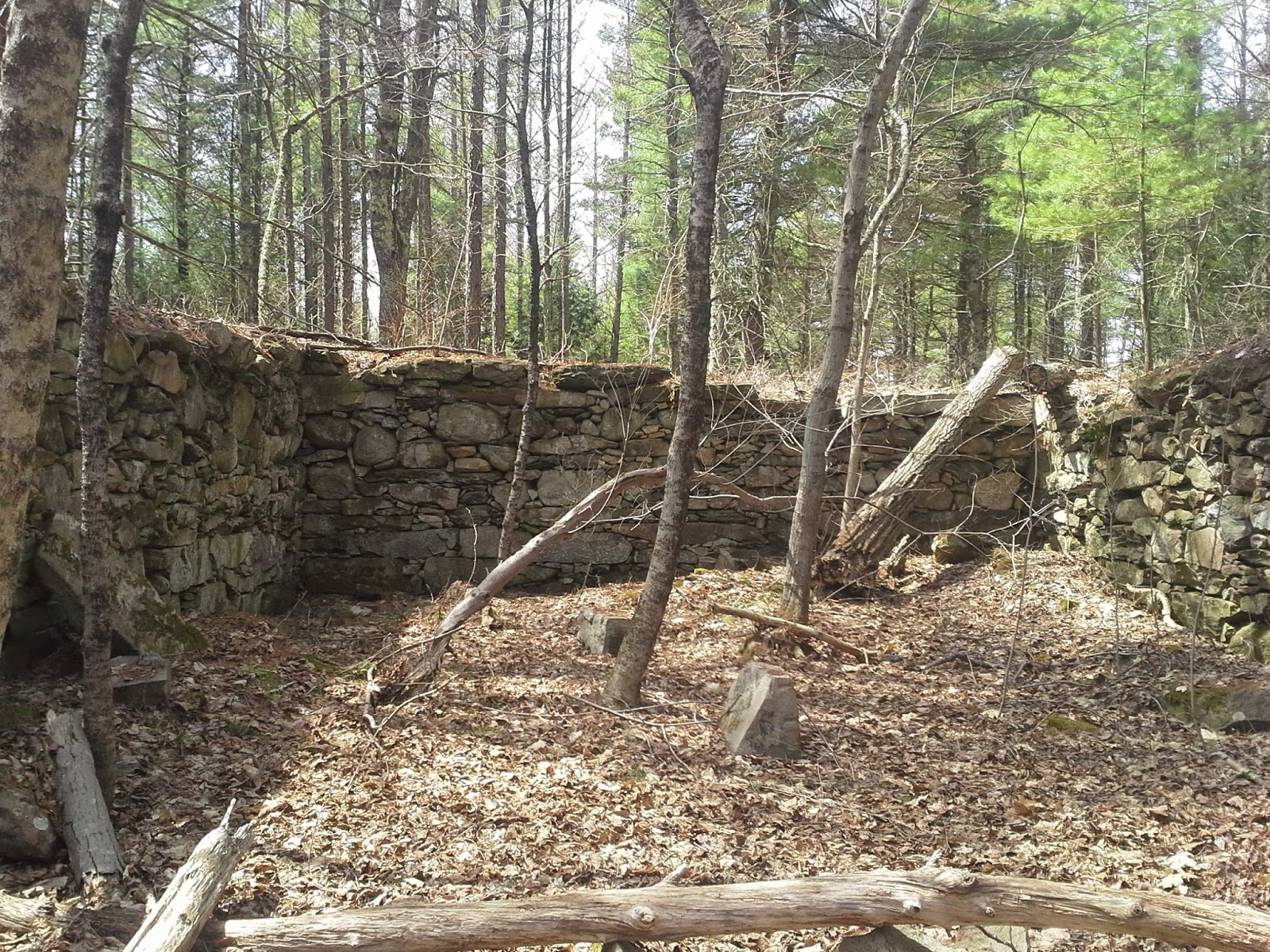
North Pepperell is a village that no longer exists. Centuries ago it was a prosperous part of the Massachusetts town of Pepperell. But now it's just a memory and a few ruins hidden in the woods. The village became a ghost town after it was cursed by a local witch. Well, at least that's what the legends say.

Pepperell was settled in 1702 and incorporated as a town in 1775. Pepperell was known for its farmlands and orchards, but the village of North Pepperell was a center of industrial activity. Located along the Nissitissit River, the village (which was also called North Village) supported a sawmill, a gristmill and a cloth mill, as well as a blacksmith and a cigar manufacturer. It also had a school and a tavern.

Sometime in the early 1800s a strange woman moved to the village. Some sources don't name her, while others claim her name was Mrs. Lovejoy. New Englanders can be standoffish even today, but back then the region's Puritan influence was still strong and newcomers who didn't fit in were viewed with great suspicion. And Mrs. Lovejoy definitely did not fit in with the industrious folks of North Pepperell.


She lived alone in a rundown shack near the schoolhouse, and she let her pigs and cows wander into her neighbors' fields. She dressed strangely and wore a handkerchief over her head. She also never talked with her neighbors. None of this behavior is particularly criminal or really even that strange, but it was enough to make Mrs. Lovejoy's neighbors eye her with suspicion.

I'm sure you can see where this is going. People in North Pepperell soon began to mutter that Mrs. Lovejoy was a witch, and eventually three men decided to do something about the "witch" in their midst. In 1820 they went to Mrs. Lovejoy's shack and dragged out the elderly woman. Then they branded her in the middle of her forehead with a hot iron rod.

She shrieked in pain, but when she regained her composure she cursed her assailants. "This village will die. Flames will devour your businesses! The river will dry up! Death will visit each house!" And with that she fled into the woods, never to be seen again.

At first the people of North Pepperell congratulated themselves on getting rid of Mrs. Lovejoy, but their attitude changed as misfortune repeatedly struck the village. First the sawmill burned in a mysterious fire, then the gristmill. Over time the village's other businesses burned as well. The town's industry was decimated. People tried to rebuild, but the village's dam burst and the river's water level sank to a level that couldn't support any mills. 

Of course, the river was still deep enough to drown a four-year old boy who fell in. His accidental death was just one of many that haunted North Pepperell. One man tripped over a chair, instantly breaking his neck, while another died when he fell from his wagon after the horses became startled by something unseen. A respected community member choked to death in front of his family during dinner. A young woman went to milk the cows in the barn and disappeared. Her body was never found.

Those villagers who didn't die under mysterious circumstances began to move away, driven by economic desperation and fear of the witch's curse. The last of the curse's victims may have been two elderly sisters who died in 1900. One night they saw a fire in the woods near their house and tried to extinguish it. The fire overwhelmed them both, but only one body was ever found.

They were the last inhabitants of North Pepperell. Now the village has been taken over by the trees and birds. A few rock walls are the only signs that anything was ever there at all.

*****

This legend appears in a few different places, but the most comprehensive account I've seen is in Joseph Citro's 2004 book Cursed In New England: Stories of Damned Yankees. Joe is a great storyteller and I always enjoy reading his books.

There are lots of stories in New England about witches' curses, and most follow the same  basic pattern. Suspicious townspeople harass someone they suspect is a witch. The harassment turns violent or even deadly. The suspected witch curses their abusers. The curse happens and the townspeople regret what they did.

The story about North Pepperell fits this pattern, but it's interesting that it supposedly happened in 1820. Certainly witchcraft beliefs lingered in New England well after the 17th century witch trials ended, but it's surprising to read about people attacking an alleged witch in the 19th century. Of course, the story may not be true and could just be a legend to explain the misfortunes that ruined North Pepperell. I don't think there are any legal documents or town records corroborating the legend of Mrs. Lovejoy.

On the other hand, according to Cursed In New England, some people speculate that Mrs. Lovejoy may have actually been a Quaker who was persecuted for her religious belief. I suppose that's possible, since the Massachusetts Puritans executed several Quakers in the 1600s. The anti-Quaker laws were repealed in the early 1660s, though, so it seems strange that the North Pepperell villagers would still be branding a Quaker 120 years later. Maybe I just underestimate how bigoted and violent people can be.

Regardless of its truth, the lesson behind this legend is ambiguous, as it is with many of these witch's curse stories. Mrs. Lovejoy is presented as an innocent old eccentric who is not a witch. On the Yet, she has the ability to curse an entire village, causing destruction and many deaths. What agency is responsible for the curse coming true? Is it God? Karma? Or perhaps it's witchcraft after all?

December 28, 2016

Was 2016 The Year of The Witch?

This year is grinding to a close, so I thought I'd see what stories on this blog from 2016 were the most widely read.

I was kind of surprised by the result. Overwhelmingly, stories about witches and witchcraft were the most popular this year. Monsters, haunted locations and weird seasonal folklore all took a back seat - 2016 was the year of the witch here on New England Folklore.


Drumroll, please! Here are the top five stories I posted this year:

1. By far the most popular story was this one from January about the Dogtown Witches. These 18th century widows made their living as fortune-tellers, herbalists, and by threatening to bewitch travelers passing through their North Shore village. The story of the Dogtown witches is charming, empowering and a little scary. In short, it's everything I like in a Yankee witch story. As an added bonus, Dogtown Common (the village where they lived) is now an abandoned ghost town in the middle of an enormous forest in Gloucester.


2. Readers also really liked this post about "How to Make a Witch Bottle," a type of classic New England defensive folk magic. Maybe people reacted to the crafty aspect. All you need is a jar, some nails, and your own urine. How much easier could it be? On the other hand, maybe a lot of my readers are plagued with supernatural problems and feel the need to defend their homes with magic. I hope that's not the case, but 2016 has been a very strange year...


3. In February of 2016 Robert Eggers's art-horror film "The Witch" was released to wide critical acclaim. I loved the movie, but I've heard mixed things from friends. Some horror movie fans were bored and confused by the slow pace and 17th century dialect, and art film aficianados didn't see it because they were afraid of the violence and bloodshed. I think the main audience for this film was intelligent people who love the creepy side of folklore, which happily describes all of this blog's readers. My review of "The Witch" was the third most popular post of 2016, and focused on how the film did and didn't reflect authentic New England witch lore. Spoiler alert: New England witch lore has fewer naked people and goats.


4. Do you see what I mean about 2016 being the year of the witch? So much witchcraft, but I'm not complaining. One exception to the witchcraft trend was this post about Connecticut's haunted fairy village. I spent much of 2016 researching New England fairy lore, so I was happy that readers responded well to this one. The legend features sinister fairies, an axe murderer, and a cursed ghost town, so there is a lot to respond to.

Image from From Roadtrippers.com.

5. Rounding out the top five is another witch-oriented post. I asked "How Did Tituba Become Black?", and that question apparently resonated with readers. Tituba was one the key figures in the Salem witch trials. A slave in Reverend Samuel Parris's household, Tituba was one the first people accused of witchcraft. She set the pattern for all the trials with her vivid confessions and incriminated several others as witches. Popular culture has depicted Tituba as black for many years, but she was actually an Aarawak Indian from the Caribbean. Read the post to find out how this transformation happened. (Hint: Arthur Miller and Henry Wadsworth Longfellow both made it happen.)

Ashley Madekwe as Tituba on TV's Salem.
I've had a lot fun writing this blog in 2016, so thank you for reading and letting me share my obsession with the weird side of New England. I hope you'll keep reading in 2017. Happy New Year!

April 20, 2015

The Ghost of Ram Tail Mill

This Sunday Tony and I made an excursion down to Foster, Rhode Island to visit the Ram Tail Mill ruins. What better way to spend a sunny spring day than visiting a notorious haunted ghost town?

Ram Tail Mill was founded in the 1813 by William Potter, Peleg Walker, and several other partners. The mill was powered by the nearby Ponangansett River, and mechanically spun and wove woolen cloth. Wool comes from sheep which is why it was called the Ram Tail Mill.


William Potter's two sons managed the operations in tandem with Peleg Walker. Walker was supposedly a cranky, disagreeable man, but managed to find his niche as the mill's night watchman. He would patrol the mill buildings with a lantern in his hand, and then ring the bell after sunrise when it was time for the workers to start their day. Things went well for several year and a small village formed around the mill. 

There was always tension between Peleg Walker and the Potters, but at some point it erupted into a major argument. Neither legends or historical records indicate what it was about, but it was bad. It ended with Walker shouting, "You'll have to take the key to this mill from a dead man's pocket!"


 His warning came true. On the morning of May 19, 1822 the bell did not ring. When the puzzled workers arrived from their houses they found Peleg Walker hanging dead from the bell rope. The key to the mill was tucked into his pocket. Walker was 35 years old.

The locals assumed Walker was a suicide and buried his body nearby. Operations resumed at the mill, and with the cranky night watchman gone the atmosphere at Ram Tail was much calmer. But one night the workers and the Potter family were awakened by the mill's bell ringing wildly. They ran to to investigate but found the mill was empty. The bell was ringing on its own.


The mysterious ringing happened on several other nights (usually at the stroke of midnight) until the Potters took down the bell rope. Maybe the rope was just blowing in the wind? This didn't help - the bell still would ring late at night. They finally removed the bell itself.

This brought peace for a short while, but other strange things started to happen. The water wheel moved backwards, against the flow of the river, and the mill's machinery would run by itself late at night. Even worse, someone could be seen walking around the mill at night carrying a lantern. It looked suspiciously like Peleg Walker...

Fearing that the mill was cursed, the workers began left to find other jobs. Without anyone willing to work there the Potters were forced to shut it down. The little village was abandoned and became a ghost town. No one lived there anymore, but Peleg Walker could still be seen wandering through the empty buildings late at night.


The mill burned down in 1873 but kept its reputation as a haunted location. In fact, the 1885 Rhode Island census lists the Ramtail Mill as haunted, making it the only officially haunted place in the state.

We did not see Peleg Walker's ghost, but we did have one weird thing happen to us. As I was taking a photo of the trail that leads directly to the ruins, my phone's camera went a little haywire. The screen just turned blinding white. This happened to me one other time that day. The same thing happened to Tony, but he didn't notice until we got home that some of his photos were all white. Supernatural phenomenon or just a camera malfunction on a bright sunny day?

One of my all white photos!
I definitely felt a little creeped out as we explored the ruins, but it could have just been my fear of deer ticks combined with a very quiet forest. We only saw two other people, and when we asked them if they knew where the mill was they told us they didn't even know there was such a thing. It was really quiet there.

The conservation land is very beautiful and has some amazing stone walls that run along the main trail and into the woods. The walls are covered in lichen, as was the ground at a nearby historic cemetery where we found the graves of some members of the Walker family. (Peleg Walker is buried in another cemetery about a mile away.)


DIRECTIONS: I've read some accounts online of people having trouble finding the ruins, but we got there relatively easily. Take Route 6 west from Providence until you reach Foster. Go south on Rams Tail Road. You'll know you're going the correct way because you'll pass a cemetery on the left. Rams Tail road becomes a dirt road for a while, but when it ends take a left on Central Pike. A short way down the road you'll see the trail entrance with a fire gate on your left. There is space for one or two cars to park.

Follow the path until you reach a four way crossroad. Go left and follow the path as it curves along the water. When the path splits like a T, take the right and follow the path up along the hill. The ruins are at the top of the hill.

My sources for this post: Joseph Citro and Diane Foulds's Curious New England, Rory Raven's Haunted Providence, Michael Bell's Food for the Dead, and Rhode Island's Haunted Ramtail Factory by Thomas D'Agostino and Arlene Nicholson.

October 19, 2014

Fall Phenomena: Mountain Lions, Vampires, Evil Clowns, and More!

As we get closer to Halloween, it seems like more and more strange things have been happening locally.

For example, a 26-year old man from Beverly, Massachusetts was arrested for trying to dig up a grave in Salem's Old Burial Ground on Charter Street. The man apparently is mentally ill, which is sad and not really the strange thing. The strange thing is that a group of tourists gathered around and watched him unearth the tomb in broad daylight. Apparently they thought it was just a normal part of the Salem Halloween festivities!

In other odd news, buried deep inside the October 12 issue of the Boston Globe was a short note that a woman in Burlington, Massachusetts called the police to say she had seen a mountain lion walking near some power lines. As is often the case with these sightings, the police investigated but found nothing conclusive.


It seems like weird creatures are often seen near power lines. Is this because of electromagnetic something or other, or simply because the undergrowth is cut low allowing clearer sight lines? One of my favorite power line sightings was this strange creature seen by Bill Russo in 1990 in Raynham, Massachusetts. And by favorite, I mean creepiest!

"Ee wah chu..." Image from The Bridgewater Triangle documentary.

I first learned about Bill from the recently released Bridgewater Triangle documentary. Bill has just published a book evocatively titled Creature from the Bridgewater Triangle. It is available on Kindle. I haven't read it, but it definitely has a great title!

Speaking of great titles, I'll be doing some readings and signings for my book Legends and Lore of the North Shore next week.


  • Tuesday, October 21 at 7:00 pm: Tewksbury Library, Tewskbury, Massachusetts (reading and a talk)
  • Saturday, October 25 at 3:00 pm: Boston Book Festival, Copley Square, Boston (book signing). I'll be at the History Press booth.

If you're not in the mood for reading, you might want to check out this new documentary about the New England vampire phenomenon. The documentary is from Connecticut's Historical Haunts LLC, and features Rhode Island folklorist Michael Bell.

Rhode Island folklorist Michael Bell.

The vampires of old New England weren't the bloodsuckers we see in movies today, but instead were the hungry corpses of people who died from tuberculosis. It was believed that they fed from their graves on the health of their surviving family members. I haven't seen this film but it looks like good, spooky viewing!

Speaking of spooky viewing, the TV show American Horror Story: Freak Show features a particularly terrifying clown called Twisty.

Twisty!
 Late this summer, before the show started, a creepy clown was seen lurking around at night in southern California. The trend now appears to be spreading nationwide. These evil clowns are all late to the party. Everyone knows the original evil clown scare started here in Boston. Once again, New England is a trendsetter! I just wish this were a better trend.

Finally, if you want to escape the evil clowns, vampires, and mountain lions, you might want to purchase the sylvan yet abandoned village of Johnsonville in East Haddam, Connecticut. The village is spread over 62 acres and was a former resort. Of course, you may encounter some strange phenomena since East Haddam is well-known for its mysterious subterranean Moodus noises and for witchcraft activity. Johnsonville also apparently comes with a resident ghost, but he doesn't sound too malevolent. The village is being sold at auction with a starting bid of $800K, which seems reasonable to me given current Boston housing expenses.

May 04, 2014

Roger Babson's Dogtown Boulders

I've been working this winter on a book about the legends and lore of Massachusetts's North Shore. The title? Legends and Lore of the North Shore, of course!

While I was researching the book Tony and I took a trip up to Dogtown Common, the Colonial-era ghost town on Cape Ann. Dogtown is famous for many things, including witches and maybe a werewolf, but one of its most visually interesting features are the boulders carved by Roger Babson during the Great Depression.

Stone walls delineate former farms in Dogtown Common.
Roger Babson was a very successful financier in the early part of the 20th century, and accurately forecast the Depression. Descended from some of Gloucester's earliest settlers, Babson was unhappy with how people thought about poor, abandoned Dogtown. Rather than focusing on the village's uncanny history and Yankee Gothic atmosphere, he felt people should instead celebrate the hard-working colonists who had founded Dogtown.

Boulders, boulders, boulders!
To rehabilitate its image, he proposed hiring a group of local masons to carve motivational slogans into some of the boulders that are scattered across the Dogtown plateau. And there are a lot of boulders there! The rocky, unproductive soil was one reason the settlers ultimately abandoned the place.


The Gloucester city leaders agreed to Babson's odd proposal. He was willing to pay the masons himself, and since it was the depths of the Depression the men needed the money. Babson also sweetened the deal by donating five hundred acres of land to Gloucester so the city could have a new reservoir.


In the end, the masons carved Roger Babson's slogans into thirty-six boulders across Dogtown Common. They also carved numbers to mark the cellar holes of the settlers' abandoned homes, and a boulder indicating the former village's main square.


Roger Babson died in the 1960s, but I think if he were alive today he might be disappointed at the effect his boulders have. Rather than diminishing Dogtown's creepy atmosphere, they actually increase it. The boulders might have been cornily motivational in the Depression when Dogtown was mostly meadow, but since that time it has become a dense forest.


The carved rocks actually make the forest seem more desolate, not less. They're just another abandoned human endeavor, like the ghost town itself. Whenever I stumbled upon one hidden among the trees, I wasn't motivated to work hard or save money. Instead, I was reminded that time and Mother Nature will ultimately overturn everything, whether it's a village founded by Puritans or boulders carved by an eccentric millionaire. Roger Babson did contribute to Dogtown's reputation, just not in the way he thought.